
Raymond Realty's Kandivali Bet: Decoding Mumbai's Redevelopment Boom
Summary
Raymond Realty expands into Kandivali with a Rs 3,000 crore redevelopment project, marking its 7th JDA and solidifying its position among major Mumbai developers. This asset-light strategy rapidly builds a substantial portfolio, now reaching Rs 43,000 crore.

Introduction
Raymond Realty filed a regulatory disclosure on March 9, 2026 that did not take long to make rounds across Mumbai's real estate circles. The company had signed definitive documents for a residential project in Kandivali with an estimated gross development value of Rs 3,000 crore — its seventh joint development agreement Mumbai and its third project in the western suburbs. One announcement, but several stories running through it simultaneously: a listed developer building scale aggressively, a western suburbs micro-market validating premium demand, and an asset-light model proving it can compete with legacy land-heavy developers in India's most contested residential market.
The Kandivali Project: What Is Known and What Isn't
Raymond Realty did not disclose the name of the landowning entity nor the total size of the land parcel involved in this joint development agreement. That is standard practice at the definitive agreement stage, particularly when approvals are still pending and land acquisition conditions may carry confidentiality obligations. What is confirmed: a prime location in Kandivali, a Rs 3,000 crore GDV target, and a redevelopment classification — meaning the project involves replacing an existing structure rather than building on fresh land.
This project marks Raymond Realty's third redevelopment initiative in the western suburbs of Mumbai and its seventh joint development project overall, announced on March 9, 2026. For a company that listed independently only in July 2025, adding a project of this scale within months of standalone listing reflects the pace at which the management team is moving.
The Rs 43,000 Crore Portfolio Story
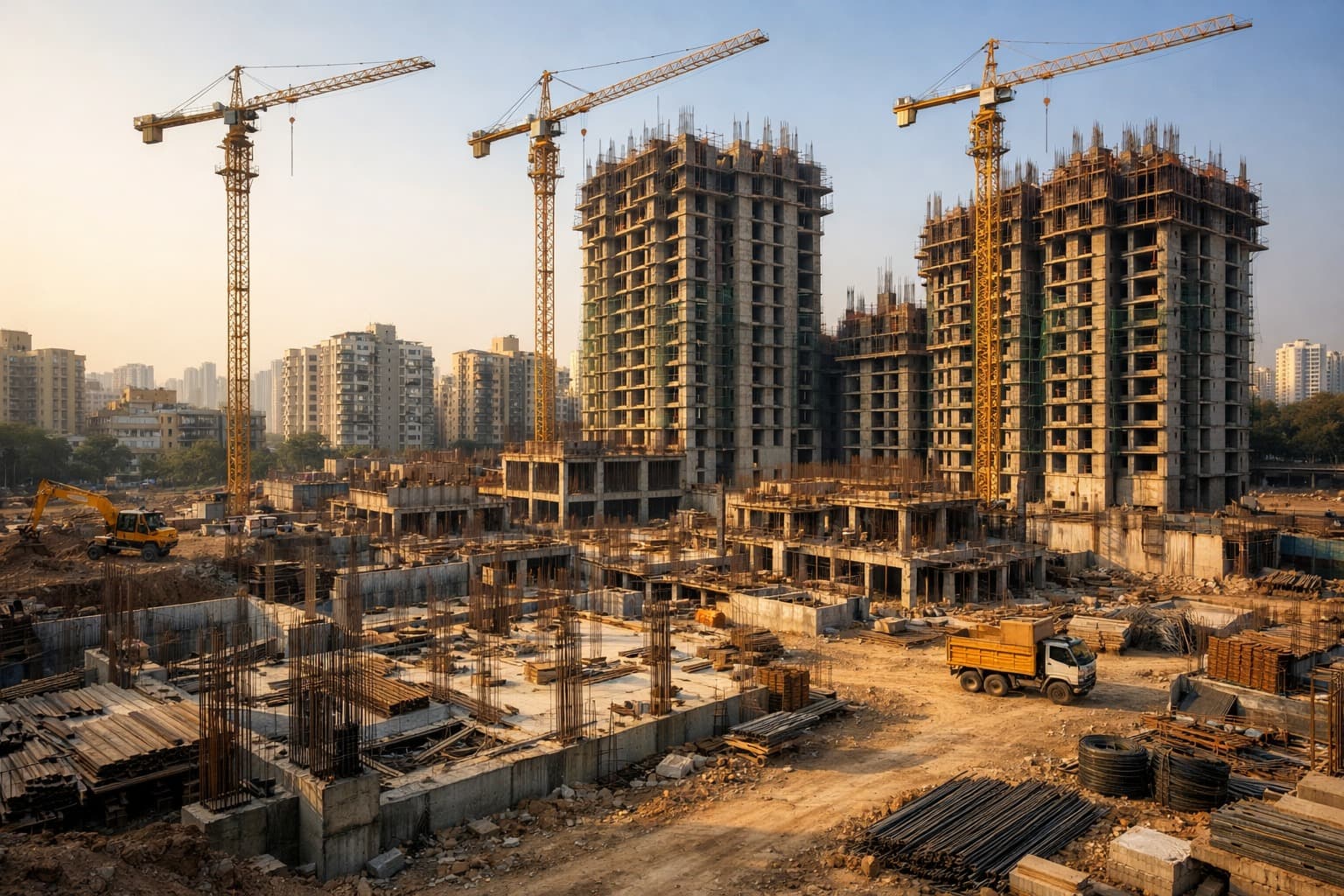
The Kandivali addition is significant not just in isolation but for what it does to the overall pipeline number. With this addition, the total GDV of Raymond Realty's ongoing and planned real estate projects will reach nearly Rs 43,000 crore. That is a portfolio number that puts Raymond Realty in direct conversation with established Mumbai developers. Raymond Realty's approach mirrors that of major developers like Lodha Group, Godrej Properties, and Oberoi Realty, all actively developing large-scale projects in Mumbai, with the company leveraging its JDA strategy to build a significant portfolio without substantial land ownership burdens.
The asset-light logic is not complicated but it is powerful. Each JDA converts a landowner's parcel into a co-development arrangement where Raymond brings brand, execution, and capital while the land partner contributes the asset. Neither party carries the full risk of outright land acquisition. The developer stretches capital further; the landowner accesses builder-grade construction quality and market reach without selling a generational asset.
The Western Suburbs and Why Kandivali Makes Sense
Kandivali real estate has been on a sustained appreciation curve driven by infrastructure and aspiration. The metro network now touches Kandivali's eastern spine through Line 2B, connecting it to Andheri and the western express highway corridor efficiently. Kandivali East has emerged as a genuine mid-to-premium residential address with a strong base of self-employed and salaried homebuyers looking for space without paying Bandra or Andheri premiums.
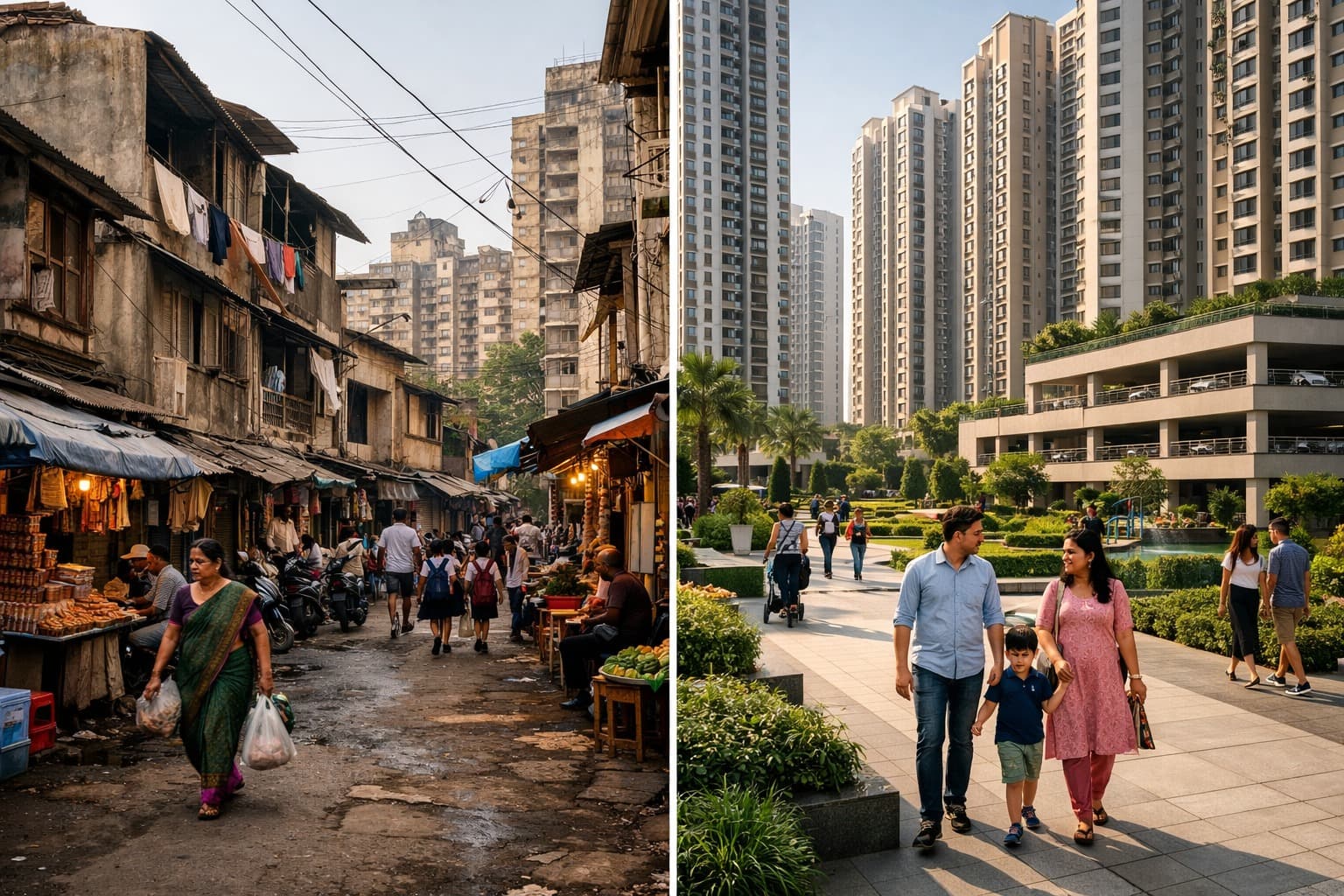
Redevelopment in this micro-market carries particular momentum. Large swaths of Kandivali's housing stock dates to the 1980s and 1990s — buildings that are now well past their comfortable maintenance horizon and sitting on land that commands significant per-square-foot realisations. The economics of redevelopment in Kandivali work cleanly: original residents receive upgraded units at no cost, the developer captures surplus FSI for sale in the open market, and the neighbourhood gains new construction without greenfield land consumption.
Raymond Realty's JDA Track Record So Far
The Kandivali project joins a pipeline that has been assembled systematically since the real estate business was carved out of Raymond Ltd. Previous major joint development projects include developments in Mahim with Rs 1,800 crore GDV and Wadala with Rs 5,000 crore GDV, alongside a Bandra East project with over Rs 2,000 crore revenue potential announced in June 2024. Each successive JDA has pushed into a slightly different Mumbai micro-market — Mahim for its central connectivity, Wadala for its infrastructure-driven premium, Bandra East for aspirational eastern Bandra demand, and now Kandivali for the western suburbs volume play.
That geographic spread across the Mumbai Metropolitan Region is deliberate. A developer concentrated in a single suburb carries outsized risk if that micro-market softens. A portfolio spread across Mahim, Wadala, Bandra, and Kandivali is diversified against any one neighbourhood's cycle.
The Quarterly Numbers Behind the Headline
Context for this announcement comes from the financial performance sitting beneath it. Raymond Realty reported an 11% sequential increase in net profit to Rs 66.8 crore in the latest quarter, revenue rising 8.8% quarter-on-quarter to Rs 757.5 crore, with booking value of Rs 1,504 crore and customer collections of Rs 1,210 crore during the period. These are not spectacular numbers on their own, but for a company that only listed independently in mid-2025, the trajectory matters more than the absolute level. Booking value growing while collections stay healthy suggests projects are converting from sales to execution without major slippage — which is the core execution risk in any JDA-heavy model.
What This Means for Buyers and Investors in Kandivali
For end-users watching Kandivali's pipeline, a Raymond Realty project at the Rs 3,000 crore GDV level will likely deliver apartments in the Rs 1.5 crore to Rs 3.5 crore band depending on unit size, matching the demand profile of the suburb's growing professional and self-employed buyer segment. The redevelopment tag means existing residents in the source building benefit directly, and the surrounding neighbourhood gets a premium product that anchors values in nearby buildings upward.
For investors tracking Raymond Realty Mumbai as a listed stock, the JDA velocity signals that management is executing against the stated portfolio-building strategy rather than announcing and stalling. Seven JDAs across diverse Mumbai micro-markets in under two years of independent operation is a pace few newer listed developers have matched.
Summary
Raymond Realty's seventh joint development project in Kandivali, Mumbai, carries an estimated GDV of Rs 3,000 crore and is the company's third redevelopment in Mumbai's western suburbs. With total portfolio GDV now approaching Rs 43,000 crore, the Raymond Realty asset-light JDA strategy is producing scale at a pace that places the company squarely alongside established Mumbai western suburbs developers. The Kandivali announcement is not just a project disclosure — it is evidence that Mumbai redevelopment 2026 has a new and credible builder in the room.
Video will be embedded from: https://www.youtube.com/watch?v=w9UU_bc1pBw