
Pune Real Estate Market in 2025: Stability Amidst Slight Registration Dip
Summary
Pune's 2025 real estate market shows stability despite a slight dip in registrations. Strong stamp duty collections and demand for larger homes indicate market maturity and a positive outlook for 2026.

Introduction: A Market That Slowed, But Did Not Weaken
The Pune real estate 2025 story is not about decline, but about balance. After a record-breaking 2024, the city witnessed a small dip in transaction volumes, yet demand fundamentals stayed strong. With buyers continuing to commit to home purchases and government revenues touching new highs, Pune property registrations in 2025 reflect a market settling into stability rather than facing stress. This shift highlights how Pune’s housing market is maturing, supported by genuine end-user demand, affordability-led segments, and confidence in long-term growth.
Pune Property Registrations Show Controlled Year-on-Year Dip
According to official property registration data Pune, the city recorded 1,85,657 registrations in 2025, a modest 2.3% decline from 2024. This reduction must be seen in context. The previous year benefited from pent-up demand, favourable borrowing conditions, and heightened buyer urgency. In comparison, 2025 represents a return to normal activity levels. Importantly, Pune real estate trends 2025 indicate that transaction volumes still remain close to historical averages, confirming sustained buyer interest across segments.
Stamp Duty Collections Signal Strong Buyer Commitment
While volumes softened slightly, Pune stamp duty collections told a more positive story. Revenues reached ₹7,119 crore, marking a four-year high and underlining buyer willingness to invest. Rising stamp duty revenue Pune indicates that higher-value transactions increased their share. Buyers were not stepping away from the market; instead, they were choosing better projects, improved layouts, and well-connected locations. This revenue growth reflects confidence in asset quality and future appreciation within the Pune housing market.

December 2025 Reflects Market Normalisation, Not Slowdown
Month-wise data initially raised concerns, as December 2025 registrations dropped sharply year-on-year. However, analysts explain that December 2024 was unusually strong. When viewed against the six-month average, December 2025 activity was only around 10% lower. This pattern confirms Pune property registrations dip 2025 was driven by a high base effect. The market was not weakening; it was correcting after an exceptional run, a sign of maturity rather than volatility.
Affordable Homes Continue to Anchor Demand
One of the clearest indicators of stability is the continued dominance of affordable housing. Homes priced up to ₹1 crore accounted for nearly 85% of all transactions. This trend reinforces Pune residential demand as being end-user driven. First-time buyers, professionals, and families continue to see Pune as a value-driven city offering employment access and livable infrastructure. Meanwhile, properties above ₹1 crore maintained a consistent 15% share, highlighting balanced participation from premium buyers as well.
Buyer Preference Shifts Towards Larger Homes
Another notable Pune real estate trend 2025 is the gradual shift in unit size preference. Demand for homes below 500 sq ft dipped slightly, while interest in homes above 800 sq ft increased to 30%. This change reflects evolving lifestyles, hybrid work models, and the desire for functional living spaces. Buyers are prioritising comfort, storage, and community amenities, indicating that quality is becoming as important as price in the Pune housing market analysis.
Central Pune Continues to Lead Residential Activity
Geographically, Central Pune remained the most active zone, accounting for nearly two-thirds of transactions. Areas under PMC, PCMC, and Haveli Taluka continue to attract buyers due to established infrastructure, employment hubs, and social amenities. West Pune followed, while North, South, and East Pune together contributed a meaningful share. This spread highlights that Pune real estate demand remains stable across multiple micro-markets, reducing dependence on any single corridor.
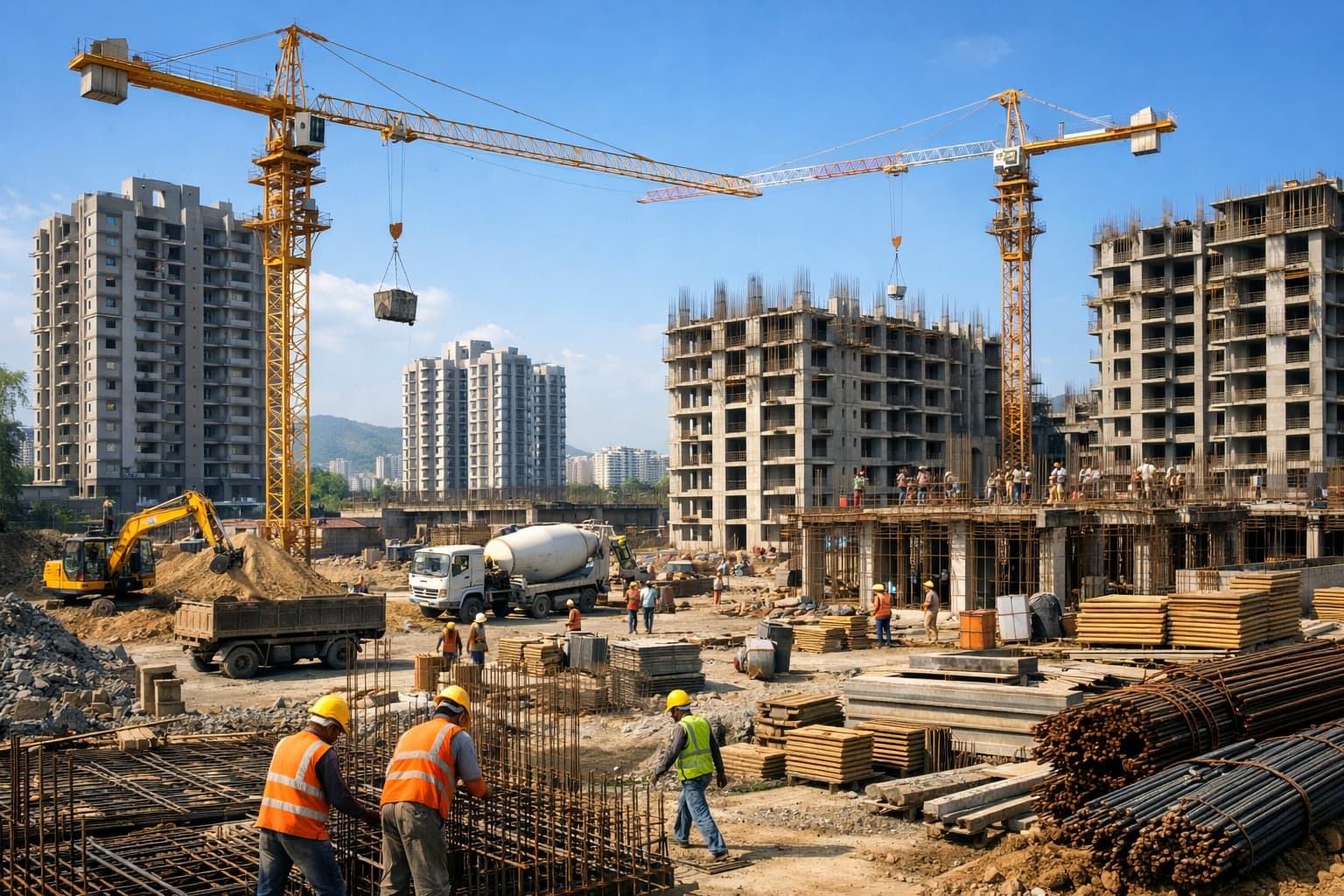
Real Estate Impact: What These Trends Mean for Stakeholders
The real estate impact of these trends is significant. For homebuyers, stability ensures better negotiation power without the fear of sudden price corrections. For developers, consistent demand across ticket sizes allows planned launches instead of aggressive supply. Investors benefit from predictable returns rather than speculative spikes. Strong stamp duty collections Pune 2025 also signal policy stability and sustained government confidence in the sector.
Expert Insights Point to Structural Stability
Industry experts agree that Pune is not facing a slowdown but a transition. Higher-value transactions continue to support revenues, while affordable housing maintains volumes. Some caution that rising prices and inventory levels require disciplined execution. However, overall sentiment remains positive. According to analysts, Pune real estate demand remains stable because it is supported by employment growth, education hubs, and steady migration rather than speculative buying.
Outlook for Pune Real Estate in 2026
Looking ahead, the Pune housing market outlook 2026 remains steady. Infrastructure upgrades, job creation in IT and manufacturing, and balanced supply pipelines are expected to support demand. While short-term fluctuations may continue, Pune’s diversified buyer base ensures resilience. As the market adjusts after its 2024 peak, Pune residential market trends 2025 suggest a strong foundation for sustainable growth rather than overheating.
Summary
Pune’s real estate market in 2025 showed resilience despite a marginal dip in registrations. Strong stamp duty collections, stable demand across price segments, and growing preference for larger homes highlight market maturity. Affordable housing remained the backbone, while premium demand stayed consistent. Central Pune continued to dominate transactions, supported by infrastructure and employment hubs. Experts view this phase as normalisation rather than slowdown. With balanced supply and end-user demand, Pune’s housing market is well positioned for steady growth in 2026.
Video will be embedded from: https://www.youtube.com/watch?v=bOFERCcd_d4