
PAN Requirement for Property Deals: What Changes Below Rs 20 Lakh?
Summary
Proposed changes to Income Tax Rules 2026 may raise the PAN requirement threshold for property deals to ₹20 lakh. This aims to ease documentation for smaller transactions, especially in Tier 2/3 cities, while clarifying rules for gift deeds and JDAs.

PAN May Not Be Required for Property Deals Below Rs 20 Lakh Anymore. Here Is What That Actually Changes.
Introduction
Most homebuyers in India have come to accept that the PAN card is simply part of the paperwork. You buy a property, you quote your PAN. That has been the rule for over a decade now, and nobody really questioned it.
But the Income Tax Department is now questioning it on your behalf. The Draft Income Tax Rules 2026, floated as part of the broader overhaul of India's direct tax framework, includes a proposal that could meaningfully reduce documentation requirements for a large segment of property buyers across the country. If approved, deals valued below Rs 20 lakh may no longer require mandatory PAN disclosure at the time of registration.
The proposed change, if it clears the final notification process, would come into effect from April 1, 2026.
Where the Current Rule Came From and Why It Is Feeling Its Age
The mandatory PAN requirement for property transactions currently kicks in at Rs 10 lakh. This threshold was set under Rule 114B of the Income Tax Rules 1962 and was designed to bring high-value property deals within the formal financial reporting system. The idea was sound: flag large transactions, create a paper trail, make it harder for unaccounted money to move through real estate.
That logic still holds. The problem is the number itself. When this rule was originally framed, Rs 10 lakh represented a genuinely significant property transaction in most Indian cities. Fast forward to 2026 and a tiny one-room tenement in a Tier 3 city can brush against that threshold. The rule has not moved while property prices have climbed steadily year after year.
A first-time buyer picking up a modest plot in Nashik or a small flat in Coimbatore for Rs 14 lakh is not the kind of transaction this reporting framework was designed to capture. And yet, under the current rules, that buyer needs to furnish PAN just as much as someone buying a sea-facing flat in Mumbai for Rs 5 crore.

The Proposed Change: Double the Threshold, Expand the Scope
The Draft Income Tax Rules 2026 propose raising the PAN threshold for property deals from Rs 10 lakh to Rs 20 lakh. Transactions below this revised limit would no longer require mandatory PAN disclosure during registration. Deals at or above Rs 20 lakh would continue to attract the full reporting requirement as before.
That is the main headline. But tucked alongside it is an equally important clarification that has not received as much attention in the coverage so far.
The draft rules propose explicitly bringing two additional categories of property transactions under the PAN framework: transfers by way of gift deed and joint development agreements. Both of these have existed in something of a grey zone when it comes to PAN compliance. The new draft removes that ambiguity entirely.
In practical terms, almost all gift deed transfers and every meaningful JDA will comfortably exceed Rs 20 lakh, so they will require PAN regardless. But spelling it out removes the interpretational wiggle room that has occasionally allowed these transaction types to slip through documentation requirements.
Who This Actually Helps
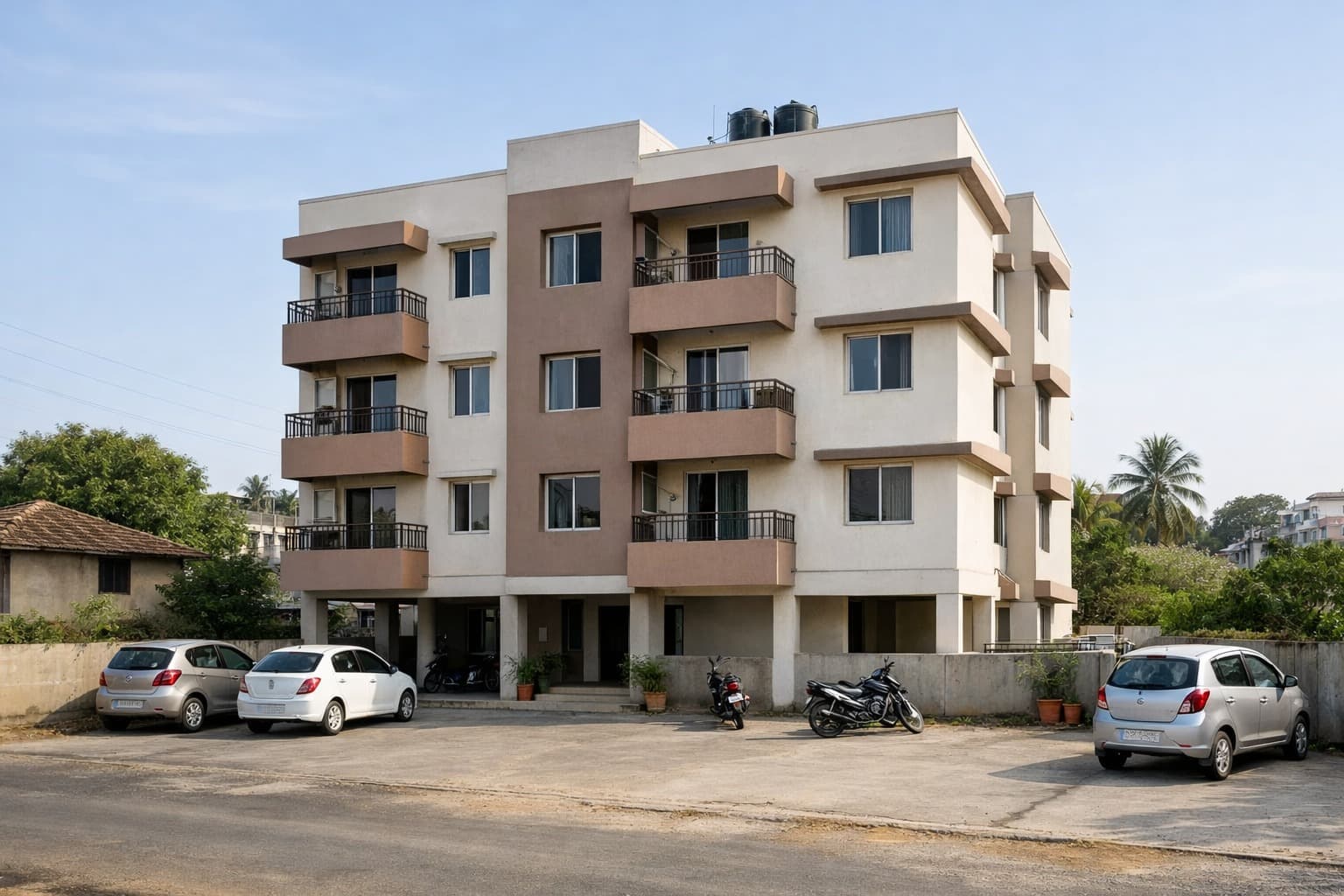
The segment that benefits most from this change is not the Mumbai luxury buyer or the Delhi NCR investor. It is the first-generation homebuyer in smaller cities and semi-urban markets who is purchasing property in the Rs 12 lakh to Rs 18 lakh range.
These buyers are often self-employed, sometimes in agriculture or small trade, and while many do have PAN cards, their familiarity with the compliance ecosystem is lower than that of a salaried urban professional. Removing the mandatory PAN requirement for their transaction category simplifies the registration process meaningfully without compromising the government's ability to track higher-value deals where tax considerations are more significant.
From a pure administrative standpoint, it also reduces the load on sub-registrar offices in smaller towns where the documentation bottleneck slows down registrations and contributes to delays.
Should You Still Quote PAN Voluntarily?
This is the part that tax professionals want buyers to hear clearly, because the answer is yes.
The proposed rule change removes a mandatory requirement. It does not remove the underlying tax implications of a property transaction. If you are selling a property for Rs 17 lakh and have made a capital gain on it, that gain is taxable regardless of whether PAN was quoted during registration. The Income Tax Department has multiple other means of identifying these transactions, including stamp duty records, bank transfers, and Aadhaar linkages.
Experienced chartered accountants are advising clients to continue quoting PAN voluntarily even on sub-20 lakh transactions, particularly on the seller side. Maintaining a clean audit trail is simply good financial hygiene, and in an era where PAN, Aadhaar, and banking data are increasingly interconnected, the idea that a small transaction will quietly disappear from scrutiny is not realistic.
The threshold change makes compliance easier. It does not make compliance optional in the broader tax sense.
Summary
The Draft Income Tax Rules 2026 propose raising the mandatory PAN disclosure threshold for property transactions from Rs 10 lakh to Rs 20 lakh, with the change expected to take effect from April 1, 2026, if notified. The revision acknowledges that property prices across India have significantly outpaced the decade-old threshold, and aims to reduce documentation burden for buyers in Tier 2 and Tier 3 city markets transacting in the sub-20 lakh range. The draft also explicitly extends the PAN framework to gift deeds and joint development agreements, closing a longstanding ambiguity. Tax experts, however, continue to recommend voluntarily quoting PAN even for smaller deals, as the underlying capital gains and income tax obligations on property transactions remain fully in force regardless of the registration threshold.
Video will be embedded from: https://www.youtube.com/watch?v=Ga6UiL_puGU