
Omaxe Foray into Hospitality: ₹6,200 Crore Hotel Push Across Ayodhya, Vrindavan and Beyond
Summary
Omaxe commits ₹6,200 crore to build 19 hotels in 13 cities, including Ayodhya & Vrindavan. This asset-light hospitality push targets India's booming religious tourism & integrated development for steady revenue.

Introduction
There's a particular kind of announcement in Indian real estate that makes you sit up, and Omaxe's latest move falls squarely into that category. The company, long known for residential townships and shopping complexes, has decided to step into an entirely new arena. It's betting nearly ₹6,200 crore on hotels, and the cities it has picked say a lot about where the company thinks future demand is heading.
A Hospitality Arm Built From Scratch
Omaxe has formally launched a dedicated hospitality business vertical, something the company hadn't operated as a standalone unit before. Over the next four to five years, it plans to build 19 hotels spread across roughly 5 million square feet. That's not a small bet for a developer whose identity has largely been tied to housing and commercial spaces. And honestly, the timing doesn't feel accidental.
Why Ayodhya and Vrindavan Matter So Much
Twelve of these nineteen properties will rise in Uttar Pradesh alone. Two each are planned in Ayodhya and Vrindavan, with additional hotels coming up in Lucknow, Prayagraj, Ghaziabad, Gorakhpur and Kaushambi. These aren't random picks. Religious tourism in these towns has exploded in recent years, partly because of better roads, partly because of renewed cultural interest, and partly because pilgrims today expect comfort, not just a roof over their heads.
Beyond Uttar Pradesh
The company isn't stopping at one state, though. New Delhi, Faridabad and Ujjain will each get a hotel, while Chandigarh, Amritsar and Ludhiana together will see four more properties, with Chandigarh getting two of them. Put together, Omaxe's hospitality presence will eventually span 13 cities across five states. That's a wide net for a company entering this business for the first time.
The Asset-Light Approach
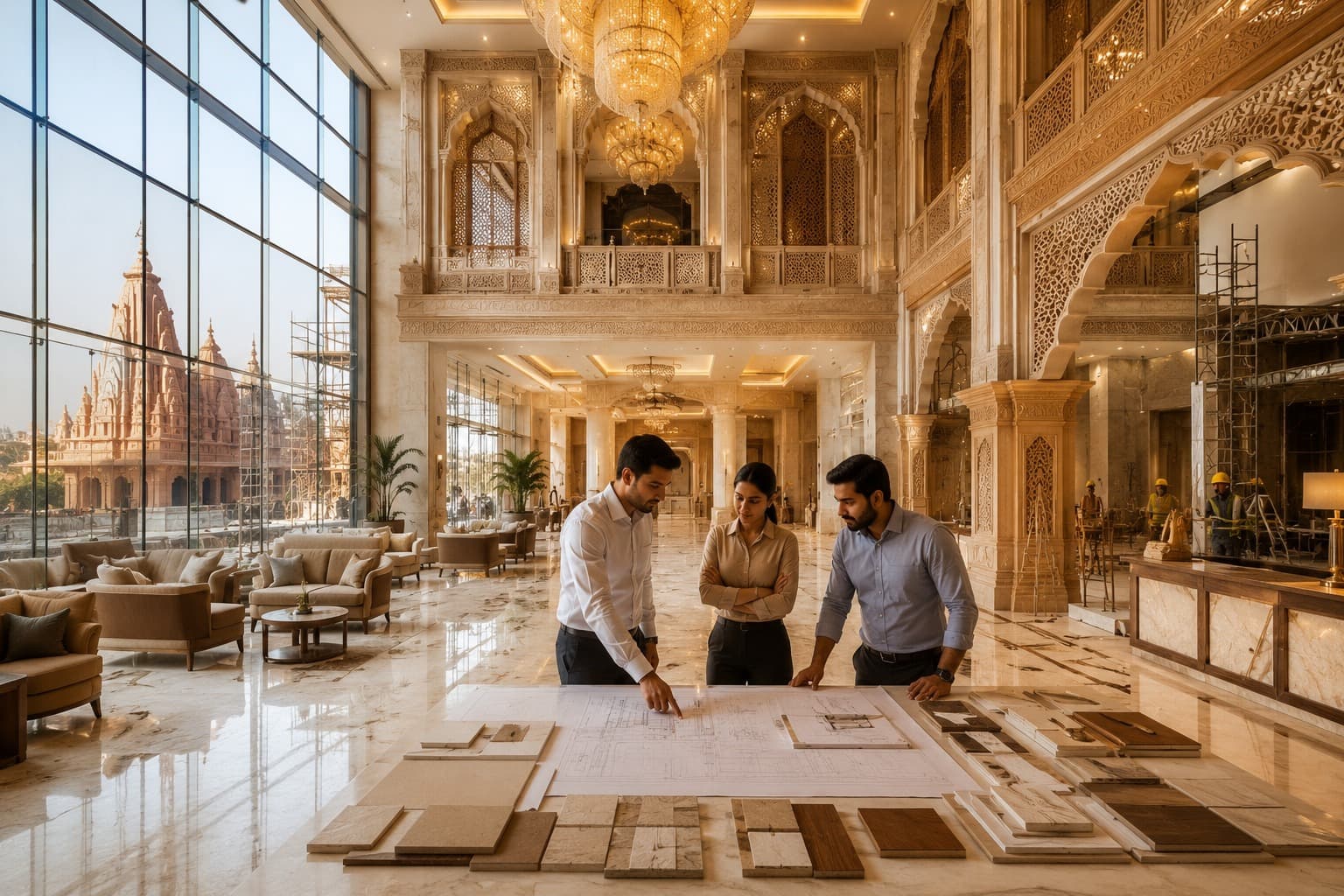
Here's something worth understanding before assuming Omaxe is about to start running hotels day to day. It isn't. The company plans to develop the properties and then hand over operations to established hospitality brands through management or branding tie-ups. This asset-light model isn't new in Indian real estate, but it does suggest Omaxe wants the upside of hospitality without taking on the operational headache that comes with running hotels themselves.
One Project Already Taking Shape
Among everything announced, one project stands out as concrete rather than conceptual. A 158-key Gateway Hotel, operated by IHCL, is coming up at The Omaxe State in Dwarka, developed through a public-private partnership with the Delhi Development Authority. It's a useful preview of what the rest of the portfolio might eventually look like once operator tie-ups for the other sites are finalised.
The Bigger Picture for Indian Real Estate
What's interesting here isn't just the hotel count. It's the underlying shift. Developers across India are increasingly building integrated destinations rather than standalone residential blocks. Housing, retail, offices and now hospitality are being woven into single ecosystems. Why? Because a mixed-use destination tends to hold its value better, attracts footfall year-round, and gives a developer multiple revenue streams instead of relying purely on housing sales cycles.
What This Means for Tourism Infrastructure
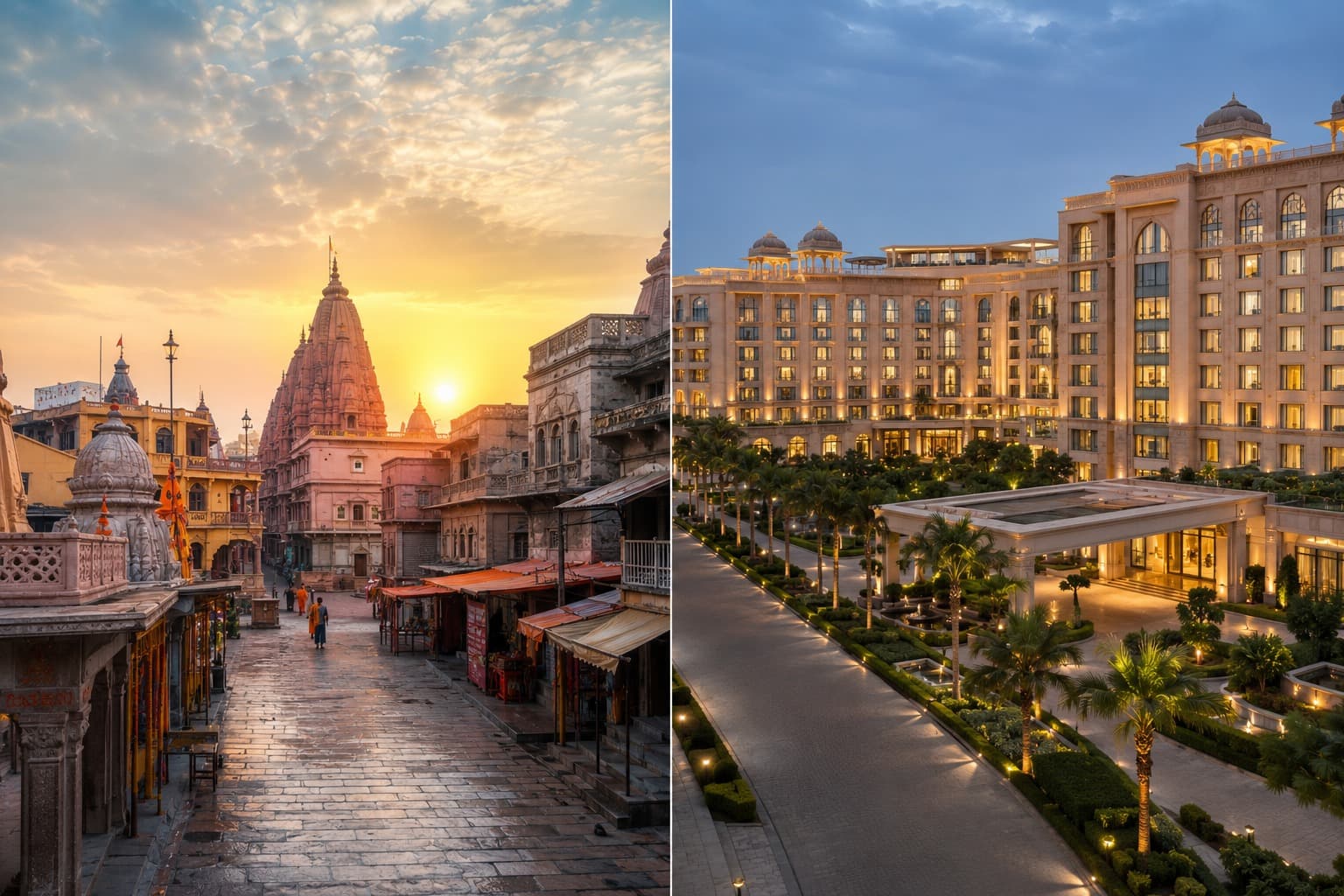
Religious and spiritual tourism in India has quietly become one of the fastest-growing travel segments, and infrastructure hasn't always kept pace with demand. Better expressways, new airports and metro expansion into smaller cities are changing that equation though. A move like Omaxe's hotel expansion essentially follows that infrastructure curve, betting that places like Ayodhya and Vrindavan will keep pulling in larger crowds for years to come.
Should Investors and Homebuyers Care?
For anyone tracking Omaxe as a stock or a developer, this diversification adds a layer worth watching. Hospitality, once stabilised, tends to generate steady annual revenue rather than the lumpy income pattern typical of residential sales. The company has indicated this business could eventually contribute close to ₹1,000 crore a year once it matures, though that naturally depends on execution, occupancy and how quickly operator partnerships come through.
Summary
Omaxe's entry into hospitality marks a significant shift for the company, with plans to invest around ₹6,200 crore in 19 hotels across Ayodhya, Vrindavan and other cities in five states over the next four to five years. Backed by rising religious tourism and improving infrastructure, the move reflects a broader industry trend toward integrated, mixed-use developments. With an asset-light operating model and projects already underway in Delhi, this expansion positions Omaxe to tap steady hospitality revenue alongside its core real estate business in the years ahead.
Video will be embedded from: https://www.youtube.com/watch?v=_sPNEUrMcgI