
Oberoi Realty Enters Malabar Hill: Impact on South Mumbai's Luxury Market
Summary
Oberoi Realty enters Malabar Hill via a cluster development scheme, boosting its luxury South Mumbai portfolio. This move signifies a structured supply of modern, large-format residences, potentially driving up property values in the exclusive neighborhood.

Introduction
There is a reason every serious real estate developer in India eventually trains its sights on South Mumbai. No other geography in the country combines prestige, scarcity, and wealth concentration quite like the island city's southern tip. And within South Mumbai, Malabar Hill sits at the very top of that hierarchy. So when Oberoi Realty formally inked a development agreement for a land parcel in Malabar Hill under the cluster development scheme, the market sat up and took notice. This is not just another redevelopment announcement. It signals where Mumbai's luxury segment is heading next.
What the Agreement Actually Says
The deal involves a land parcel measuring approximately 1,740 square metres located at Malabar Hill, Mumbai. Under the terms of the agreement, this site will be developed alongside adjoining societies as part of a cluster development scheme. That is an important detail. The project is not being treated as a standalone redevelopment of a single building. It is being structured as a consolidated scheme, which allows multiple adjacent plots to be planned together under a single framework.
Oberoi Realty's estimated free sale entitlement from this specific parcel is up to around 51,000 square feet of RERA carpet area. The final development will be governed by the Development Control and Promotion Regulations for Greater Mumbai, 2034, better known as DCPR 2034, along with all other applicable laws. Both the quantum of saleable area and the final project shape will depend on regulatory approvals as the process moves forward.
What Is a Cluster Development Scheme
For buyers unfamiliar with the term, a cluster development scheme under DCPR 2034 allows multiple old or dilapidated buildings in a defined area to be redeveloped together as one integrated project rather than in isolation. The relevant regulation is 33(9) of the DCPR. Under this framework, the minimum eligible plot size is 4,000 square metres in the city limits, and the permissible Floor Space Index can go up to 4.0 on the gross plot area.
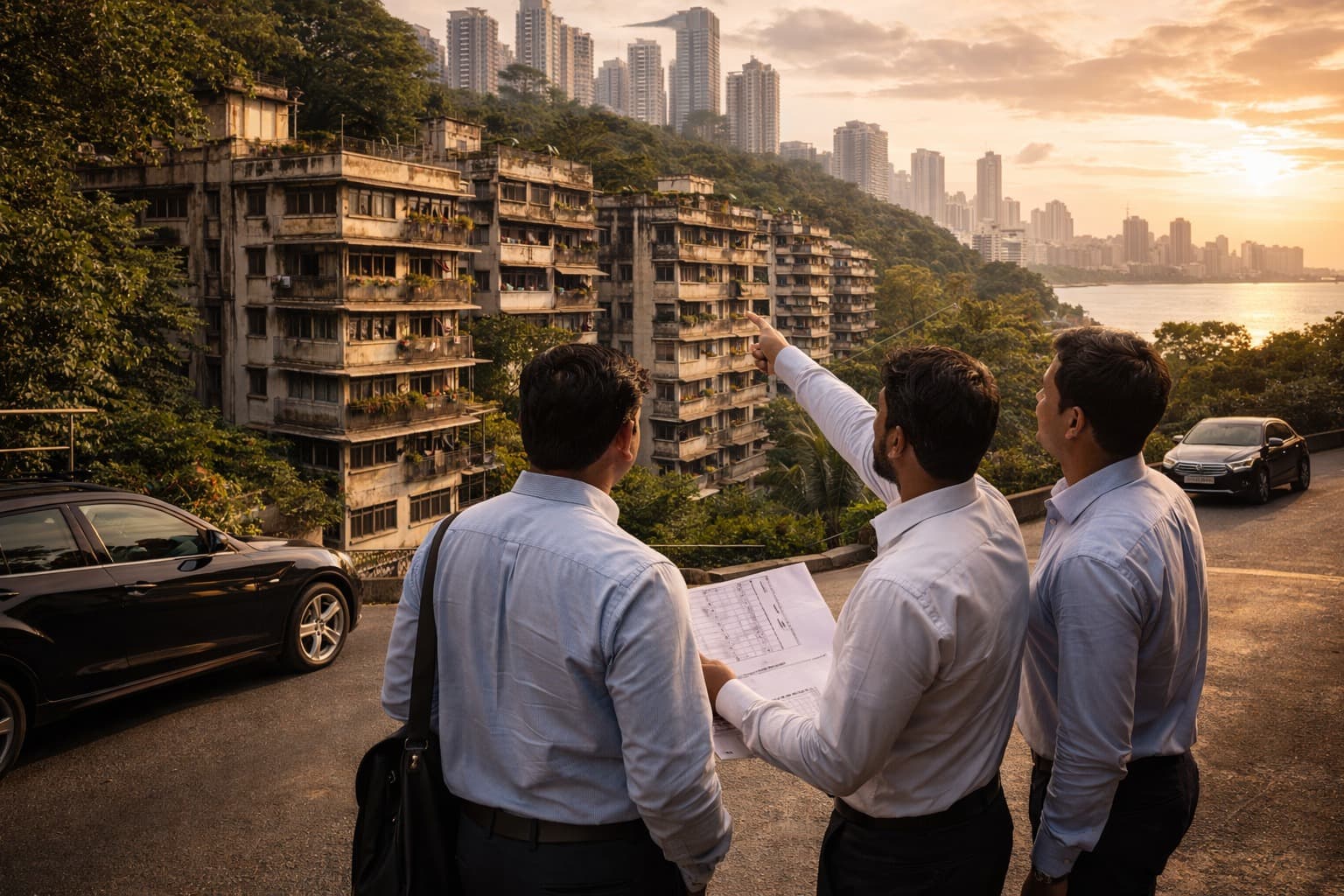
The logic behind cluster development is sound. Redeveloping a single old building in a dense area like South Mumbai often produces a tower that is too small to be commercially viable and too cramped to meet modern design standards. Bringing adjacent plots together allows for better planning, improved open spaces, proper infrastructure, and a development scale that actually makes sense. It also unlocks much higher FSI, which is the real reason developers pursue it.
Why Malabar Hill Matters So Much
Malabar Hill is not just a prestigious address. It is one of the most land-constrained luxury micro-markets anywhere in India. New greenfield supply simply does not exist here. Every significant new project in the neighbourhood must come through redevelopment, and that makes each agreement signed here genuinely consequential.
Property prices in the area reflect this scarcity clearly. Average transaction rates in Malabar Hill stood at approximately Rs 1,37,500 per square foot in the fourth quarter of 2025, up sharply from around Rs 98,566 per square foot in the same period a year earlier. Premium buildings and sea-facing apartments in the neighbourhood regularly command Rs 90,000 to Rs 1,60,000 per square foot, with some ultra-luxury inventory stretching beyond that range.
The area recorded 41 sale transactions in 2025 with a combined value of over Rs 1,000 crore. That is a thin volume but an enormous ticket size, which tells you exactly who is buying here and why.
Oberoi Realty's Broader South Mumbai Push
This Malabar Hill agreement does not stand alone. Oberoi Realty has been methodically building its South Mumbai landbank for some time. In March 2026, the company also signed a development agreement for two housing societies on Peddar Road, covering roughly 4,800 square metres with a potential free sale component of up to 1.40 lakh square feet. Earlier, the developer had tied up a project on Nepean Sea Road involving a parcel of approximately 4,706 square metres.
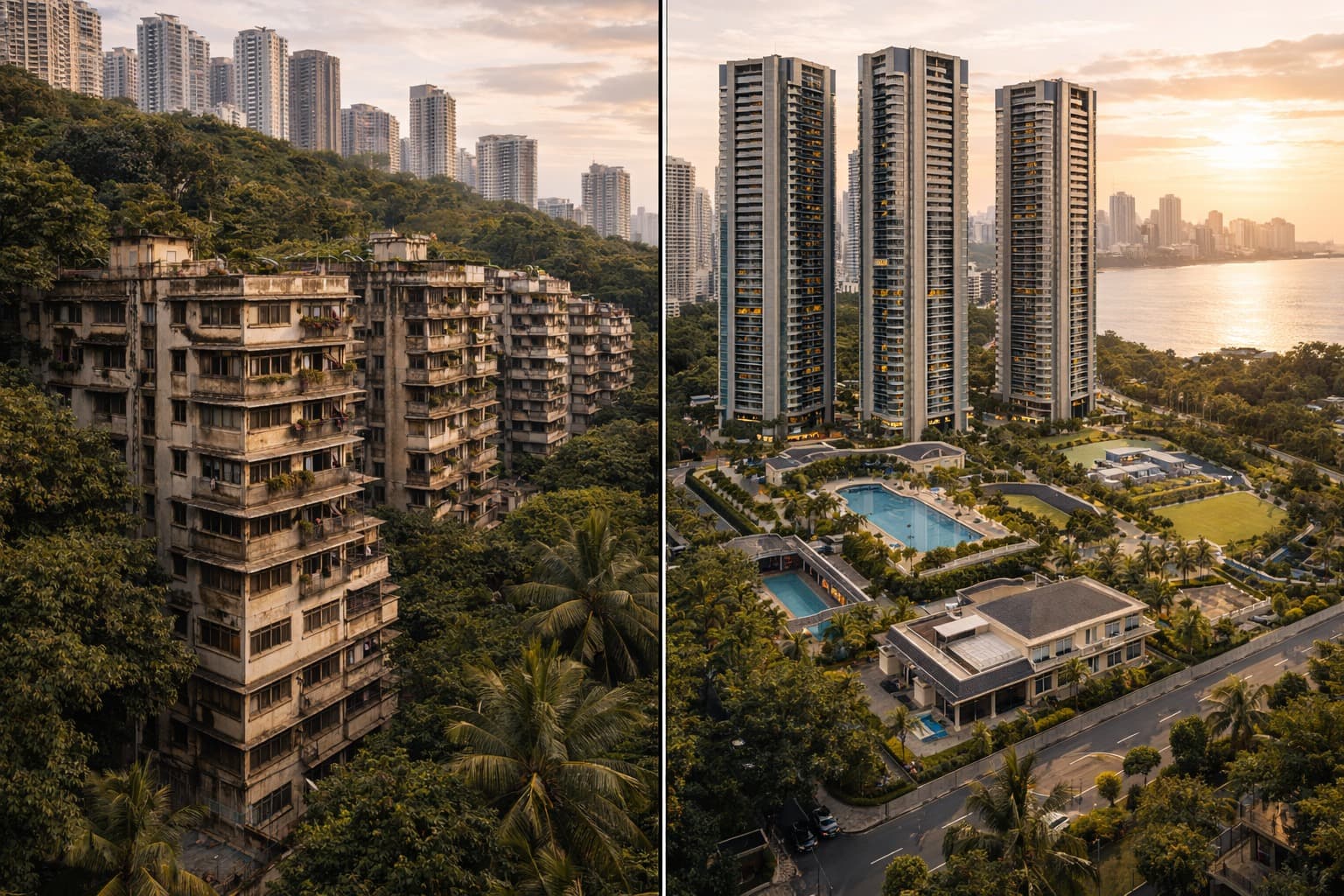
Read the pattern and it becomes clear. Oberoi Realty is assembling a concentrated luxury portfolio across the most premium residential belt in the country, from Malabar Hill to Peddar Road to Nepean Sea Road. These are not opportunistic one-off deals. They represent a deliberate strategy.
What It Means for Buyers and the Market
For buyers tracking luxury housing Malabar Hill Mumbai, this kind of developer activity carries a specific implication. Supply here has always been thin. But it is becoming even more structured. The new inventory that emerges from cluster development scheme projects like this one will be modern, large-format, and priced for ultra-high-net-worth buyers. Expect configurations of 4BHK and larger, designed to compete with the best the city has ever produced.
The entry of Oberoi Realty into Malabar Hill also raises the overall quality benchmark for the neighbourhood. That typically drives prices upward across existing inventory as well. Sellers of older apartments in the vicinity tend to revise their expectations upward when a marquee developer stakes its claim nearby.
Summary
Oberoi Realty inks agreement for redevelopment under cluster development scheme Malabar Hill, adding to its growing portfolio of premium South Mumbai projects. The 1,740 square metre parcel carries an estimated free sale entitlement of up to 51,000 square feet of RERA carpet area under DCPR 2034. With Malabar Hill property prices averaging Rs 1,37,500 per square foot in late 2025 and rising, luxury redevelopment projects in South Mumbai 2026 are emerging as some of the most valuable real estate plays in India. This deal is another confirmation of how developers are reshaping one of Mumbai's most irreplaceable neighbourhoods.