
Mumbai's Slum Rehabilitation: A 30-Year Story of Transformation
Summary
Mumbai's SRA program has rehoused nearly 2.84 lakh families in 30 years, with significant acceleration post-COVID. Coupled with MHADA, CIDCO, and PMAY, it forms the backbone of affordable housing in the region.

Introduction
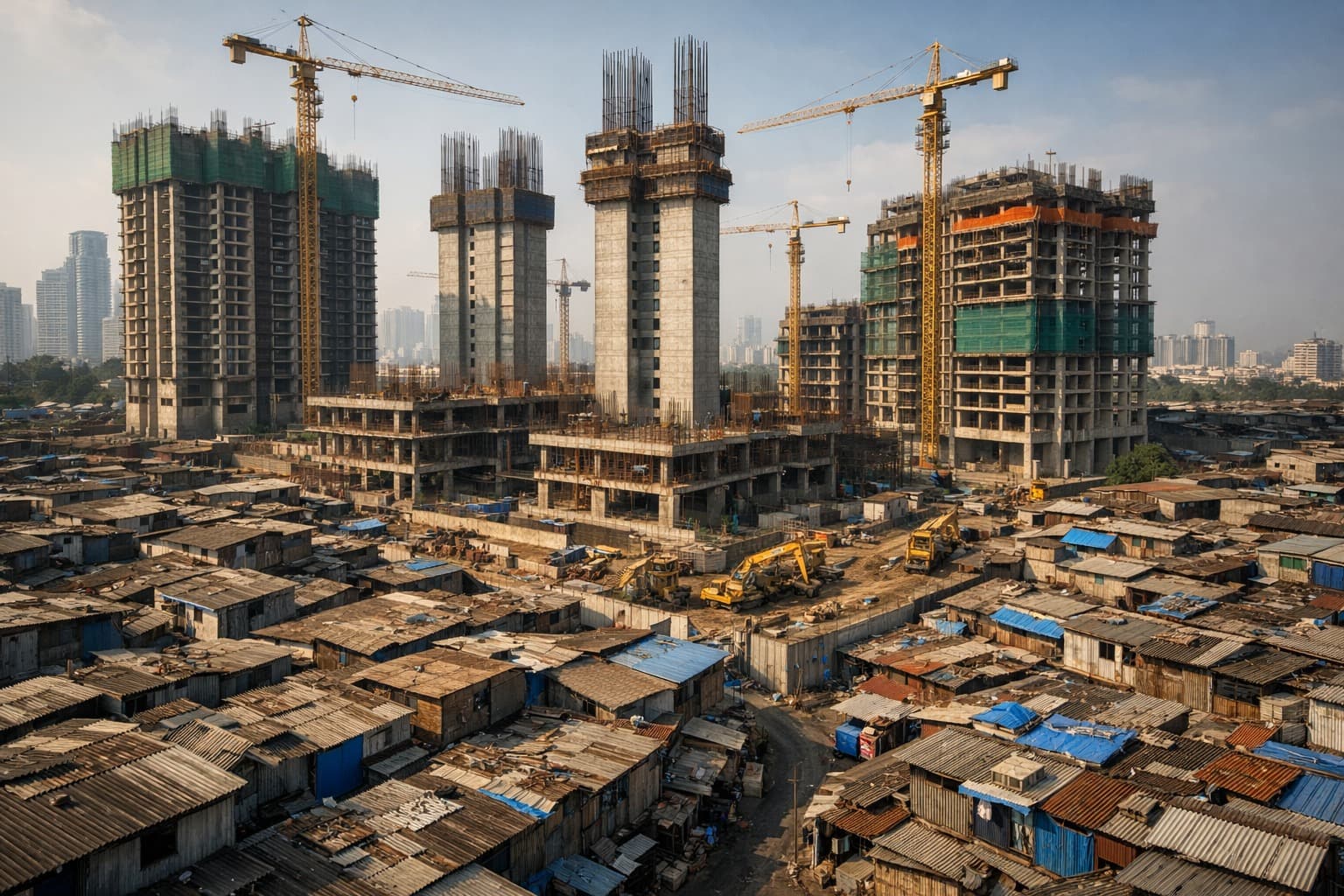
Three decades. 2,545 completed projects. Nearly 2.84 lakh families moved from cramped slum settlements into formal residential buildings across Mumbai. These numbers, drawn from the Maharashtra Economic Survey 2025–26, tell a story that rarely gets told in full: the slow, often messy, occasionally spectacular effort to rehouse urban India's most vulnerable residents using a model that charges developers with solving a problem the government alone could never afford to fix. SRA Mumbai has been running since 1995, and for all its well-documented friction, the scale of what it has delivered is worth sitting with before moving on to what remains undone.
What the Three-Decade Data Actually Shows
The pace of slum rehabilitation Mumbai has not been uniform across thirty years — and the variations are revealing. By December 2015, roughly 1,512 projects had been completed and 1.62 lakh families shifted to new housing. Fast-forward to August 2021, just after the worst of the pandemic, and those numbers had grown to 2,067 completions and 2.23 lakh families. By December 2025, the tally stood at 2,545 projects and 2,83,955 families rehabilitated.
The arithmetic here deserves attention. In the roughly four years between August 2021 and December 2025, approximately 478 additional projects were completed — representing close to 18% of the entire thirty-year total delivered in under five years. That is a meaningful post-COVID acceleration, whatever its causes.
Why the Post-COVID Acceleration Happened
This is worth examining rather than simply noting. Part of the explanation lies in projects that were already mid-construction when COVID hit and simply crossed the finish line once site access resumed. But part of it also reflects genuine policy urgency. The pandemic exposed the absolute inadequacy of cramped, shared-infrastructure living in dense urban settlements in ways that were impossible to ignore. State-level focus on clearing long-pending SRA projects Maharashtra sharpened after 2021 in ways that pre-pandemic bureaucratic timelines had not demanded.
The accelerated pace also reflects the consolidation of the developer pipeline. Larger, better-capitalised builders who entered slum redevelopment Mumbai projects in the 2015–2019 period began delivering completions in the 2022–2025 window, which is roughly the timeline a well-executed high-rise SRA project requires from tenement demolition to occupation certificate.
The Thane Picture
Mumbai city gets most of the attention, but the Maharashtra Economic Survey specifically highlights Thane's performance. All 51 SRA projects undertaken in Thane district have been completed, with 7,815 families moved to formal housing. A 100% completion rate across an entire district is administratively unusual and reflects both the smaller absolute scale of slum settlements in Thane compared to Mumbai and tighter coordination between local bodies and executing developers.
The MHADA and CIDCO Parallel Story
SRA operates through the private developer mechanism, but Mumbai's affordable housing supply picture requires reading three agencies together. The Maharashtra Housing and Area Development Authority, operating since 1977, has delivered 5.27 lakh dwelling units across Maharashtra up to November 2025. CIDCO, which has run a planned housing programme since 1970, has constructed 2.30 lakh units up to December 2025. Together with SRA's rehabilitated families, these three bodies account for the backbone of subsidised and affordable residential supply in one of the world's most expensive housing markets.
The combined output is substantial but still short of the need it was designed to address. Mumbai's slum population, even after three decades of SRA activity, continues to house a significant share of the city's residents. The gap is not a failure of the agencies so much as a reflection of the sheer scale of in-migration and informal settlement formation that has continued in parallel with every rehabilitation effort.
PMAY's Role and What the Numbers Say
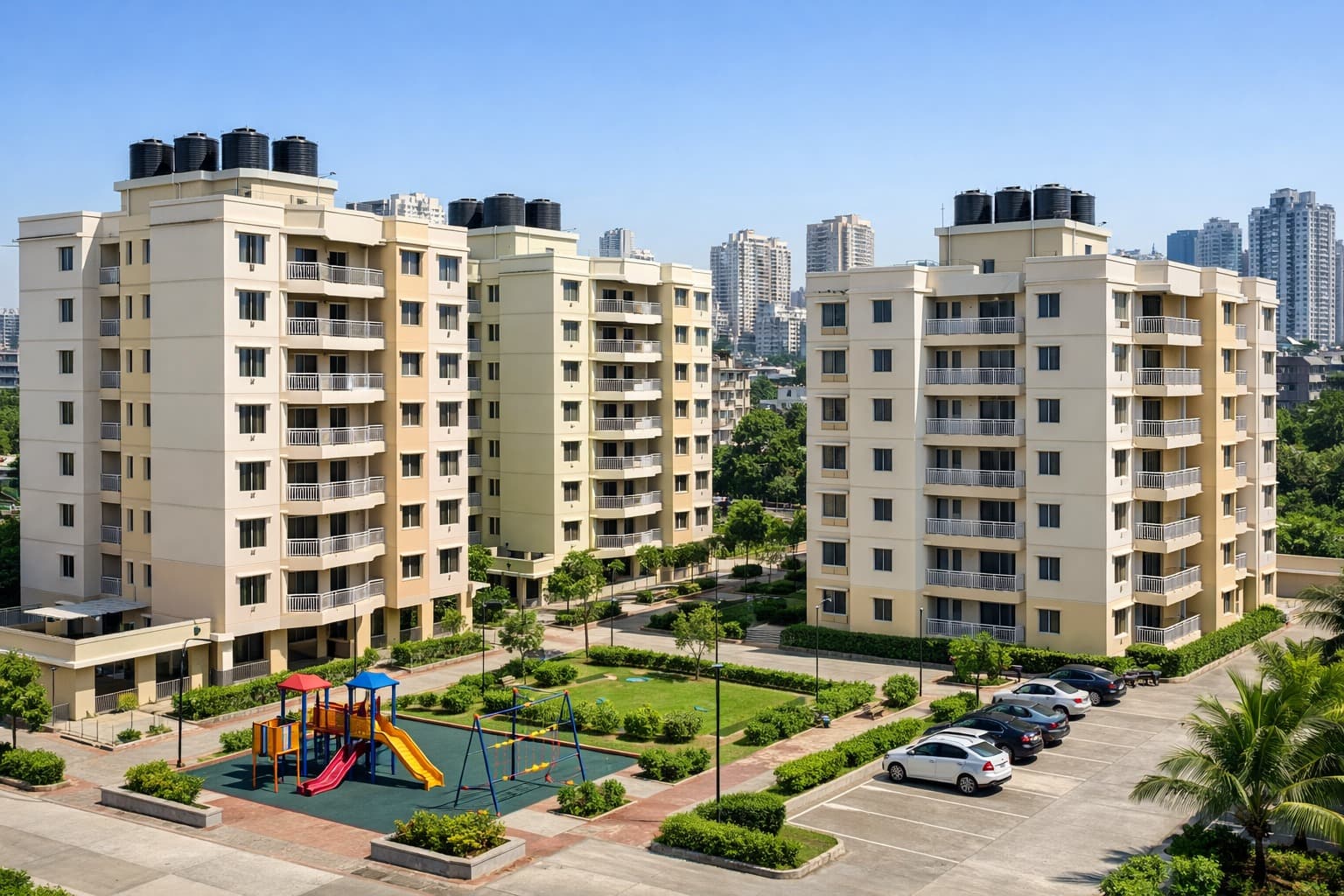
The Union government's PMAY Maharashtra programme targets construction of 19.40 lakh homes across 409 cities in the state. Up to December 2025, 10.15 lakh units have been sanctioned and 8.75 lakh completed. That is a meaningful delivery rate — over 85% of sanctioned units built — though the gap between the overall target and units sanctioned so far remains significant.
Under PMAY-Urban 2.0, Maharashtra has registered 3.21 lakh beneficiaries so far, with the central government disbursing Rs 246.93 crore in financial assistance. The 2.0 iteration of the scheme specifically targets urban poor and middle-income households, filling a segment that pure SRA activity does not reach: households that are not living in notified slums but also cannot access market-rate housing without subsidy support.
What This Means for Mumbai's Real Estate Market
Every SRA completion converts encumbered land into titled, mortgageable residential stock. The free-sale component of each project adds new supply to Mumbai's housing market, typically in mid-segment price bands, which directly affects affordability in localities where market-rate supply has otherwise been dominated by premium launches. Dharavi, Kurla, Chembur, Jogeshwari — the geographies where SRA Mumbai activity concentrates are also locations where infrastructure investment is heaviest, making each completed rehabilitation project a multiplied contributor to neighbourhood value.
Summary
Mumbai's slum rehabilitation programme completing 2,545 projects over three decades, with 18% of that total delivered in the five post-COVID years alone, marks a genuine if incomplete urban transformation. With 2,83,955 families rehoused through SRA, 5.27 lakh units from MHADA, 2.30 lakh from CIDCO, and 8.75 lakh PMAY Maharashtra homes built, the affordable housing architecture of Maharashtra is larger than most market commentary acknowledges — and it is still actively building.
Video will be embedded from: https://www.youtube.com/watch?v=w9UU_bc1pBw