
Mumbai's OC Crisis: BMC Amnesty Scheme Extended to Buildings Up to November 2016
Summary
Mumbai's OC crisis sees relief as BMC's amnesty scheme extends to buildings built before November 2016. Revisions include a later cut-off date, penalty waivers, and inclusion of hospitals/schools, offering a path to legal clarity for thousands.

Introduction
Lakhs of Mumbai residents have spent years living in a legal grey zone. Their buildings are occupied, their families have settled in, their children go to school nearby. But on paper, these homes do not officially exist as completed structures because their builders never obtained an Occupancy Certificate. That certificate, commonly called an OC, is the document that formally tells the city: this building is safe, compliant, and ready for habitation. Without it, residents cannot get home loans easily, resale values are depressed, and the constant anxiety of potential action by authorities never fully goes away.
The Maharashtra state government has now moved to address this long-festering problem. The Urban Development Department approved a revised BMC OC amnesty scheme in December 2025, extending coverage and offering meaningful relief to residents who had no hand in creating the compliance mess they now live with.
What Changed: The Cut-Off Date Extension
The most significant revision in the approved scheme is the extension of the eligibility cut-off date. Under BMC's original proposal, buildings built and occupied before 6 January 2012 were to be covered. The state Urban Development Department pushed that date forward by four years, bringing all buildings built and occupied before 17 November 2016 within the scheme's reach.
This single change dramatically expands the pool of eligible structures. Mumbai has an estimated 20,000 non-OC buildings that stand to benefit from this policy. Many of these are in densely populated residential neighbourhoods where middle-income families bought homes in good faith, only to discover years later that the builder had never completed the paperwork trail.
The Free FSI Penalty Waiver
The second major revision addresses a specific category of buildings where free FSI, which refers to floor space that builders received at no premium cost for amenities like flower beds, entrance lobbies, and utility spaces, was converted into habitable rooms. This happens more often than most buyers realise. A builder constructs what is technically a non-habitable utility area under the permitted FSI rules, then quietly converts it into a bedroom or a living room extension.

Under the original BMC proposal, such buildings would have faced a 50 percent discount on the applicable penalty when applying under the amnesty scheme. The UDD revised this to a complete waiver of the penalty, but only if the building applies within six months of the revised policy being formally introduced. After six months, the penalty applies in full. The six-month window is designed to create urgency and drive early registrations.
A senior UDD officer acknowledged that this revision represents a financial concession by BMC but explained that attracting maximum participation in the regularisation process was the priority.
Hospitals and Schools Now Included
The revised scheme also extends eligibility to hospitals and school buildings, which were not part of the original BMC proposal. This is a practically important addition. Several educational institutions and medical facilities in Mumbai operate out of structures that predate modern compliance requirements and never received occupancy certificates. Bringing them within the scheme allows these essential services to regularise their status without demolition or displacement threats.
Critically, the UDD has drawn a firm line on commercial constructions. No commercial building will be considered for regularisation under this amnesty scheme. The programme is limited to residential buildings, hospitals, and schools.
Partial OCs for Individual Flat Owners
One of the more buyer-friendly elements in the revised scheme is the UDD's directive to BMC to develop a separate procedure, including an online system, for issuing Partial Occupancy Certificates to individual flat owners. This matters because in many large housing societies, the entire building's OC is held hostage by disputes involving only a handful of floors or units. A resident on the seventh floor who has done nothing wrong cannot get OC because the developer violated norms on the fourteenth floor.
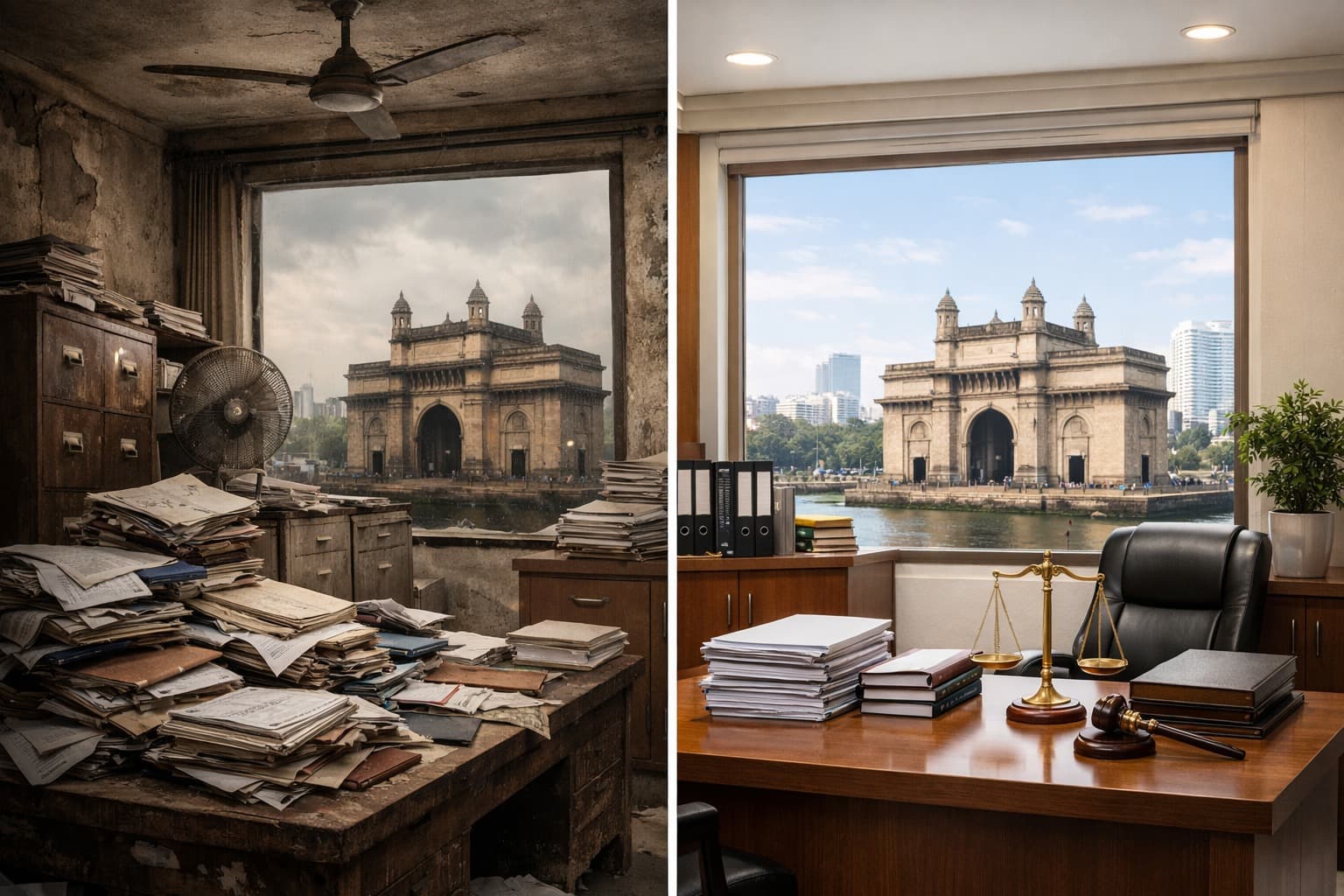
The partial OC mechanism would allow individual buyers to regularise their specific unit's status independently. The UDD has also asked BMC to delink the OC of rehabilitation buildings from the sale buildings in redevelopment projects, which is another long-standing source of gridlock that has kept thousands of redevelopment project residents in uncertainty.
A Firm Warning Against Misuse
The UDD's communication to BMC was explicit on one point. The OC amnesty scheme is designed to regularise genuine irregularities through a legal process, not to whitewash genuinely unauthorised constructions. BMC has been told to take proper precautions and ensure the scheme is not used as a backdoor to legitimise illegal structures that were never sanctioned at all.
Additionally, the 50 percent premium discount and the penalty concession within the first six months are available only to flats with a carpet area up to 80 square metres. Larger units do not qualify for the discounted rate.
BMC has been asked to prepare detailed guidelines and upload them publicly. No separate government resolution will be issued. The corporation will implement the scheme based on the UDD's approval and directives.
Summary
The BMC amnesty scheme to grant OC to buildings built before November 2016 is the most significant attempt yet to resolve Mumbai's long-running non-OC building crisis. With the cut-off date extended from January 2012 to November 2016, over 20,000 buildings now fall within scope. The free FSI penalty waiver within the first six months, the inclusion of hospitals and schools, and the proposed partial occupancy certificate system for individual flat owners make this a genuinely comprehensive policy. For Mumbai residents who have lived without OC through no fault of their own, this scheme offers the clearest path to legal clarity their buildings have ever had.
Video will be embedded from: https://www.youtube.com/watch?v=GDXDYhAvOH0