
Mumbai's Cluster Redevelopment: Unlocking 800-1,000 Acres of Opportunity
Summary
Mumbai's cluster redevelopment is unlocking 800-1,000 acres, offering a significant land supply boost. This initiative provides developers access to prime locations and buyers modern homes in established neighborhoods, revitalizing the city's urban landscape.

Mumbai's 800 to 1,000 Acre Redevelopment Story: What MHADA's CEO Just Told the Market
Introduction
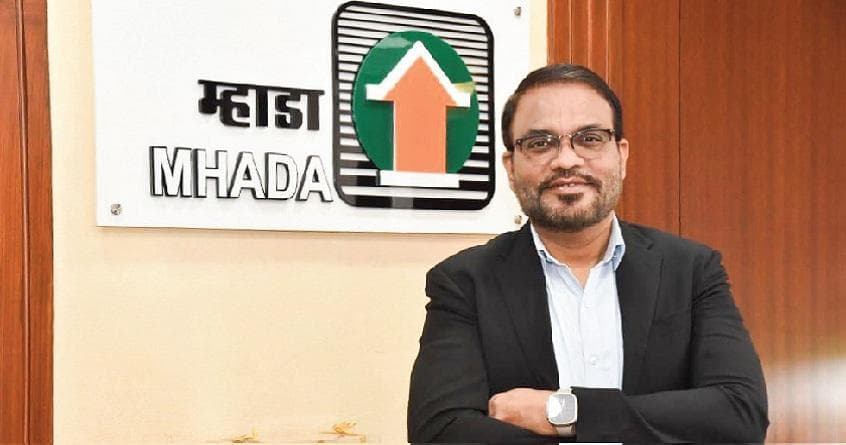
Land is Mumbai's most permanent constraint and most discussed problem. Yet in the past twelve months, between 800 and 1,000 acres of developable land has been unlocked within the city limits through Mumbai cluster redevelopment, according to MHADA CEO Sanjeev Jaiswal. That is not a small number. In a city where a single acre in a mid-suburb commands hundreds of crores, unlocking nearly a thousand acres through policy-driven redevelopment represents one of the most consequential land supply events in Mumbai real estate in years. Understanding what cluster redevelopment is, how this land has opened up, and what it means for buyers and developers is now essential reading for anyone watching the MMR market.
What Cluster Redevelopment Actually Means
Standard redevelopment in Mumbai operates building by building. A single old structure reaches a consent threshold among its residents, a developer steps in, and a new building replaces it. The process is slow, legally contentious, and produces isolated new towers surrounded by unchanged decay.
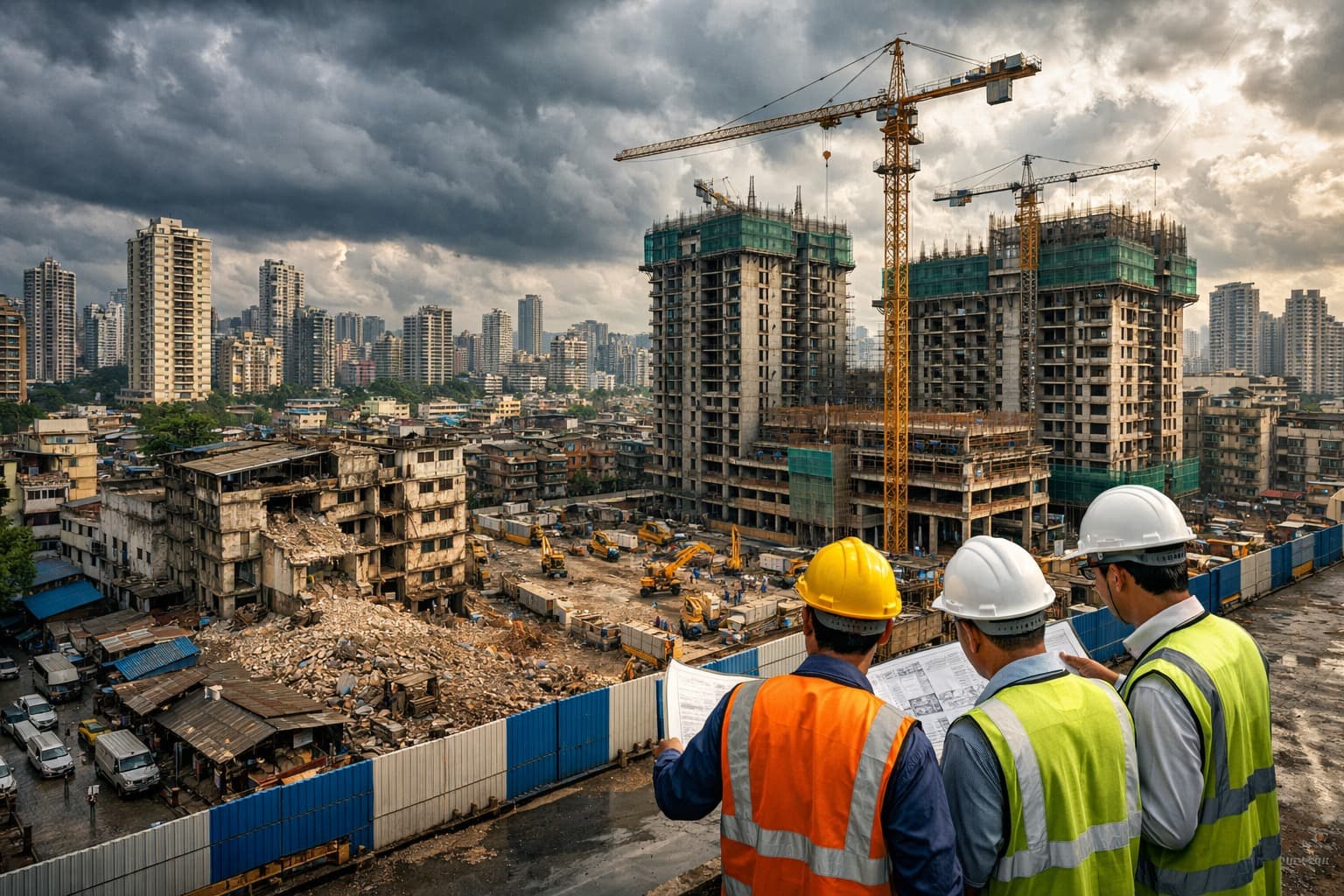
Cluster redevelopment policy Mumbai works differently. It aggregates multiple old and dilapidated buildings across a defined precinct into a single redevelopment scheme. Instead of one tower replacing one building, an entire neighbourhood pocket is replanned together. Roads widen. Open spaces are created. Infrastructure is upgraded at the precinct level rather than the plot level. The outcome is urban renewal rather than piecemeal replacement, and the developable land created in the process is substantially larger than any single-building scheme could produce.
The 800 to 1,000 Acre Headline: What It Represents
MHADA CEO Sanjeev Jaiswal's statement that 800 to 1,000 acres have been opened up in the past year is a measure of how much land has become eligible and actionable for cluster redevelopment schemes during that period. This includes cessed buildings under MHADA's jurisdiction, old private layouts meeting age and condition criteria, and precincts where requisite resident consent has been achieved or is close to threshold.
MHADA Mumbai redevelopment pipeline of this scale translates directly into future housing supply. Given that Mumbai's most acute affordability crisis sits precisely in the central and inner suburban areas where most of this ageing building stock is concentrated, the land unlocked here has the potential to deliver hundreds of thousands of new homes over the next decade. And critically, a portion of every cluster redevelopment scheme must be reserved for affordable and rehabilitation housing, meaning this is not purely a premium supply story.
Where This Land Is Located
The geography of Mumbai's ageing building stock concentrates in specific pockets. Dharavi, Kurla, Byculla, Worli, Parel, Dadar, Sion, Chembur, and large swathes of the eastern suburbs from Mulund down through Ghatkopar carry dense clusters of pre-1970 construction that qualifies for redevelopment schemes. Many of these neighbourhoods sit on land whose locational value, given proximity to the metro network and employment centres, is extraordinary relative to what the current built environment suggests.
Mumbai land supply 2026 from cluster redevelopment is therefore not land at the city's periphery. It is land embedded in established, connected, high-demand urban fabric. When that land gets redeveloped with modern construction, the resulting projects sit in locations that new peripheral supply simply cannot replicate.
What It Means for Developers
For developers, cluster redevelopment represents access to well-located land without open market acquisition costs. The trade-off is complexity. Managing consent across dozens of tenants, navigating transit accommodation logistics, and meeting MHADA's rehabilitation obligations requires operational depth that not every developer possesses. But for those with the capability, the financial upside from the free-sale component of a well-located cluster scheme can be transformative.
Large and mid-sized developers with established redevelopment verticals have been building dedicated cluster redevelopment teams for the past two to three years precisely in anticipation of this pipeline opening up. The MHADA CEO's confirmation that 800 to 1,000 acres is now actionable will accelerate that activity meaningfully in 2026.
What It Means for Buyers
For end-use buyers, cluster redevelopment projects in established Mumbai neighbourhoods offer something the new peripheral market cannot: address quality combined with modern construction. A new apartment in a cluster-redeveloped precinct in Dadar or Sion or Chembur places the buyer in a genuinely central, infrastructure-rich location at prices that, while not cheap, remain more accessible than comparable new construction in premium South Mumbai or Bandra.
Mumbai redevelopment 2026 buyers should verify MHADA approvals, check the developer's track record in rehabilitation projects specifically, and confirm that transit accommodation and timeline commitments are documented in the agreement. Cluster schemes carry longer gestation periods than clean-site projects, and buyers entering at launch need to factor that into their planning.
The Broader Policy Signal
The fact that a senior MHADA official is publicly quantifying land unlocked through cluster redevelopment suggests an institutional confidence in the policy's momentum. Past redevelopment cycles in Mumbai were characterised by policy uncertainty, consent disputes, and project stalls. The current environment, with cleaner RERA oversight and more defined cluster redevelopment regulations, appears to have shifted that dynamic enough for MHADA to present progress metrics with confidence.
Summary
Mumbai cluster redevelopment unlocking 800 to 1,000 acres in a single year is the most significant Mumbai land supply story of 2026. MHADA CEO Sanjeev Jaiswal's statement confirms that ageing building stock in central and inner suburban Mumbai is finally converting into actionable development pipeline at meaningful scale. For developers it is a well-located land opportunity. For buyers it is a path to modern housing in established neighbourhoods. And for the city, it is the closest thing to a genuine housing supply solution that does not require building on farmland at the urban fringe.
Video will be embedded from: https://www.youtube.com/watch?v=BOdrtmsU8gs