
Mumbai Real Estate Update: How Industrial Land Redevelopment is Reshaping the City
Summary
Mumbai's industrial land is being redeveloped into modern real estate, reshaping the city. From mills to factories like Parle-G, land monetization drives commercial and mixed-use projects, supported by policy changes and rising values.

Introduction
Mumbai is a city that constantly reinvents itself to respond to limited land availability and rising urban demand. As manufacturing activities move out of the city, large industrial land parcels are being redeveloped into modern real estate projects. This shift is redefining the skyline and the economic fabric of the city. The latest example is the planned redevelopment of the Parle-G factory in Vile Parle, highlighting how Mumbai redevelopment is entering a new phase rooted in land monetisation.
Mumbai’s Industrial Past and Urban Evolution
For decades, Mumbai’s economy was powered by mills, factories, and warehouses spread across the island city and suburbs. These industrial zones supported employment and trade, shaping neighbourhoods around them. Over time, rising land values and policy changes reduced the viability of manufacturing within city limits. This transition created opportunities for industrial land Mumbai to be reused for housing, offices, and mixed-use developments, aligning with the city’s service-led growth model.
From Textile Mills to Real Estate Landmarks
The most visible chapter of mill land redevelopment unfolded in Central Mumbai. Areas like Lower Parel, Worli, Mahalaxmi, and Prabhadevi witnessed old textile mills transform into premium commercial and residential hubs. Projects developed on former mill land introduced office towers, luxury apartments, retail malls, and hotels. This wave established a blueprint for future redevelopment and became a defining feature of Mumbai real estate over the past three decades.
The Parle-G Factory Redevelopment in Vile Parle
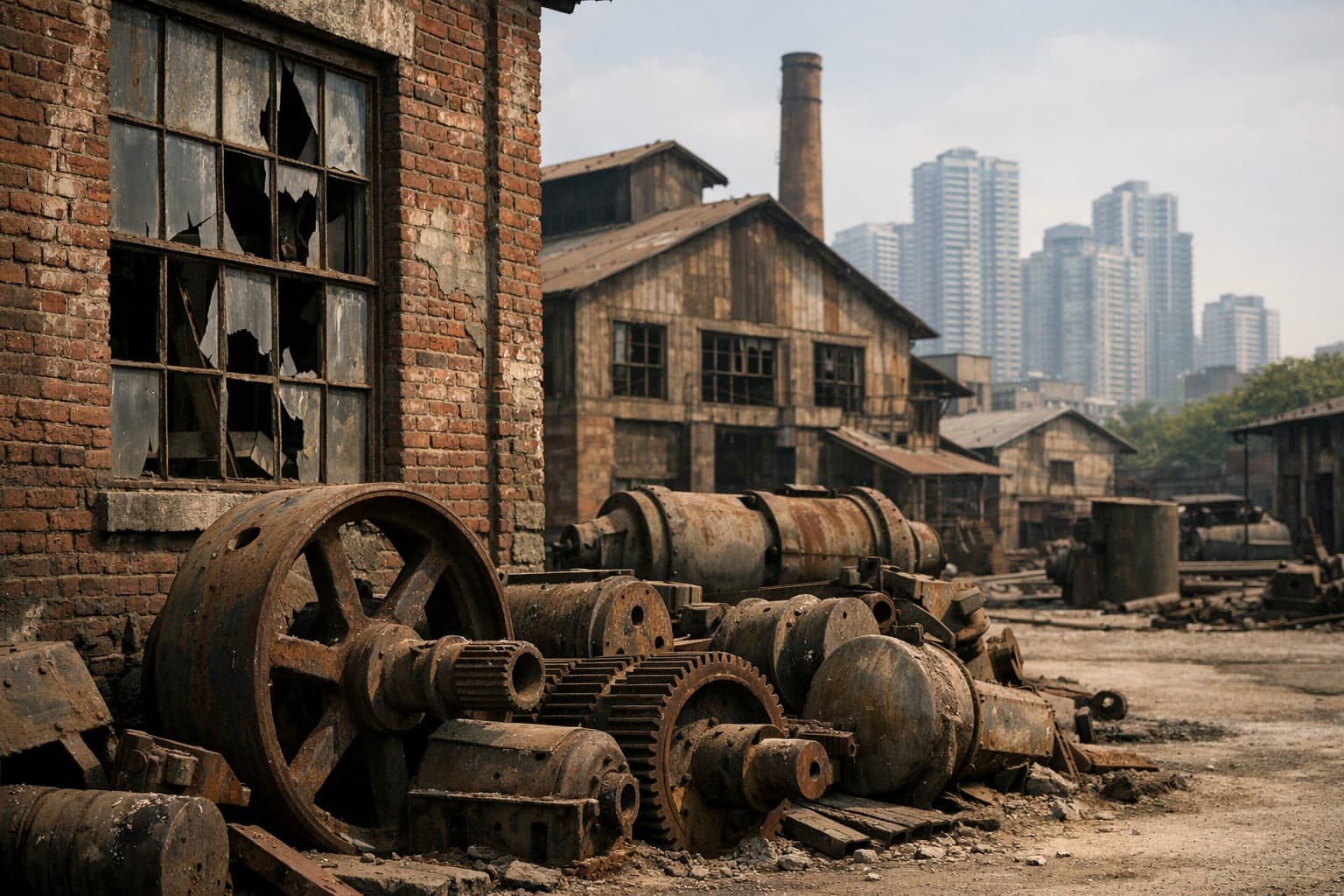
The latest example of Parle G factory redevelopment reflects a similar transformation outside the traditional mill belt. The historic Parle Products manufacturing campus in Vile Parle East, where India’s iconic biscuit was first produced, is proposed to be redeveloped into a commercial complex. Spread across 5.44 hectares, the site is planned to accommodate substantial built-up space, marking a significant case of factory land redevelopment in suburban Mumbai.
Project Scale and Development Details
The proposed project includes a total built-up area exceeding 1.9 lakh square metres. This comprises FSI and non-FSI construction, with multiple buildings featuring basement levels, commercial floors, and structured parking. Retail outlets, offices, restaurants, and food courts are planned within the complex. The estimated project cost is close to ₹4,000 crore, reinforcing the scale at which old factories redevelopment Mumbai is being undertaken today.
Policy Changes Enabling Redevelopment
The rise of Mumbai industrial redevelopment news is closely linked to changes in development control regulations. These policy reforms unlocked redevelopment potential by allowing higher floor space and mixed-use planning on large plots. Owners of industrial land were incentivised to monetise assets that were no longer economically efficient for manufacturing. This regulatory environment continues to support mill to mixed use development Mumbai across several districts.
Expansion Beyond Textile Mills
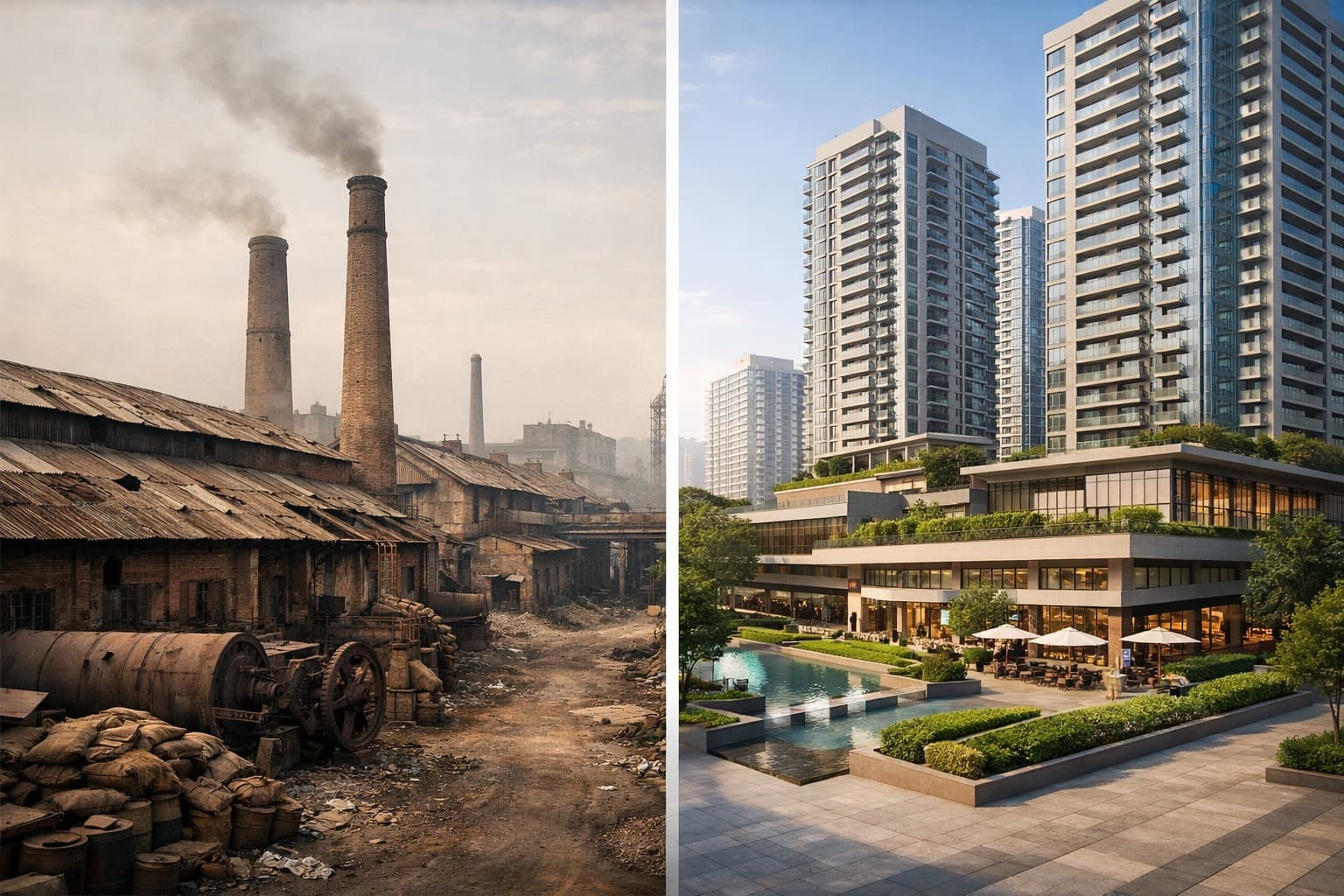
Redevelopment is no longer limited to cotton mills. Across Andheri, Kurla, Goregaon, and Mulund, biscuit factories, engineering units, and warehouses have been converted into IT parks, co-working hubs, and residential towers. This reflects urban transformation Mumbai, where land once dedicated to production is repurposed for consumption, services, and knowledge-driven industries. The shift mirrors global urban trends seen in other major financial cities.
Impact on Urban Infrastructure and Housing
Large-scale redevelopment plays a crucial role in modernising urban infrastructure. New projects bring better road access, upgraded utilities, and improved public spaces. At the same time, they help address housing demand by unlocking centrally located land. Through Textile mill land monetisation in Mumbai, the city has been able to accommodate population growth without expanding its physical boundaries.
Future Redevelopment Opportunities
Experts believe the next phase of redevelopment will focus on railway land, port trust land along the eastern waterfront, and salt pan parcels in suburban areas. These large tracts offer potential for planned urban districts rather than isolated projects. The Future of industrial land redevelopment in Mumbai is expected to align closely with upcoming infrastructure projects and satellite city development, enabling industries to relocate while freeing city land.
Economic Logic Behind Land Monetisation
As infrastructure improves in peripheral regions, manufacturing, logistics, and warehousing can operate more efficiently outside Mumbai. This makes it financially sensible for owners to monetise prime city land. According to industry experts, How industrial land is reshaping Mumbai real estate is driven by economics rather than sentiment, as land values far exceed returns from traditional industrial use.
Long-Term Impact on Mumbai’s Identity
While redevelopment alters the city’s physical character, it also reflects Mumbai’s adaptive nature. By reusing legacy assets, the city balances heritage with progress. Projects like Parle G Vile Parle commercial redevelopment project represent continuity through transformation, ensuring that historical sites remain relevant within a modern urban framework.
Summary
Mumbai’s redevelopment journey shows how industrial land is being transformed to meet modern urban needs. From textile mills in Central Mumbai to factory sites like the Parle-G campus in Vile Parle, legacy industrial parcels are being redeveloped into commercial and mixed-use projects. Supported by regulatory reforms and rising land values, this shift is reshaping the city’s skyline. As manufacturing moves outward, land monetisation within Mumbai is expected to continue, driving future real estate growth and infrastructure-led urban transformation.
Video will be embedded from: https://www.youtube.com/watch?v=jHJAHPhX4o8