
MMRDA's Three Land Options for Mumbai 3.0: What This Means for Landowners and Investors
Summary
MMRDA's Mumbai 3.0 offers landowners three progressive options: mutual consent, FSI/TDR, or land pooling (22.5% developed land return). This transforms urban development into a participatory model, attracting FDI to create a new Raigad urban hub.

Introduction
Urban development in India has long carried a difficult reputation among the people it displaces.
Land acquisition has historically been contentious, adversarial, and slow. Farmers and landowners who found themselves in the path of a planned project often had little say and little recourse.
Mumbai 3.0 is trying something different.
Following a Government Resolution dated March 16, 2026, the Maharashtra government designated MMRDA as the New Town Development Authority for a 323.44 square kilometre zone spanning 124 villages across Uran, Panvel, and Pen talukas in Raigad district. And instead of the traditional one-size-fits-all acquisition approach, MMRDA has introduced three distinct compensation options that give landowners real choices about how they participate in the project.
What Is Mumbai 3.0
Mumbai 3.0 is the vision for a third planned urban node in the Mumbai Metropolitan Region, following the original island city and Navi Mumbai.
The catalyst is the Atal Bihari Vajpayee Sewri-Nhava Sheva Atal Setu, the iconic trans-harbour link that has fundamentally changed the travel time between South Mumbai and Raigad. What was once a 60-plus minute journey now takes 20 to 25 minutes. This connectivity shift has made the previously peripheral Raigad coastline a realistic extension of the Mumbai urban ecosystem.
The Mumbai 3.0 zone is massive: 323 square kilometres, 124 villages, and a vision for a planned urban ecosystem with industrial hubs, residential zones, commercial districts, and infrastructure built from scratch. Forest land, Coastal Regulation Zones, and a 250-metre buffer around Pen Municipal Council limits are excluded from the MMRDA's authority.
Online consent submissions from landowners began on April 27, 2026, with Aadhaar and land ownership records as required documents.
The Three Compensation Options
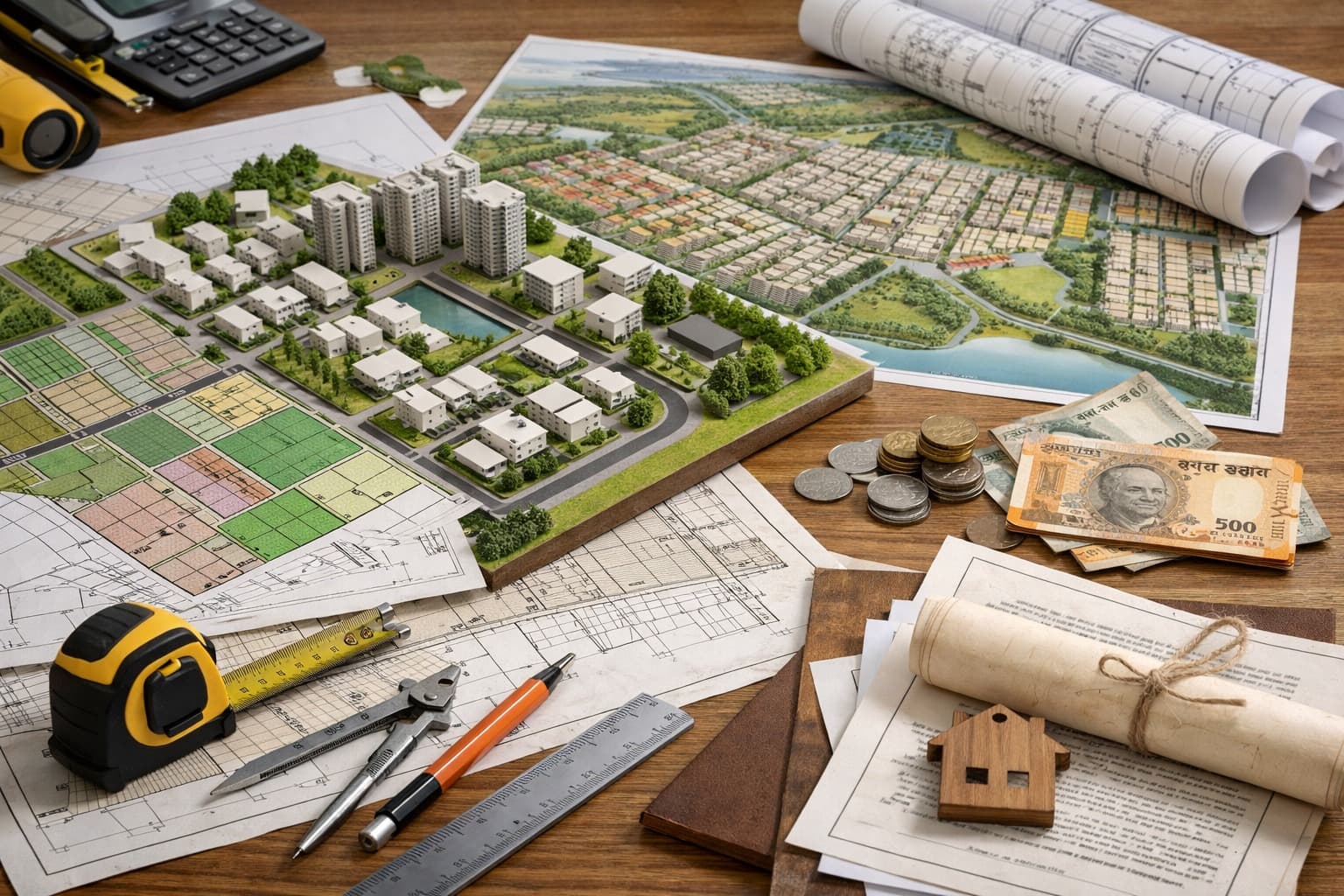
MMRDA has structured three pathways for landowners, moving away from compulsory acquisition as the default.
The first option is mutual consent-based acquisition. The government acquires land through negotiated agreement with the landowner. Compensation is determined mutually under applicable legal provisions. This is a participatory version of traditional acquisition, where the landowner has bargaining power at the table rather than simply receiving a statutory notice.
The second option is compensation through development rights, specifically FSI or TDR. Instead of cash, landowners receive Floor Space Index entitlements or Transferable Development Rights that can be used to construct additional built-up area on retained land or sold in the open market to developers. This option keeps the landowner invested in the local real estate economy rather than converting their land asset entirely into cash.
The third option is the most transformative: the land pooling model.
The Land Pooling Model: A Genuine Shift
Under Mumbai 3.0's land pooling model, landowners who voluntarily contribute their land receive 22.5 percent of the developed land back.
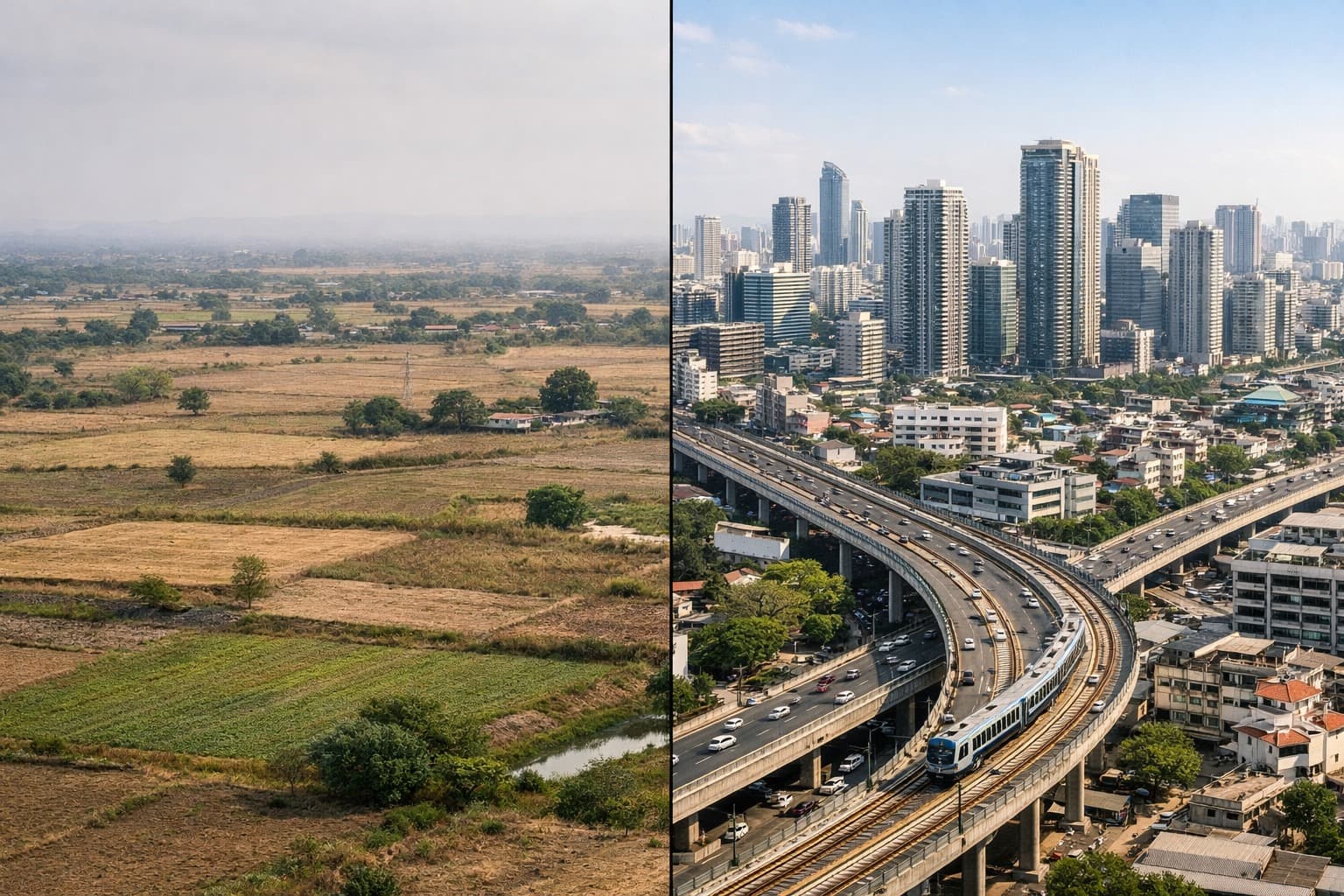
This follows the established CIDCO model that was used in the creation of Navi Mumbai decades ago. The landowner surrenders raw agricultural or undeveloped land. MMRDA develops infrastructure, roads, services, and the urban framework. The landowner then receives back 22.5 percent of that same land, now developed, serviced, and potentially far more valuable than the original parcel.
Importantly, geography is preserved. Landowners in Uran and Panvel receive their developed land allocation in Uran. Landowners in Pen receive their allocation in Pen. This ensures that families are not displaced from their economic and social geography and can benefit from appreciation in the specific area where they are rooted.
For landowners holding less than enough land to generate 40 square metres of developed plot, direct cash compensation is provided instead. This protects small farmers from receiving a plot too small to be practically useful.
What This Means for Real Estate and Investors
The real estate implications of this policy are significant.
Mumbai 3.0's land framework is designed to attract FDI at scale. Investors bringing foreign direct investment receive priority in land allotment. Eligible investors must acquire a minimum of 100 acres and commit to at least ₹250 crore per 100 acres within four years. This signals that the project is designed to attract industrial parks, logistics hubs, technology campuses, and large-format commercial development alongside residential supply.
For residential buyers, the project promises larger homes at accessible prices in a planned environment that Mumbai's constrained core cannot offer.
Areas already benefiting from Atal Setu proximity, specifically Uran, Dronagiri, Panvel, and surrounding nodes, are the first zones expected to see appreciable impact. Panvel property prices have already risen approximately 74 percent since 2021, driven substantially by airport and trans-harbour link sentiment.
A high-level committee led by the Additional Chief Secretary of the Urban Development Department has been constituted to resolve disputes between MMRDA and landowners during implementation.
Summary
MMRDA's three-option land compensation framework for Mumbai 3.0, established via a Government Resolution in March 2026, marks a genuine policy evolution in Indian urban development. By offering mutual consent-based acquisition, FSI and TDR-based compensation, and a land pooling model that returns 22.5 percent of developed land to participating landowners, the project converts potential adversaries into stakeholders. For the real estate market across Uran, Panvel, and Pen, the successful execution of this model would unlock one of the largest planned urban zones India has ever attempted.
Video will be embedded from: https://www.youtube.com/watch?v=S8vbG_8qVEU