
Maharashtra's Top 5 Tier III Cities Where Real Estate Is Quietly Having Its Moment
Summary
Beyond Mumbai and Pune, Maharashtra's Tier III cities like Nashik and Solapur are emerging real estate hotspots. Driven by industrial growth and infrastructure, these affordable markets offer promising investment opportunities for savvy buyers in 2026.

Introduction
Maharashtra's real estate story has always been told through two cities. Mumbai and Pune dominate every conversation, every developer's launch calendar, and every investor's mental map of the state. But something has been shifting in the last two years that is difficult to ignore. Five cities sitting well beyond the Mumbai-Pune axis have started generating transaction volumes, developer interest, and buyer inquiries that would have seemed unlikely half a decade ago. Maharashtra tier 3 cities are attracting genuine capital from first-time buyers, NRI investors, and regional developers who recognise that the fundamentals supporting these markets are not speculative. They are structural. And they are only getting stronger in 2026.
Nashik: From Vineyards to Real Estate Hotspot
Ask most people what Nashik is known for and they say grapes, wine, and the Kumbh Mela. What they might not say is that Nashik real estate has been one of Maharashtra's quietly consistent performers for several years. The city's property prices sit between Rs 4,500 and Rs 6,500 per square foot in established residential areas, offering entry points that Mumbai buyers find almost disorienting after their home market.
The Nashik-Pune Expressway has transformed the city's connectivity profile. Industrial growth in zones around Sinnar and Satpur continues adding employment. And the Maharashtra government's push to attract IT investment to tier 2 and tier 3 cities under its decentralisation policy has Nashik on several companies' shortlists. Ready reckoner rates here saw a 7.3% revision in FY26, which confirms the government's own reading of where market values are heading.
Chhatrapati Sambhajinagar: Industrial Transformation in Progress
The city formerly known as Aurangabad has been quietly rebranding itself in every sense. Aurangabad property investment narrative has shifted decisively from heritage tourism to industrial manufacturing. The Delhi Mumbai Industrial Corridor's Shendra-Bidkin AURIC node sits at the city's doorstep and has moved from announcement to actual land allotments with companies beginning production. That is a different story from the typical infrastructure promise.
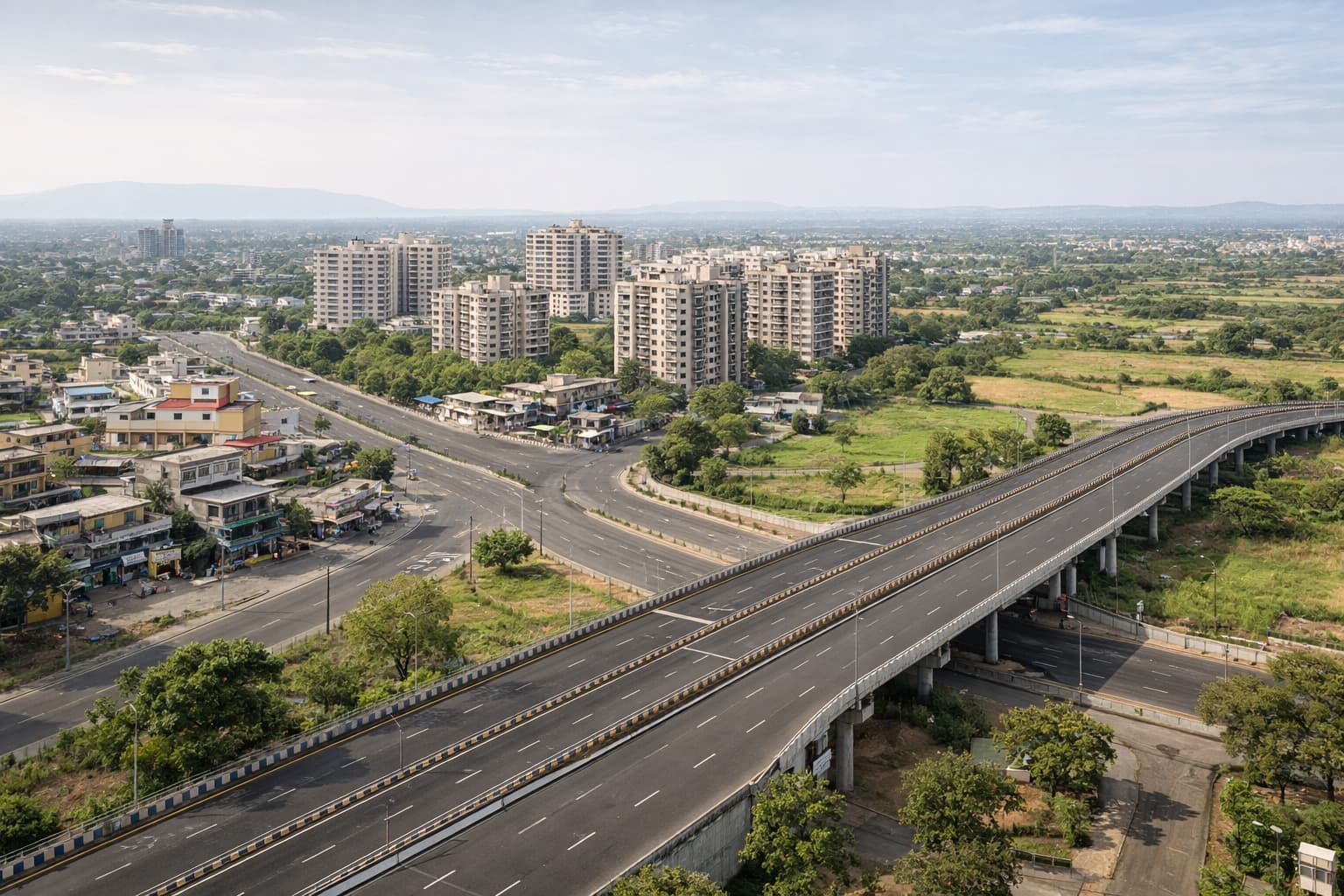
Automotive and pharma manufacturing have anchored employment here for years. The DMIC addition creates a new demand layer from management-level workers who need quality housing within commuting distance. Property prices in Cidco, Garkheda, and the Beed Bypass belt remain attractively priced between Rs 3,500 and Rs 5,500 per square foot. The buyers entering now are ahead of the appreciation curve that industrial employment consistently creates in its surrounding residential markets.
Kolhapur: The Southern Maharashtra Market Nobody Is Watching Closely Enough
Kolhapur property investment has a very specific buyer base: families with roots in the city, NRIs from the Maratha diaspora, and investors who understand that a city of over six lakh people with strong agriculture, manufacturing, and education sectors is not going to stay underpriced indefinitely. Property values between Rs 3,800 and Rs 5,300 per square foot across the city's established residential areas make it one of Maharashtra's most affordable organised residential markets by any comparison.
Kolhapur's infrastructure has been improving steadily. The National Highway connecting it to Pune and Mumbai is better than it has ever been. The city's private education and healthcare ecosystem has matured into genuine quality options that families no longer need to leave for. Ready reckoner rates rose 5% in FY26, a modest figure that understates the actual market movement visible in registered transaction data.
Solapur: The Textile Town Rewriting Its Investment Story
Of all five cities on this list, Solapur real estate carries the most dramatic government validation signal. The city recorded the highest ready reckoner rate hike in all of Maharashtra in FY26 at 10.17%. That is not a rounding error. It reflects actual market activity compelling the government to revise its benchmark valuations by a double-digit percentage.
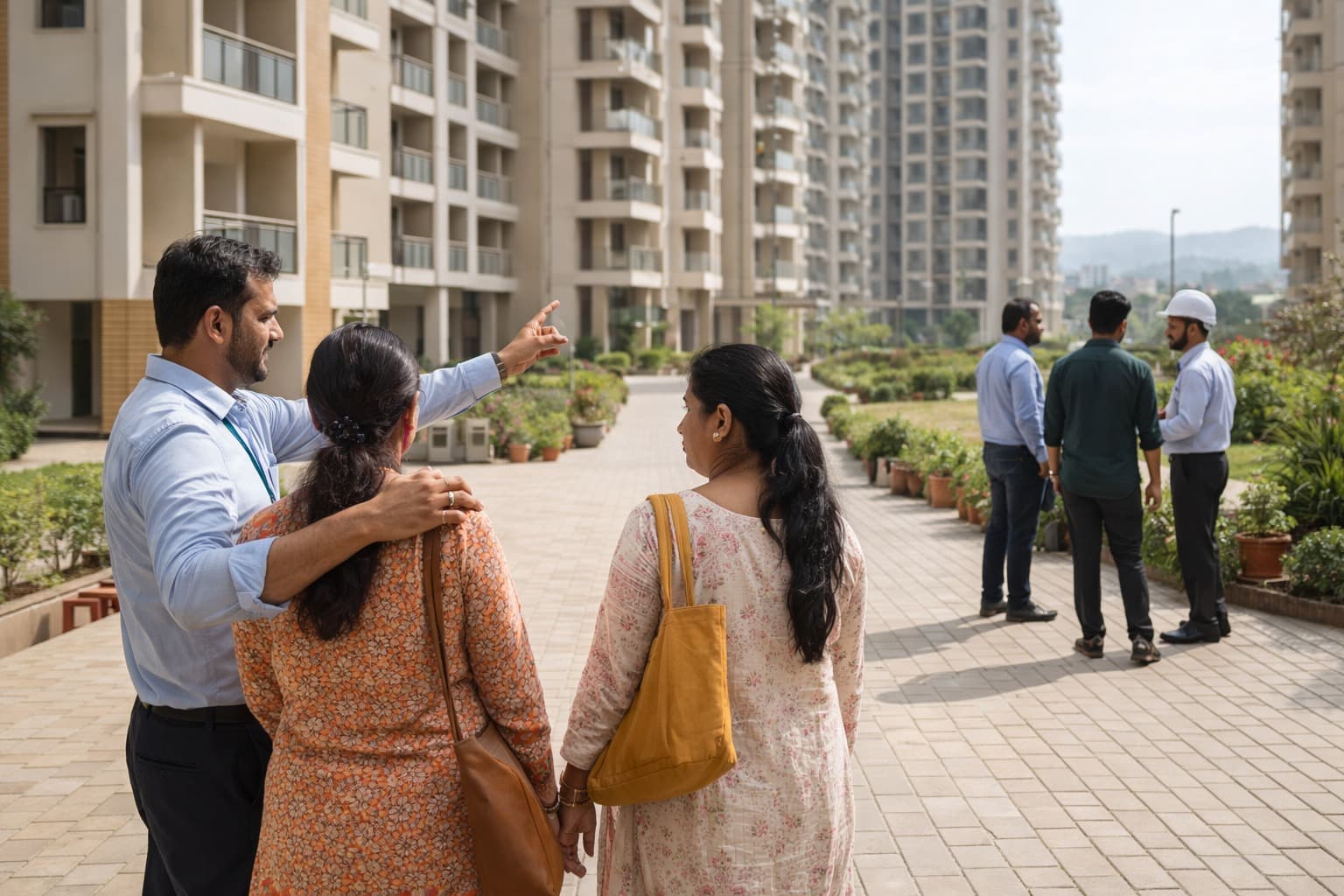
Solapur has long been identified primarily with textile manufacturing and beedi production. That industrial base is being supplemented by improved road connectivity toward Hyderabad through NH-52, a new domestic airport that has opened routes, and growing interest from logistics operators positioning warehouses along the Maharashtra-Karnataka-Telangana freight corridor. First-time buyers from within the city and from Mumbai's Solapur-origin migrant community are both active here in ways that were not visible three years ago.
Amravati: Vidarbha's Underrated Investment Case
Amravati sits in the Vidarbha region and carries that geography's reputation for being economically overlooked relative to Maharashtra's western cities. But Amravati property market has been moving. The city recorded an 8.03% ready reckoner revision in FY26, placing it third on the state's hike list behind Solapur and Ulhasnagar. Cotton processing, agriculture, and education anchor its economic base. The agro-processing sector has been growing as investment flows into Vidarbha following the government's sustained focus on the region's development.
Connectivity improvements toward Nagpur, which is Vidarbha's infrastructure anchor and logistics hub, have expanded Amravati's effective economic radius. Property prices here remain among the lowest in organised Maharashtra residential markets, creating an entry point accessible to buyers who have been entirely priced out of the state's larger cities.
Summary
Maharashtra's top 5 tier 3 cities, Nashik, Chhatrapati Sambhajinagar, Kolhapur, Solapur, and Amravati, are attracting real estate investors and home buyers in 2026 for reasons built on industrial growth, infrastructure investment, and the simple arithmetic of affordability relative to genuine economic fundamentals. These are not speculative plays. They are cities with working economies, improving connectivity, and property prices that still leave meaningful appreciation room for buyers who arrive before the broader market catches on.
Video will be embedded from: https://www.youtube.com/watch?v=Zk3XGZ8yVxE