
Maharashtra Govt Waives Resident Consent for MHADA Colonies Above 20 Acres: Streamlining Mumbai Redevelopment
Summary
Maharashtra waives resident consent for MHADA colonies above 20 acres, streamlining Mumbai redevelopment. This policy aims to accelerate projects, improve living conditions, and unlock stalled housing developments.

Introduction
In a major shift in Mumbai redevelopment news, the Maharashtra government has removed the requirement of obtaining resident approval for the redevelopment of 20-acre MHADA colony clusters. This change marks a bold update in the larger Maharashtra housing policy, reflecting the state’s intention to fast-track ageing housing projects and improve living conditions for thousands of families. The decision affects large MHADA layouts spread across Mumbai, where redevelopment has often slowed down due to delays in securing majority consent.
What This MHADA Redevelopment Decision Means
The decision relates specifically to MHADA redevelopment projects that cover more than 20 acres. Earlier, developers and MHADA needed a significant percentage of resident signatures to begin work. Now, with the resident consent waiver, the government aims to eliminate long delays caused by disagreements, conflicts, and lack of coordination among residents. This is expected to unlock several pending projects and create smoother redevelopment pathways in the city’s older neighbourhoods.
Why the Policy Needed a Change
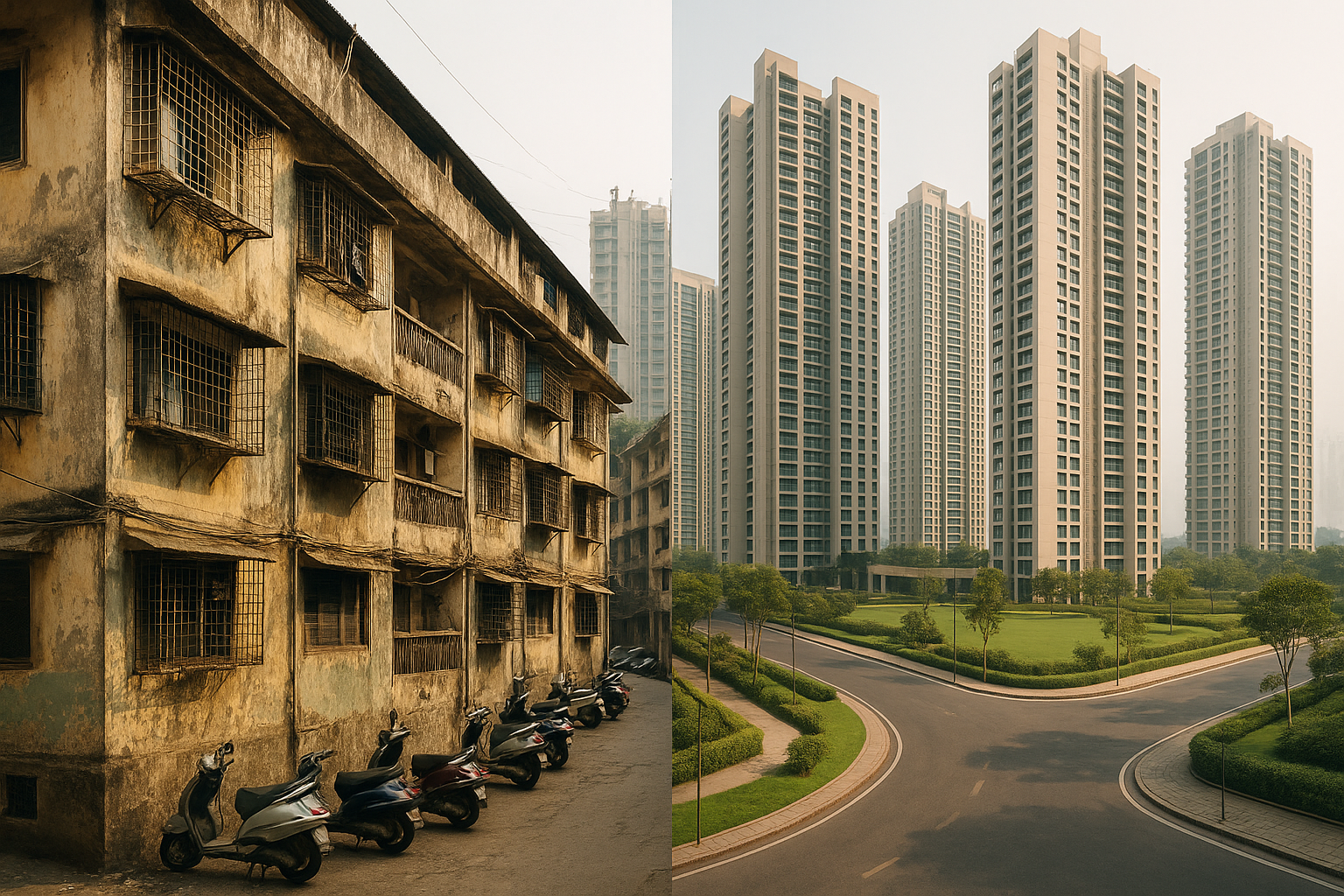
Many MHADA colonies in Mumbai were built decades ago, and several structures are now weak, heavily congested, or lacking modern facilities. The redevelopment process usually requires a high level of resident participation. However, with large colonies accommodating thousands of families, achieving consensus often became extremely challenging. To address this, the government announced a Maharashtra redevelopment policy change, focusing on faster renewal of large housing complexes and addressing growing safety concerns.
Understanding the MHADA Colonies Consent Waiver Rule
The new MHADA colonies consent waiver rule applies only to layouts measuring 20 acres or more. In such large clusters, redevelopment will begin based on MHADA’s approval and planning permissions without requiring the usual consent percentage from individual residents. The objective is to improve transparency, reduce disputes, and help communities benefit from redevelopment instead of remaining stuck in outdated buildings.
Mumbai Large-Scale Redevelopment Update
This update has brought fresh attention to the city’s ageing municipal and MHADA colonies. With the new rule, many long-pending proposals may finally move ahead. Several areas with old low-rise blocks, narrow internal roads, and outdated civic systems can now be transformed into modern, safe, and planned neighbourhoods. This Mumbai large-scale redevelopment update also renewed interest among developers who previously hesitated to take on massive, stalled projects.

Government Decision on Mumbai Redevelopment
The government decision on Mumbai redevelopment aims to bring clarity and reduce uncertainty for both residents and developers. By removing the consent requirement, authorities want to eliminate conflicts that arise from minority resistance, internal disagreements, or legal delays. The decision is also aligned with broader urban planning goals, including better infrastructure, improved public spaces, and stronger building safety. Through this policy, the state hopes to create more organised housing clusters within the city’s limited land availability.
Why Maharashtra Removed Consent Requirement for 20-Acre MHADA Projects
The state explained that the main reason for removing consent requirement for 20-acre MHADA projects was the unmanageable scale of consultations. In colonies with thousands of residents, even a small group refusing to cooperate could delay the entire project for years. The government believes that redevelopment is a necessity in such cases, not just an improvement. This clarifies why Maharashtra removed consent requirement for 20-acre MHADA projects, ensuring redevelopment does not remain stuck because of administrative challenges.
What the New Consent Waiver Means for Residents
Many families living in these large MHADA colonies have long waited for safer homes. Under the new policy, redevelopment can begin without the time-consuming process of collecting signatures or organising repeated meetings. This does not remove resident rights; instead, it removes procedural obstacles. Residents will still receive houses according to redevelopment guidelines and entitlement norms. The update explains what the new consent waiver means for MHADA redevelopment in Mumbai—a faster, smoother shift toward better living standards.
Impact of Consent-Free Redevelopment on Large MHADA Colonies
The new rules are expected to speed up infrastructure upgrades, increase housing supply, and reduce safety risks linked to deteriorating buildings. For developers, large projects will become more viable because approval cycles will shorten. For residents, the key benefits include modern buildings, elevators, security systems, open spaces, and improved amenities. This outlines the impact of consent-free redevelopment on large MHADA colonies, making redevelopment a more efficient and organised process.
How the Policy Change Will Influence Homebuyers
For potential buyers, the policy brings predictability to MHADA’s large-scale redevelopment pipeline. Many upcoming properties will be developed under clear and simplified guidelines. Homebuyers can expect better-structured layouts and modern township-style amenities. This update strengthens trust in the redevelopment landscape and supports future housing growth. The state hopes this Mumbai redevelopment policy change will attract more private participation and improve overall confidence in Mumbai’s residential market.
Mumbai Redevelopment Policy Change Explained for Homebuyers and Residents
The simplest way to understand this policy is to see it as a push to modernise Mumbai’s old housing stock. Large colonies, which earlier struggled to move forward due to logistical difficulties, will now be redeveloped more efficiently. The change is especially helpful for residents who have lived for years in outdated, congested buildings without proper facilities. This is the Mumbai redevelopment policy change explained for homebuyers and residents in clear terms: less delay, more clarity, and faster transformation.
Maharashtra Govt Waives Resident Consent for MHADA Colonies Above 20 Acres: Long-tail Highlights
To clearly incorporate the long-tail keywords, here is a consolidated view: The Maharashtra govt waives resident consent for MHADA colonies above 20 acres to push large-scale redevelopment. The update clarifies what the new consent waiver means for MHADA redevelopment in Mumbai—reduced delays and faster project execution. The impact of consent-free redevelopment on large MHADA colonies includes modern infrastructure and improved safety. Authorities shared why Maharashtra removed consent requirement for 20-acre MHADA projects, focusing on administrative efficiency. This is the Mumbai redevelopment policy change explained for homebuyers and residents, especially those living in old MHADA blocks.
Summary
Maharashtra’s decision to waive resident consent for MHADA colonies measuring 20 acres or more marks a major change in Mumbai’s redevelopment system. The move aims to reduce delays, simplify procedures, and enable faster reconstruction of old, unsafe buildings. Residents benefit through modern homes, better amenities, and quicker redevelopment timelines. Developers gain confidence due to clearer approvals and fewer disputes. This policy supports Mumbai’s broader goal of transforming ageing housing layouts into organised, safe, and well-planned urban neighbourhoods without long consent-related hurdles.
Video will be embedded from: https://www.youtube.com/watch?v=MUBXT6bhAho