
Krisumi Corporation's ₹4,500 Crore Bet on Gurugram's Luxury Future: A Decade of Japanese Precision
Summary
Krisumi Corporation invests ₹4,500 crore in Gurugram's luxury market with 'The Forest Reserve,' building on the success of Krisumi City. This Indo-Japanese venture promises high-quality living and strong investment potential on Dwarka Expressway.

Introduction
There is a very particular kind of confidence that comes from a developer who watched a market mature around their own project. When Krisumi Corporation launched its first phase on Dwarka Expressway back in 2019, the road itself was still navigating connectivity delays and buyer hesitation. The developer held its ground, priced at ₹8,500 per square foot, and kept building. Today, Krisumi City commands approximately ₹24,000 per square foot. That is not just market movement. It is a testimony to what disciplined, quality-led execution produces over time.
On April 13, 2026, marking a decade of partnership between Japan's Sumitomo Corporation and India's Krishna Group, Krisumi Corporation announced the launch of its fifth and sixth phases under the banner of a new development called The Forest Reserve. Alongside it came the commitment: ₹4,500 crore in fresh investment over the next six to seven years, taking the total project outlay to between ₹6,000 and ₹7,000 crore by completion.
What Krisumi City Has Built So Far
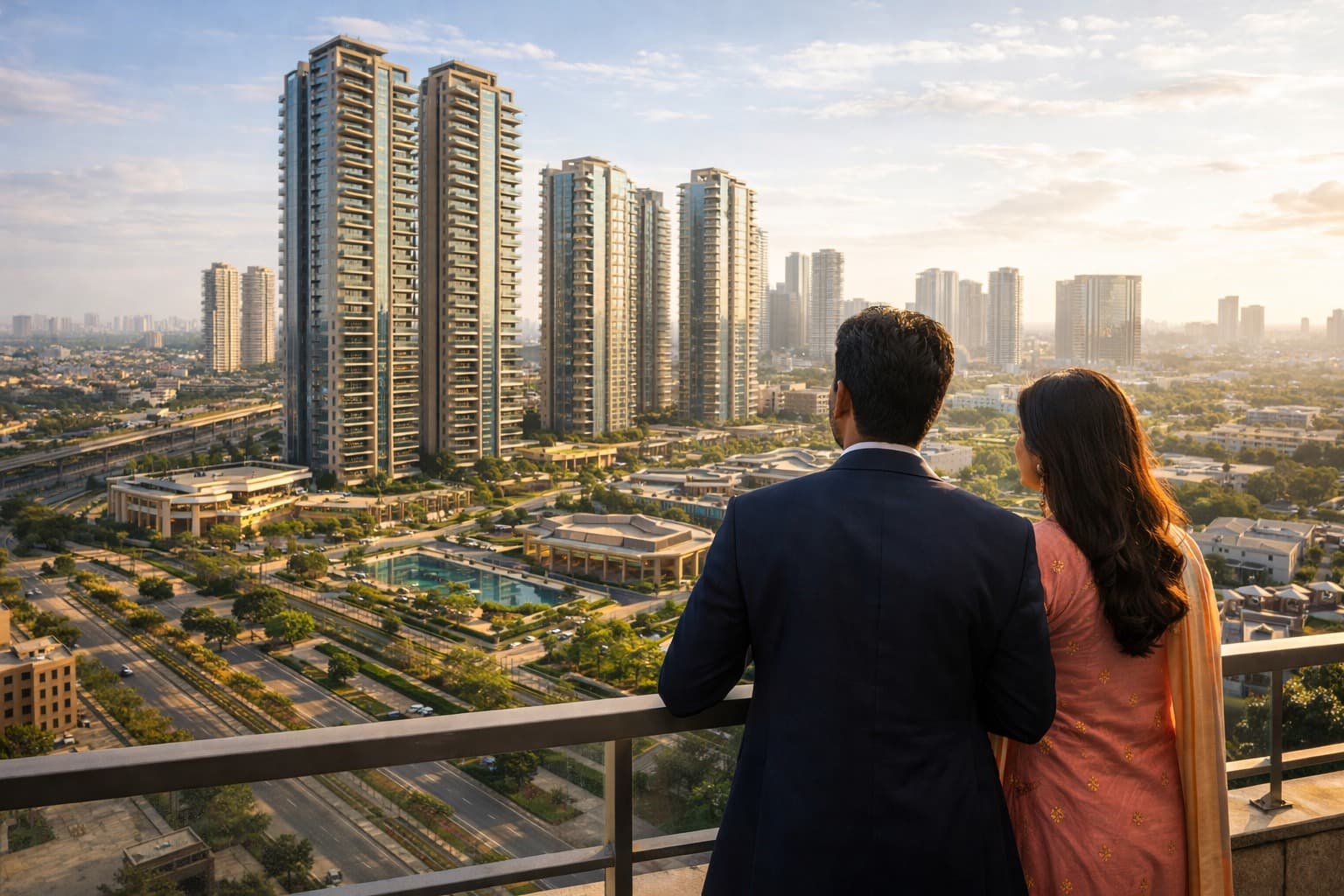
Krisumi City sits across 33.5 acres in Sector 36A, Gurugram, positioned directly along the Dwarka Expressway. Since 2019, the developer has completed four phases totalling approximately 1,800 units. Around 1,500 apartments worth ₹4,000 crore have already been sold across these phases. The company has deployed roughly ₹2,500 crore to reach this point and remains entirely debt-free, a detail that carries genuine weight in an industry where leveraged developers have frequently disappointed buyers.
What sets Krisumi City apart from most luxury housing claims in India is the deliberate and verifiable presence of Japanese quality systems. Nikken Sekkei, one of Japan's most respected architecture and project management firms, is involved in design and quality control. Approximately 25 percent of the resident families currently living in delivered phases are Japanese nationals, which says something more credible about the product than any marketing brochure could.

The Forest Reserve: Phases Five and Six
The Forest Reserve is inspired by the Japanese concept of Chinju-no-mori, which translates loosely as a sacred shrine forest. The philosophy here is of low-density, nature-led living embedded within a dense metro city. The new phases span a developable area of approximately 1.67 million square feet and carry a revenue potential of around ₹4,000 crore.
The residential configurations on offer are generous by any urban standard. The larger format is a 4 LDK unit of approximately 4,000 square feet. The smaller configuration is a 3 LDK at around 3,000 square feet. LDK is a Japanese room classification system where L stands for living, D for dining, and K for kitchen, with a number prefix indicating the count of additional rooms. This sizing positions The Forest Reserve firmly in the ultra-luxury segment, targeting buyers who want space, quality, and a living environment that is genuinely different from the standard Gurugram high-rise.
Delivered phases of Krisumi City are already generating rentals of approximately ₹100 per square foot, a strong yield signal in a market where rental income on luxury product is often treated as a secondary consideration.
The Location Case: Dwarka Expressway and Beyond
Dwarka Expressway has been one of India's most consistently rewarding infrastructure-led real estate corridors over the past five years. Property values along this stretch have risen up to 3.5 times since 2021, with current rates sitting between ₹21,700 and ₹24,000 per square foot across quality projects. Krisumi City's own price trajectory from ₹8,500 to ₹24,000 per square foot mirrors this corridor-wide appreciation.
The upcoming Global City in Gurugram adds another dimension to the investment case. This planned urban development, adjacent to Krisumi City, is expected to function as a major commercial and residential nucleus for the western Gurugram belt. Its presence alongside improving Delhi-Gurugram connectivity via Dwarka Expressway creates a compounding locational advantage for projects like The Forest Reserve that are already established and delivering.
The Indo-Japanese Proposition
The Krisumi Corporation story is ultimately about what happens when two serious industrial families, one from India's automotive supply chain and one from a Japanese conglomerate with over four centuries of institutional heritage, decide to apply their operational discipline to real estate. Krishna Group brings decades of joint venture experience with Japanese firms across manufacturing. Sumitomo Corporation brings rigorous project governance and quality benchmarking. The result is a product where construction timelines are taken seriously and promises made at launch are tracked against delivery.
That combination is rare enough in Indian real estate to be worth paying attention to. And with the entire Krisumi City project expected to reach completion by 2032, what is being announced today is not a vision statement. It is the next chapter of a project already proving what it claimed.
Summary
Krisumi Corporation's ₹4,500 crore investment plan and the launch of The Forest Reserve on Dwarka Expressway marks a significant milestone in Gurugram's luxury housing story. Backed by Sumitomo Corporation and Krishna Group, with a decade of execution behind it, Krisumi City has moved from a bold entry wager to a benchmark project. For buyers seeking Japanese-grade quality, proven price appreciation, and a genuinely differentiated living environment in Gurugram, The Forest Reserve makes a compelling case worth examining closely.
Video will be embedded from: https://www.youtube.com/watch?v=vrm0Tc1tScc