
Jammu and Kashmir's PMAY-G Achievement: Impact of 3.23 Lakh Rural Homes
Summary
J&K's PMAY-G achieved 97% completion, delivering 3.23 lakh rural homes despite logistical challenges. This milestone provides housing security and fosters community development through integrated sanitation and energy access.

Introduction
Achieving 97% of a housing target in a geography as logistically demanding as Jammu and Kashmir is not a routine administrative milestone. It is a genuinely difficult outcome that deserves more attention than a headline number typically receives. PMAY-G Jammu Kashmir implementation has produced 3.23 lakh completed rural houses across a union territory that includes high-altitude terrain, extreme seasonal weather, remote connectivity challenges, and a recent history of administrative reorganisation. The achievement sits within the larger Pradhan Mantri Awas Yojana Gramin framework that is reshaping rural housing across India, but J&K's specific context makes this number more meaningful than comparable percentages from more accessible states.
What PMAY-G Is and How It Works
Pradhan Mantri Awas Yojana Gramin is the central government's flagship rural housing scheme, designed to provide pucca homes with basic amenities to houseless and kutcha-house dwelling families in rural areas. Each beneficiary receives a financial assistance amount from the central and state governments combined, with the beneficiary contributing labour and any additional material cost. The scheme also converges with other government programmes to provide toilets under Swachh Bharat Mission, cooking gas connections under Ujjwala Yojana, and electricity connections under the Saubhagya scheme.
The rural homes Jammu Kashmir built under this framework are therefore not standalone shelter units. They are integrated with a broader livability package that addresses sanitation, energy access, and cooking infrastructure simultaneously.
The 3.23 Lakh Number in Context
J&K's PMAY-G 3.23 lakh houses figure represents 97% of the total sanctioned target for the union territory. The remaining 3% reflects units still under construction or facing beneficiary-level complications rather than systemic programme failure. For a territory that was reorganised from a state into a union territory in August 2019 and simultaneously navigated the administrative and logistical disruptions of the pandemic years, completing over three lakh rural homes is a programme execution achievement of significant scale.
To put it differently, 3.23 lakh families in rural Jammu and Kashmir now live in structurally sound pucca homes who previously did not. The social and economic impact of that shift compounds over decades in ways that a housing completion statistic alone cannot fully capture.
Geographic Challenges That Make This Achievement Significant
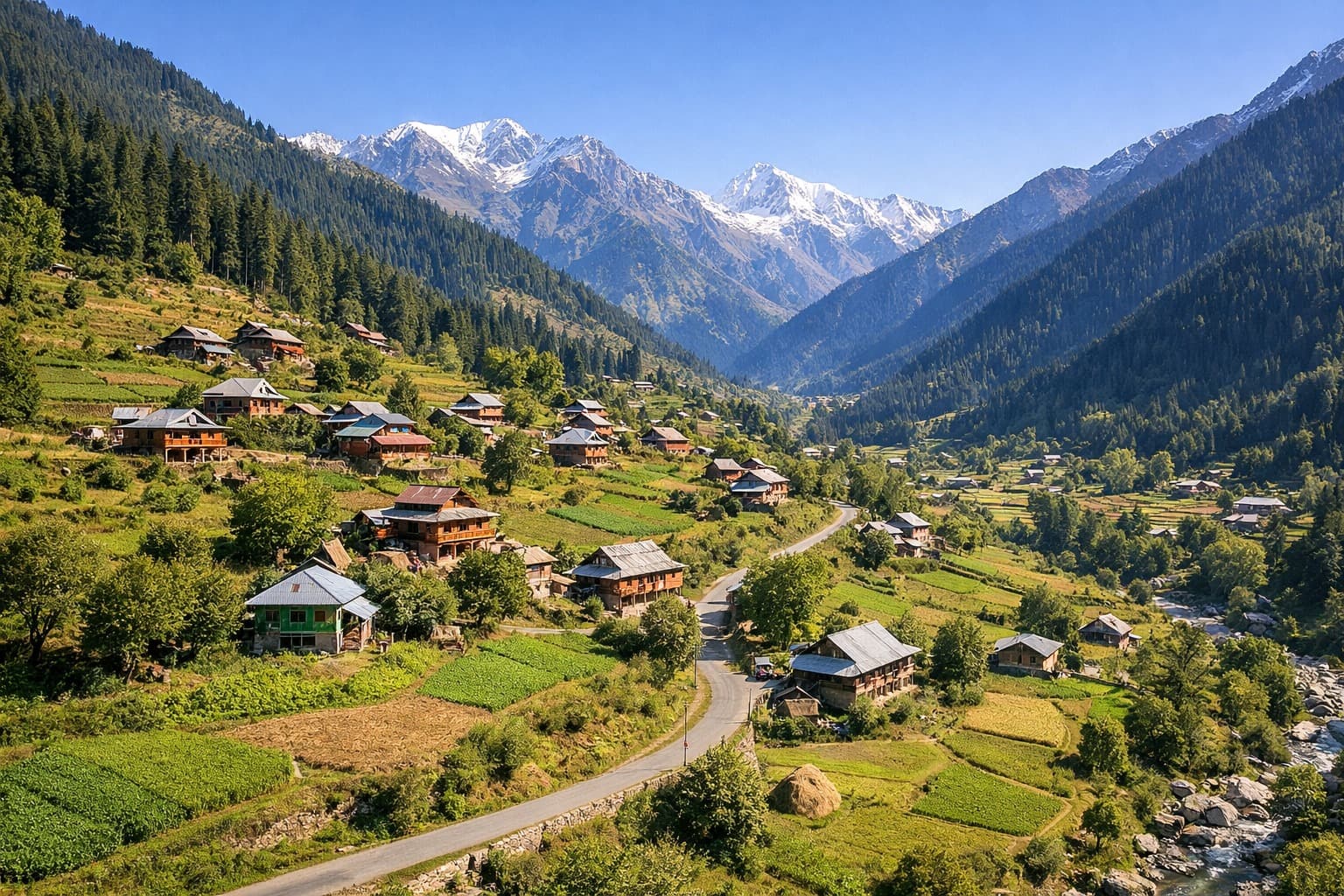
Rural housing construction in Jammu Kashmir operates under constraints that flatland states do not face. The Kashmir Valley receives heavy snowfall that limits construction windows to roughly six to eight months per year. The Jammu division includes hilly and forested terrain where material transportation costs are substantially higher than in accessible plains. The Ladakh region, while now a separate union territory, borders areas where altitude and remoteness create their own construction timelines.
Affordable housing J&K delivery in this context requires supply chain management, beneficiary coordination, and quality supervision that is meaningfully more complex than delivering the same number of houses in a state like Haryana or Gujarat. The 97% completion rate reflects not just political will but operational competence at the district and block administration level.
Quality and Amenity Standards in Completed Units
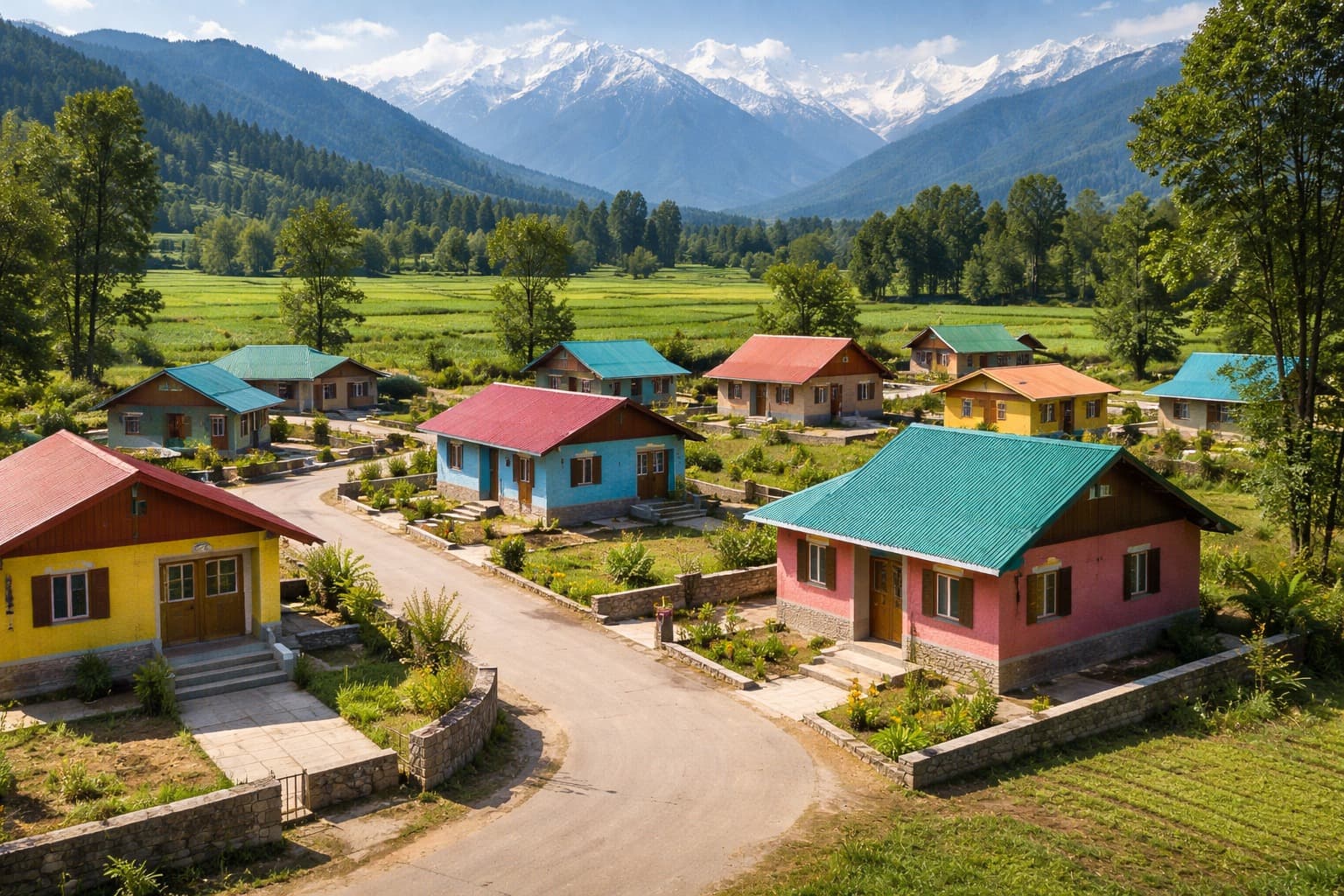
The J&K housing scheme units built under PMAY-G meet the scheme's minimum specifications of at least 25 square metres of living space, a pucca structure with weather-resistant construction, a dedicated kitchen area, and a toilet. Convergence with Swachh Bharat Mission has ensured that the vast majority of completed units have functional sanitation rather than just the structure without the support infrastructure.
In J&K's colder regions, construction specifications have been adapted to account for thermal insulation requirements, which adds cost but produces homes that are genuinely functional in winter conditions. This climate-sensitive construction adaptation is a design intelligence that improves the scheme's real-world impact beyond the headline completion numbers.
PMAY-G's Broader National Performance
J&K's achievement sits within a national PMAY rural housing India programme that has been one of independent India's largest housing delivery efforts. Across the country, PMAY-G has sanctioned over 2.9 crore homes since its launch in 2016, with completion rates varying significantly across states based on administrative capacity, terrain, and beneficiary participation levels. States like Chhattisgarh, Odisha, and Tripura have consistently ranked among the top performers. J&K's 97% achievement places it firmly in the high-performance tier despite its geographic disadvantages.
The scheme's convergence model, linking housing completion to toilet, electricity, and gas connection delivery, has made it one of the more holistic rural welfare interventions in recent Indian policy history.
What This Means for Rural Real Estate in J&K
Every PMAY-G completion in rural J&K has a quiet but real effect on the local property ecosystem. Families with pucca homes have a formal asset on record, which improves their eligibility for institutional credit. Villages with higher proportions of permanent housing attract better road, school, and healthcare infrastructure investment because planners allocate resources toward settled communities. Land values around areas with high PMAY-G completion rates tend to stabilise and appreciate modestly over five to ten years as the settlement quality improves.
Summary
Jammu and Kashmir's 97% PMAY-G achievement with 3.23 lakh rural homes completed is a programme delivery milestone that carries genuine significance beyond the percentage. It represents housing security for over three lakh families in one of India's most logistically challenging geographies, delivered through a convergence model that addresses sanitation, energy, and shelter simultaneously. For rural real estate in J&K, it creates a foundation of formal asset ownership and improved settlement quality that supports long-term community and economic development across both the Jammu and Kashmir divisions.
Video will be embedded from: https://www.youtube.com/watch?v=VOSM7JVzTZY