Introduction
For nearly two decades, Bengaluru real estate seemed immune to the doubts that plagued other Indian cities. Demand was always there. IT professionals kept moving in. Rents kept climbing. Prices held firm even through national slowdowns. But 2025 has introduced a different kind of conversation, one that more and more homebuyers, investors and developers are having quietly.
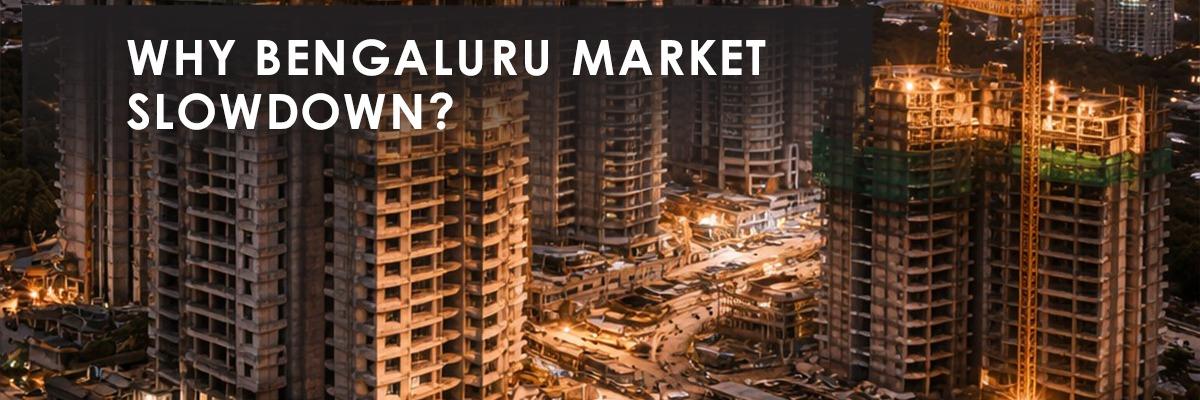
The question being asked now is simple. Is the Bengaluru real estate market slowdown actually happening, or is it just nervousness dressing itself up as data?
What the Numbers Are Actually Saying
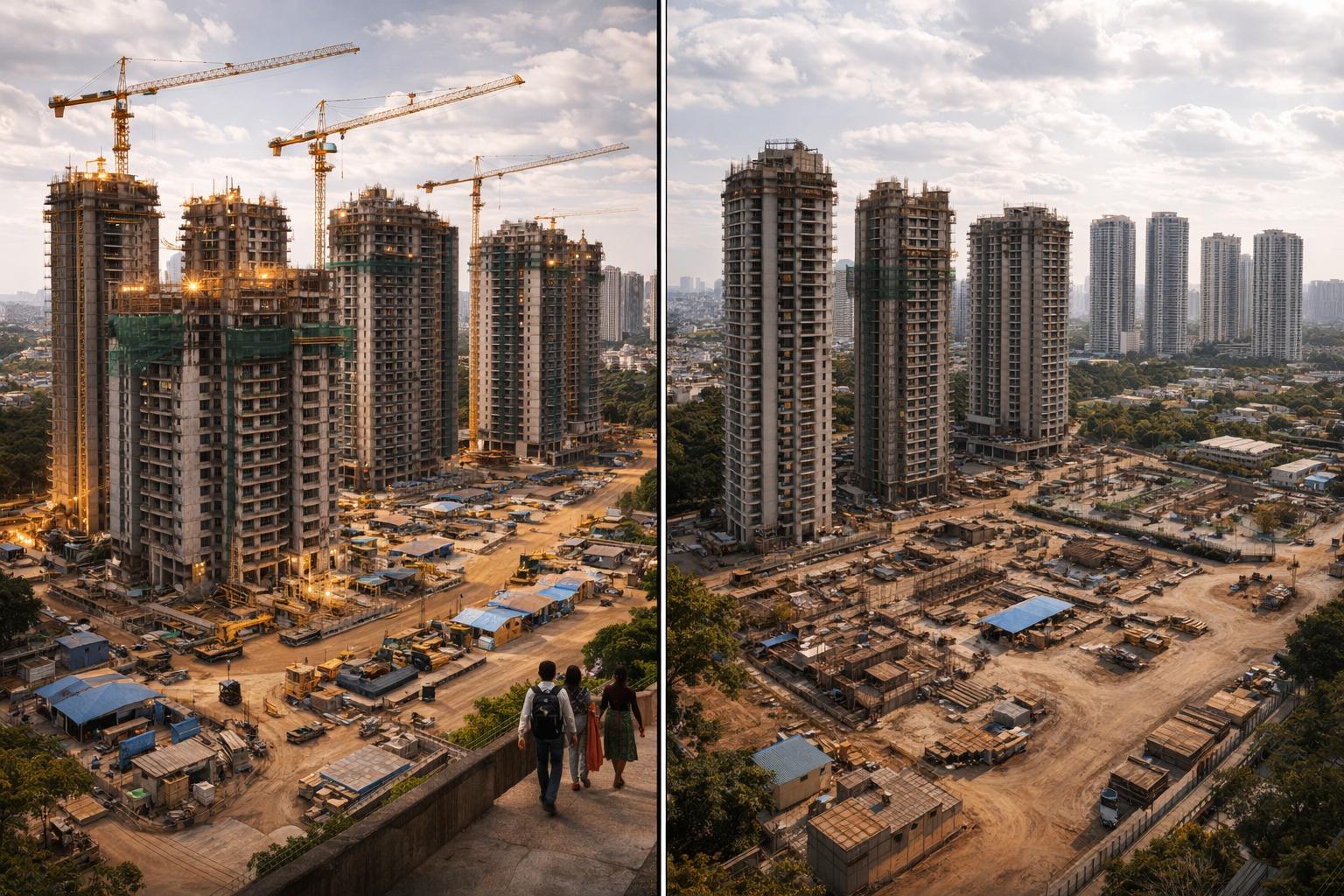
The data is hard to brush aside. Housing sales in the city fell roughly 8 percent year on year in Q2 2025, sliding from around 16,350 units to approximately 15,100 units in the same quarter. That alone might not alarm anyone. But pair it with a 30 percent jump in unsold residential inventory, which rose from about 45,400 units to nearly 58,900 units, and the picture starts to look different.
Bengaluru now holds the highest unsold housing stock among India's top seven metros. That is not a number any market wears comfortably.
The IT Layoffs Connection
To understand what is happening with Bangalore property market sentiment, you have to start with jobs. The city's housing market was built on one foundation above everything else: the steady, reliable income of technology professionals.
Between the start of 2024 and mid-2025, well over 50,000 jobs were shed across IT and IT-enabled services in the city. Companies like Google, Microsoft, Amazon and TCS announced workforce cuts that hit Bengaluru hard. The roles disappearing were not just junior positions either. Mid-level and senior roles have also faced the axe as companies lean into automation and artificial intelligence to replace what human teams used to do.
When the people who drove Bengaluru housing demand stop feeling secure in their jobs, they stop signing home loan agreements.
The Wait-and-Watch Buyer
This is perhaps the most telling shift happening right now. Buyer inquiries in areas like Whitefield, Sarjapur Road and Marathahalli are down by somewhere between 20 and 25 percent compared to a year ago.
People are still visiting project sites. They are asking questions, comparing options and doing their research. But they are not converting. The festive quarter of 2025, a period that usually reliably lifts Bangalore property transaction volumes, passed without the expected pickup. Builders who counted on Navratri and Diwali to clear inventory went home quietly disappointed.
The professionals have not lost interest in buying. They have lost the certainty that makes a 20-year home loan feel rational.
The Rental Market Is Shifting Too
The Bangalore rental market cooling is playing out in real-time across the city's tech corridors. Through 2023 and much of 2024, rents in areas tied to IT campuses surged anywhere from 15 to 30 percent year on year. Landlords held firm, refused negotiations and still found tenants.
That era is over for now. Rent growth in these same localities has slowed dramatically, with increments falling to the 7 to 8 percent range in areas where they held firm. In pockets with highest new supply, landlords are now offering flexible lease terms and quiet discounts. Some paying-guest operators in tech-heavy zones have simply shut down. The free-flowing pipeline of well-paid IT renters has dried up considerably.
Prices Are Still High. That Is Part of the Problem.
Here is the tension at the heart of the current Bengaluru property affordability crisis. Even as sales slow and inventory piles up, prices have not corrected meaningfully. The average property price in the city climbed to around Rs 9,500 per square foot by late 2025, a rise of roughly 68 percent from five years ago when the same average sat near Rs 5,500.
Whitefield alone has seen prices move up by about 65 percent over five years. North Bengaluru corridors near the airport are quoting entry prices that would have seemed extraordinary just a few years back.
Buyers are caught in an uncomfortable place. Prices are still high. Incomes feel uncertain. And EMIs on a 2025 home loan are not gentle. The mid-segment buyer, the salaried professional who forms the backbone of this market, is feeling the squeeze most sharply.
Not All Segments Are Equal
It would be wrong to paint the entire Bangalore property market with one brush. Luxury apartments targeting CXOs, senior professionals and NRIs are holding up better. Buyers in that segment are less exposed to the anxieties of junior and mid-level job cuts. They are thinking about lifestyle, location and long-term asset building, not about whether their next appraisal cycle will happen.
Affordable housing below the Rs 60 lakh mark is also seeing steadier interest. It is the premium-but-not-luxury band, the Rs 80 lakh to Rs 1.5 crore range, that is taking the heaviest hit from hesitation.
The Long View Still Has Something to Say
The pessimism deserves to be heard. But so does the longer arc. Bengaluru's metro network keeps expanding. The Namma Metro Yellow Line connecting RV Road to Bommasandra through Electronic City became fully operational in 2025. The Bengaluru Suburban Rail project is moving forward. Global Capability Centres are still hiring in the city, and roles in artificial intelligence, cybersecurity and cloud computing are growing.
The Bengaluru property market outlook for patient buyers is not grim. Analysts broadly project prices reaching somewhere between Rs 13,000 and Rs 16,000 per square foot by 2030. That is a meaningful appreciation curve from today's levels.
Summary
The Bengaluru real estate market slowdown in 2025 is real, measured and visible across sales volumes, rental demand and buyer sentiment. IT layoffs Bangalore has pulled the most important buyer community into a wait-and-watch posture. Unsold Bengaluru housing inventory is at a multi-year high. Bangalore property affordability pressures are squeezing mid-segment buyers between stubborn prices and uncertain incomes. But this is a correction, not a collapse. For buyers with a five-year horizon and the patience to negotiate in a softer market, the Bengaluru property market still offers fundamentally sound choices.