
India's Warehousing Boom: Analyzing the Significance of Crossing Half a Billion Square Feet
Summary
India's warehousing sector surpasses 549 million sq ft, fueled by manufacturing and e-commerce. Mumbai and NCR dominate, while Pune leads in absorption. Grade A facilities and a strong pipeline signal continued growth.

Introduction
Half a billion square feet of industrial and warehousing stock India is not just a round number worth celebrating. It is a structural statement about how deeply supply chains, manufacturing, and e-commerce logistics have embedded themselves into Indian real estate over the past decade. A Knight Frank India report confirms that total industrial real estate India 2025 inventory across eight primary cities closed the year at 549 million square feet, up 13% from 486 million the year before. The growth is consistent, broad-based, and underpinned by demand drivers that are not going away anytime soon.
Mumbai: Holding the Largest Piece of a Very Large Pie
The Mumbai warehousing market ended 2025 with 170 million square feet of industrial and warehousing stock, representing 31% of the national total. That is growth of 12.5% over the 151 million square feet recorded in 2024. What makes Mumbai's dominance structural rather than historical is the combination of factors working simultaneously in its favour. The city sits at the convergence of India's largest consumer base, its busiest container port, and a road network that connects to virtually every major consumption corridor in the country's western half.
Bhiwandi remains the undisputed hub within Mumbai's warehousing ecosystem. The town's scale of organised Grade A supply, proximity to the Mumbai-Nashik Highway, and established 3PL operator presence make it the first address that any logistics company considers when entering western India. Panvel has been building a parallel story on the city's southern flank, increasingly attractive to companies that need proximity to JNPT and the emerging Navi Mumbai International Airport influence zone.
NCR: Manufacturing Proximity and Highway Access at Scale
Delhi NCR held 115 million square feet of warehousing inventory at year-end 2025, accounting for 21% of the national total. Year-on-year growth came in at 11.65% from 103 million square feet in 2024. Combined with Mumbai, these two markets alone account for slightly more than half of India's total warehousing stock India inventory. That concentration reflects decades of infrastructure investment and corporate location decision-making that is not easily replicated elsewhere.
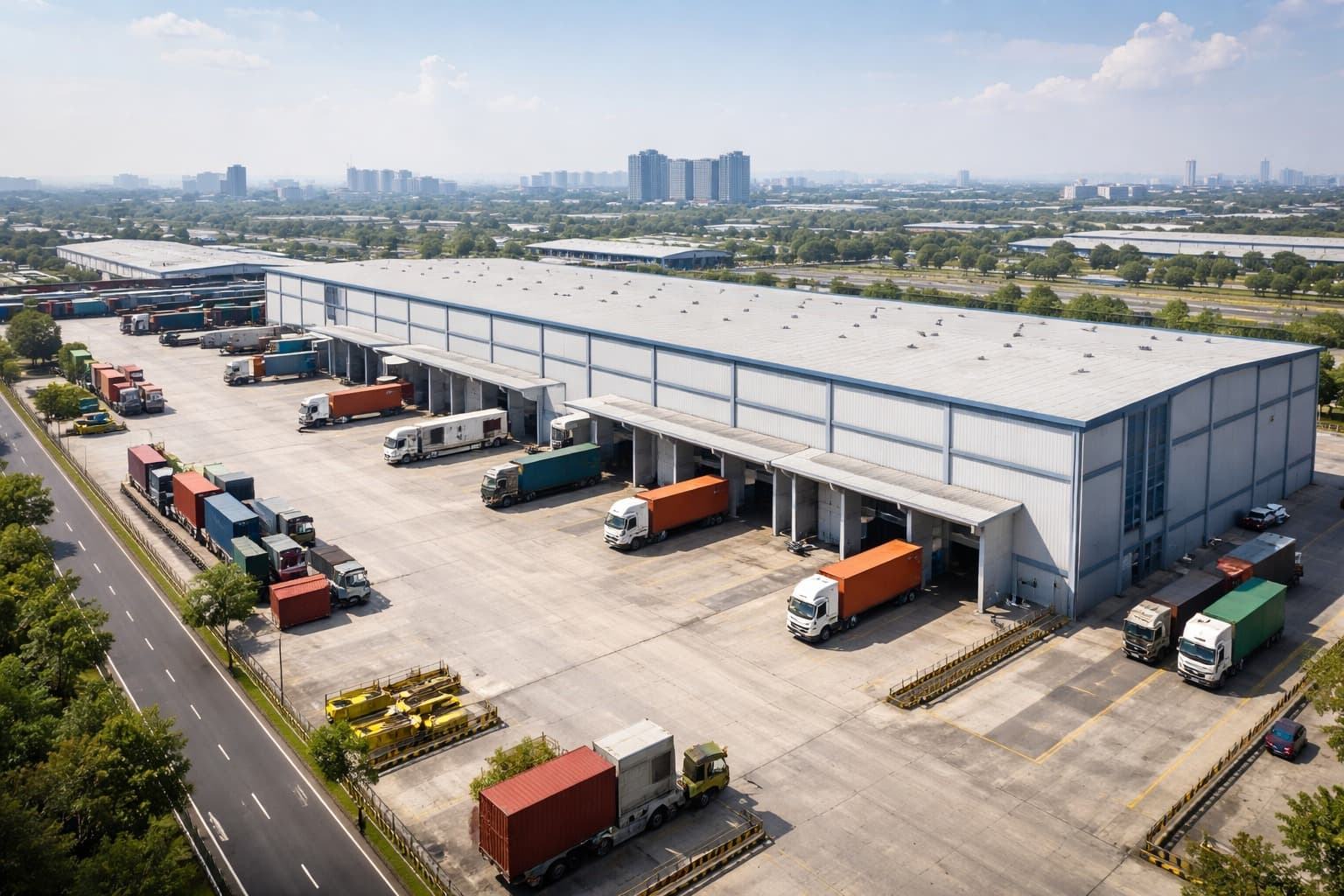
NCR's advantage is breadth of connectivity. The Eastern and Western Peripheral Expressways, the Yamuna Expressway, and the Delhi-Mumbai Industrial Corridor access points all converge in or near this region. Gurugram, Noida, Ghaziabad, and the outer belt toward Greater Noida have all developed distinct warehousing micromarkets catering to different demand profiles ranging from last-mile urban delivery to heavy manufacturing storage.
Pune Surprised Everyone in 2025
The city nobody would have predicted as the year's top performing warehousing market was Pune. Total transactions in the city reached 16 million square feet, an 86% jump year-on-year, capturing 22% of all leasing activity across the eight tracked cities in a single year. That is a remarkable performance from a market that entered 2025 as a solid mid-tier participant and exited as the absorption leader.
Pune's surge was driven primarily by manufacturing. The city's industrial base across Chakan, Talegaon, Ranjangaon, and Khed has been expanding aggressively as global companies use India as a production base for both domestic consumption and export. Pune and Chennai together accounted for 51% of all manufacturing-related warehousing leasing in 2025. That is not a coincidence. Both cities have the skilled workforce, established component supplier ecosystems, and multimodal connectivity that large manufacturers require.
Manufacturing Led the Demand Surge
Total absorption across all eight cities reached 72.5 million square feet in 2025, a 29% year-on-year increase that represents the strongest single-year growth in demand since the pandemic disrupted supply chains globally. Manufacturing occupiers, excluding FMCG and consumer electronics, accounted for 47% of total transaction volume and absorbed 34 million square feet, a 55% jump from the previous year.
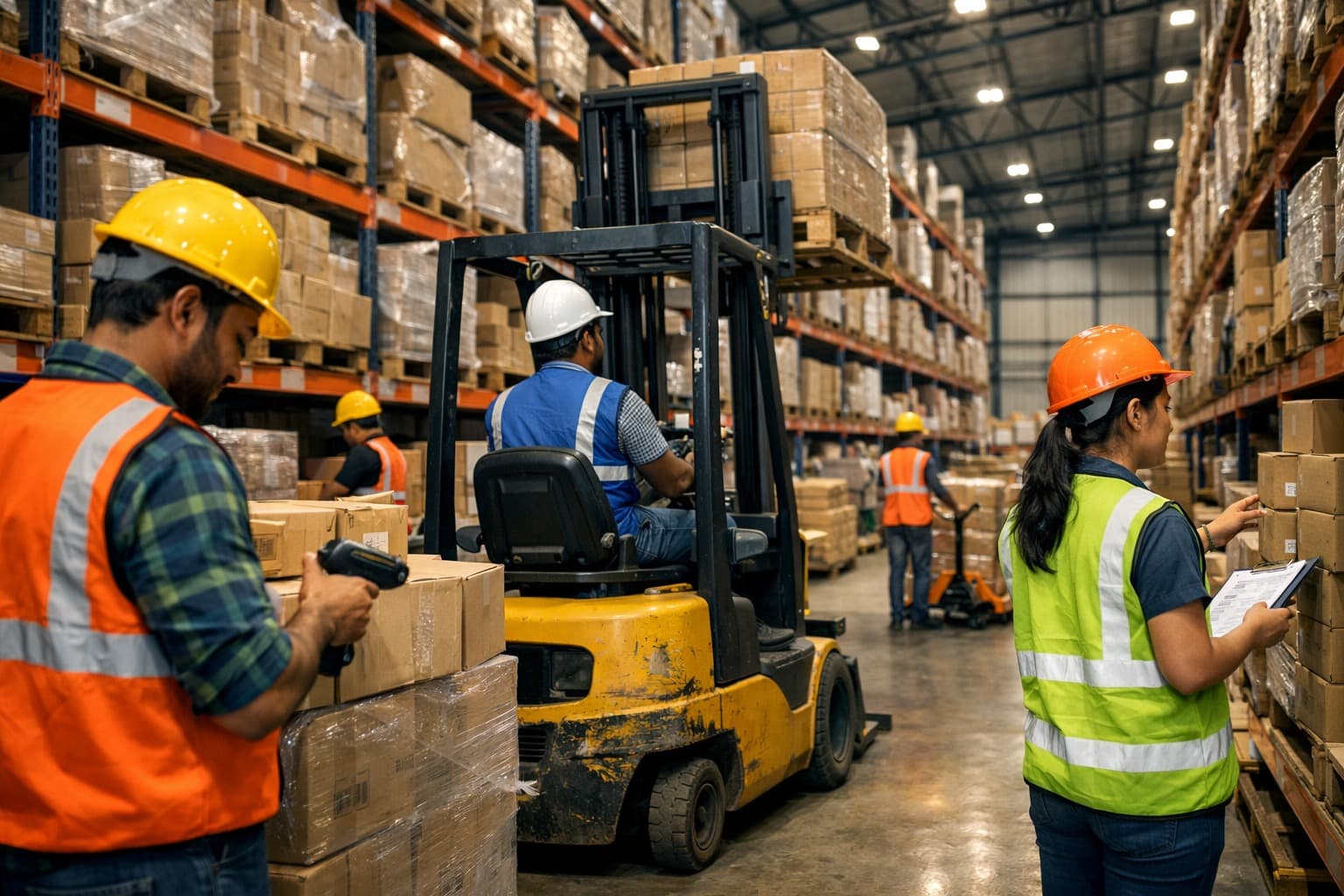
This shift matters because manufacturing demand is fundamentally different from 3PL or e-commerce demand in its implications for the asset class. Manufacturing tenants sign longer leases, customise facilities more extensively, and are less likely to vacate based on short-term business cycles. They anchor income streams for warehousing asset owners in ways that last-mile delivery operators and seasonal e-commerce tenants simply cannot.
Grade A is Where Occupiers Are Going
Of all space absorbed in 2025, 63% was in Grade A facilities. That proportion has been creeping upward steadily over the past several years as corporate occupiers, particularly multinational manufacturers and large 3PL operators, refuse to compromise on ceiling height, floor load capacity, fire safety systems, and CCTV infrastructure. The preference for Grade A is structural because the companies driving demand growth are exactly the ones with the most demanding technical specifications.
Vacancy across the eight markets held broadly stable at 11.6%, a healthy number that indicates supply is being absorbed at a pace that prevents significant oversupply from building while still providing enough options for large tenants to locate and fit out without constraint.
The Pipeline Ahead
The 256 million square feet of additional capacity sitting within established warehousing parks across the eight cities provides more than three times the annual transaction volume in built-in headroom. This buffer means supply-side oversupply is not an immediate risk and that rental growth is likely to remain moderate rather than spiking in ways that push occupiers toward less efficient alternatives. Weighted average rents grew approximately 5% in Pune and Chennai and around 3% in Mumbai, NCR, and Bengaluru through 2025.
Summary
India's industrial and warehousing stock crossing 549 million square feet in 2025 with 13% year-on-year growth reflects a market being reshaped by manufacturing expansion, supply chain deepening, and e-commerce logistics maturity. Mumbai holds 31% of national inventory and NCR follows at 21%, together anchoring the national ecosystem. Pune's 86% absorption surge makes it the market to watch through 2026. With 72.5 million square feet absorbed last year, Grade A dominance rising, and a healthy supply pipeline in established parks, India logistics real estate enters 2026 as one of the country's most fundamentally sound commercial property asset classes.
Video will be embedded from: https://www.youtube.com/watch?v=RkcS5Vrp1ec