
India's Second-Home Boom: Smart Investments in 2026
Summary
India's second-home market is booming in 2026, fueled by remote work and rental platforms. Goa, hill stations, Alibaug, and South India are prime investment locations. Smart choices combine rental yield, appreciation, and personal use.

Introduction
Something shifted in how upper-middle-income India thinks about property after the pandemic. The second home stopped being a retirement plan and became an immediate lifestyle decision. Second home India 2026 demand has been building steadily across hill stations, coastal towns, and emerging weekend destinations at a pace that has surprised even developers who bet early on this category. The drivers are a combination of remote and hybrid work flexibility, rising disposable incomes among professionals under 45, a maturing short-stay rental market through platforms like Airbnb and StayVista, and a genuine desire to own a retreat that earns when you are not using it. The second home investment India story is no longer niche. It has become one of the most active conversations in Indian real estate.
Why the Second Home Makes Financial Sense in 2026
The investment logic behind a holiday home India has strengthened considerably compared to five years ago. Short-term rental platforms have professionalised the management of vacation properties to the point where an owner in Mumbai or Bengaluru can generate consistent rental income from a Goa villa or a Coorg cottage without being physically present to manage bookings, cleaning, or guest relations.
Gross rental yields on well-located holiday properties in popular destinations are running between 5% and 9% annually, which compares favourably with the 2.5% to 4% yields available on standard urban residential property. Add capital appreciation in locations where supply is constrained and demand is structural, and the total return case for a second home begins to look compelling relative to most other asset classes available to a retail investor.
Goa: Still the Dominant Second Home Market
No conversation about second property India investment ignores Goa. It remains the single largest organised second-home market in the country by transaction volume, brand presence, and rental demand depth. North Goa locations like Assagao, Siolim, Anjuna, and Morjim continue to command premium pricing from buyers who want the established rental market and the infrastructure that comes with a mature destination.
South Goa offers a quieter alternative with lower entry prices and growing interest from buyers seeking larger land parcels. The consistent international and domestic tourist footfall into Goa ensures rental demand across seasons, which is the fundamental requirement for a second home to justify itself as an investment rather than a pure lifestyle purchase.
Uttarakhand and Himachal: The Hill Station Revival
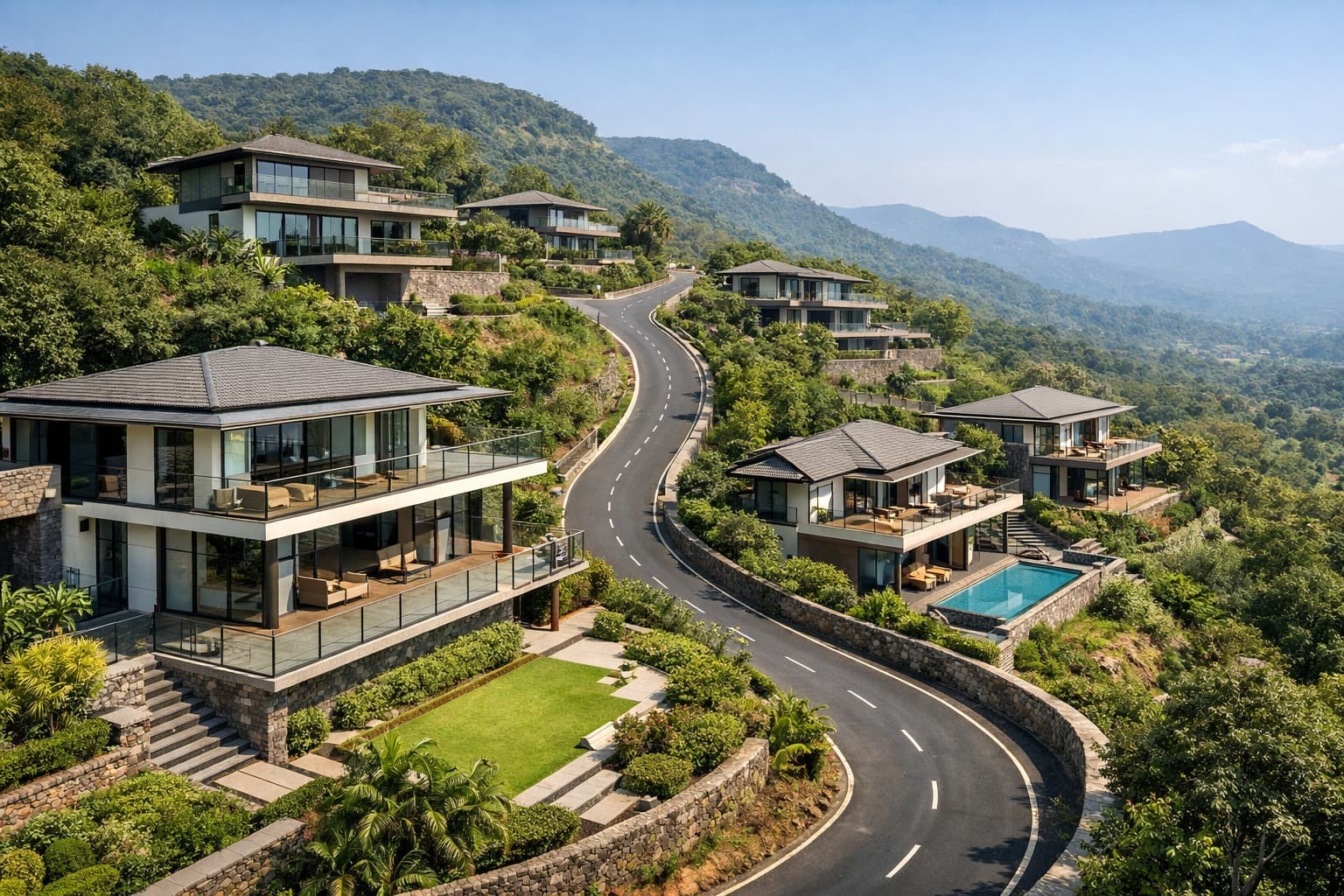
The mountains have seen a demand surge that shows no sign of moderating. Mussoorie, Nainital, Kasauli, Manali, and the villages around Jim Corbett National Park have all recorded sharp price appreciation in the 2022 to 2026 window. Real estate second home buyers in these locations include Delhi NCR professionals who can now work remotely for significant portions of the year and prefer to do so from a personally owned mountain property rather than a rented apartment.
Uttarakhand's government has been relatively welcoming to second-home development in designated tourism zones. Himachal Pradesh has more restrictive land purchase rules for non-domicile buyers, which has constrained supply and paradoxically supported prices in locations where organised developer projects have received necessary approvals.
Alibaug, Lonavala and the Mumbai Proximity Belt
For Mumbai's upper-income buyers, where Indians are buying second homes most conveniently is the weekend escape belt within two to three hours of the city. Alibaug has transformed from a local agricultural economy into a premium villa market anchored by high-quality developer projects, improved road connectivity via the Atal Setu sea link, and a rapidly maturing social infrastructure of restaurants, wellness facilities, and managed farm stays.
Lonavala and Khandala serve the older, more established segment of this market, while newer buyers are exploring Karjat, Palghar, and the Wada belt as pricing in the established locations pushes beyond comfortable second-home budgets.

Coorg, Wayanad and South India's Emerging Destinations
South India's second-home geography is centred on coffee and plantation country. Coorg in Karnataka and Wayanad in Kerala offer a combination of natural beauty, cooler temperatures, and an established plantation stay culture that translates well into rental-ready holiday property investment. Holiday home real estate India in these destinations attracts buyers from Bengaluru, Chennai, Hyderabad, and Kochi who want a driving-distance retreat with genuine landscape character.
Pricing in Coorg and Wayanad remains accessible compared to Goa and the northern hill stations, which makes these destinations particularly interesting for first-time second-home buyers entering the category with a Rs 50 lakh to Rs 1 crore budget.
What to Verify Before Buying
Second home investment return India projections are only as reliable as the underlying property's legal and physical fundamentals. Buyers must verify title clarity, land use permissions, RERA registration for apartment-format projects, and local municipal approval status before committing. Agricultural land purchase restrictions apply differently across states. In Himachal Pradesh, Uttarakhand, and parts of Kerala, non-domicile buyers face specific restrictions that require legal counsel before any transaction.
Summary
India's second-home boom in 2026 is being driven by hybrid work flexibility, short-stay rental platform maturity, and a genuine lifestyle shift among upper-middle-income buyers under 50. Goa leads by volume, Uttarakhand and Himachal are seeing mountain demand surge, Alibaug is redefining the Mumbai weekend belt, and Coorg and Wayanad offer accessible entry into South India's plantation country. The investment case for a well-chosen second home combines rental yield, capital appreciation, and personal use value in a way that few other asset categories can currently match for Indian buyers with the financial capacity to participate.
Video will be embedded from: https://www.youtube.com/watch?v=w6_bc_sOnPc