Introduction
Every real estate cycle in India throws up one line that gets repeated until it loses meaning. Right now that line is Tier 2 cities are the future. Strip away the noise, though, and an actual pattern is forming across five cities most metro-focused investors are still ignoring. Nagpur, Coimbatore, Bhubaneswar, Surat and Meerut are quietly turning into markets where early buyers make the real money, not the ones who arrive after the highway is already built.
Why the Old Investment Map No Longer Works
For years the rule was simple. Buy in Mumbai, Bengaluru, Delhi or Pune and let appreciation do its job. That rule is breaking down because entry prices have run so far ahead of rental income that yields have collapsed. A two percent rental yield sounds fine until inflation quietly eats into it. Investors are asking a different question now. Where can a rupee buy land before the infrastructure catches up, not after. That is the essence of real estate goldmine thinking today.
Nagpur: The Logistics Engine of Central India
Nagpur sits almost at the geographic centre of the country, and that used to be its only claim to fame. Not anymore. The city has become a genuine logistics and warehousing hub thanks to its position along the Delhi Mumbai Industrial Corridor, pulling in workers, executives and entire supply chains. Property around the MIHAN zone has started moving in a way long-time residents say they have not seen in over a decade. This is infrastructure driven growth in its clearest form.
Coimbatore: Manufacturing Money Meets Modern Housing
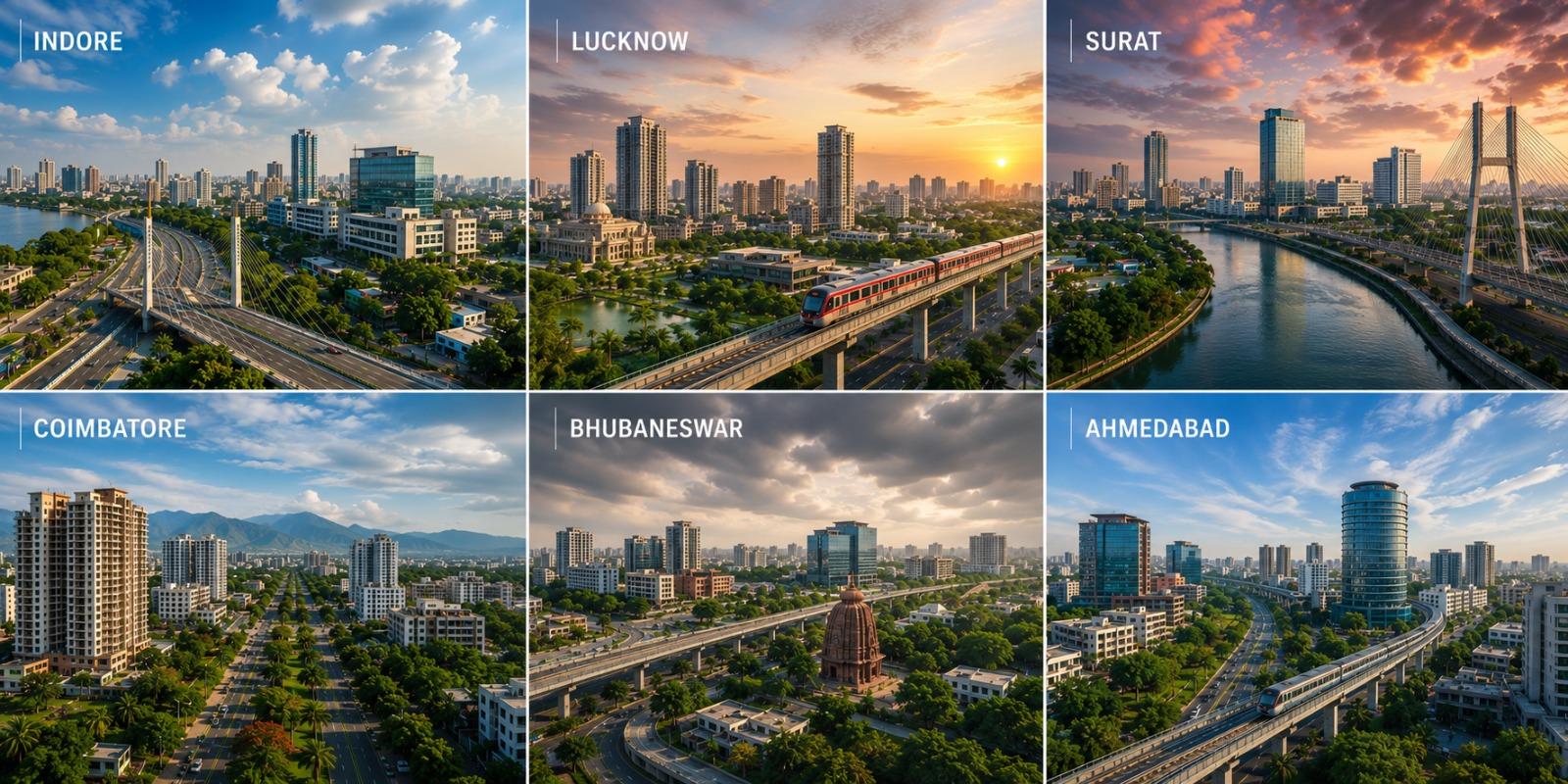
Coimbatore never really needed real estate hype. It has run on textiles, engineering and pump manufacturing for generations, quietly generating wealth that eventually finds its way into property. What has changed is scale. A new wave of IT and light engineering investment is layering on top of the old manufacturing base, pushing demand for apartment living in a city once known mostly for independent houses. Prices remain a fraction of comparable Chennai homes, and that gap will not last forever. It's one of the more affordable property markets left in South India.
Bhubaneswar: Odisha's Quiet Real Estate Surge
Bhubaneswar rarely gets mentioned in national real estate conversations, which is exactly why it deserves attention. The city has steadily built out its road network, expanded its IT corridor and kept living costs low enough that professionals from other states are settling there rather than just working there temporarily. Government offices and a walkable core have created demand that feels organic rather than speculative, making it one of the more overlooked emerging real estate markets in eastern India.
Surat: Diamond City Diversifies Into Real Estate
Surat has always been synonymous with diamonds and textiles, but the money those industries generate is increasingly flowing into land and housing rather than staying purely in trade. The city's civic infrastructure, often cited among the best maintained in the country, has widened its appeal beyond the traditional business community. Riverfront development and expanding road connectivity toward the upcoming international airport are adding fresh legs to an already self-funded market.
Meerut: The NCR Spillover Nobody Saw Coming
Meerut used to be an afterthought next to Delhi and Noida. The Delhi Meerut Expressway and the regional rapid rail transit system changed that almost overnight by cutting travel time to the capital down to something commutable. Planned zones around Modipuram and the Roorkee Road corridor are now attracting developers who see a city with NCR access at non-NCR prices, and that combination rarely stays a secret for long. This is exactly why land investment here is picking up pace.
What Ties These Markets Together
None of these cities are betting on hype alone. Each has a real economic engine, whether logistics, manufacturing, government presence or industrial trade, and each has an infrastructure project either complete or close to it. That mix of existing income and improving connectivity moves property investment returns over a five to seven year horizon, far more reliably than a press release about a future metro line.
Summary
India's real estate goldmine right now is not hiding in a single city. It is spread across Nagpur, Coimbatore, Bhubaneswar, Surat and Meerut, where genuine economic activity is meeting improving infrastructure at prices metros abandoned years ago. Tier 2 city investment is no longer a consolation prize for buyers priced out of Mumbai or Bengaluru. It has become a deliberate strategy for anyone who understands that real estate appreciation in India follows fundamentals, not headlines, and that the best entry points always look unremarkable right before they stop being cheap.