
Indian Homebuyers Did Not Get the Memo About Global Uncertainty. Here Is What the Q2 2026 Sales Numbers Actually Show
Summary
Indian housing sales defied global uncertainty in Q2 2026, rising 19% nationally. Southern and Western cities led this surge, while Delhi-NCR and Kolkata saw declines, indicating robust, broad-based demand and developer confidence.

A Quarter That Defied the Mood
Anyone reading the global headlines through April, May, and June of this year would have expected Indian homebuyers to pull back a little. Tensions in the Middle East, jittery global markets, and a generally cautious mood among institutional investors usually translate into a softer property market, at least for a quarter or two. That is not what happened.
According to data released by property analytics firm PropEquity, housing sales rise 19 percent across India's nine largest cities in the April to June period this year, touching 1,12,458 units against 94,864 units in the same quarter last year. New launches kept pace too, climbing 43 percent year-on-year to reach 1,17,609 units.
The South Did the Heavy Lifting
If there is one theme running through this quarter's data, it is the continued strength of southern India. Bengaluru posted the sharpest sales growth among all nine cities, up 47 percent year-on-year to 21,516 units sold. That kind of jump for a market already as large as Bengaluru is genuinely unusual, and it cements the city's position as the country's single biggest residential market by both volume sold and volume launched.
Hyderabad was not far behind in terms of relevance, even if the percentage growth looked more modest at 22 percent, taking sales to 14,410 units from 11,815 a year earlier. What stands out about Hyderabad this quarter is not the sales figure on its own but how the city has positioned itself on supply. New launches there jumped 75 percent to 18,407 units, pushing Hyderabad past Pune, Thane, and Delhi-NCR to become the second-largest new supply market in the country, trailing only Bengaluru.
Chennai added an 18 percent rise in sales, moving from 5,354 to 6,323 units. It is a smaller market in absolute terms compared to its peers, but consistent double-digit growth quarter after quarter suggests the city's housing demand is broadening rather than staying confined to a handful of established neighbourhoods.

The Western Corridor Surprised Almost Everyone
While the southern cities get most of the attention in these reports, the western markets quietly delivered some of the most dramatic numbers this quarter. Navi Mumbai recorded the single highest sales growth rate of any city tracked, up 61 percent year-on-year to 11,029 units, rising from just 6,833 units a year earlier.
Supply in Navi Mumbai told an even bigger story, more than doubling with a 116 percent jump to 9,902 new units. Mumbai itself was not far off that pace, with sales climbing 32 percent to 10,561 units and supply rising 111 percent to 10,438 units.
Pune and Thane grew more steadily, at 9 percent and 10 percent respectively, which in the context of this quarter almost reads as conservative. But steady growth in already mature, high-volume markets is its own kind of achievement.
Where the Slowdown Actually Happened
Not every city joined the party. Delhi-NCR posted a sales decline of 14 percent, dropping to 10,082 units from 11,703 a year earlier, while new supply in the region also slipped, falling 6 percent to 12,977 units. Kolkata fared worse still, with sales down 23 percent to 3,414 units.
These two markets have had a tougher run for a few quarters now, and this data does not suggest an imminent turnaround. Elevated pricing in pockets of NCR, combined with limited fresh project activity, appears to be weighing on absorption in a way that the southern and western markets are not currently experiencing.
What Is Actually Driving This Growth
PropEquity's founder Samir Jasuja pointed to something worth sitting with for a moment. India's housing market, in his assessment, has barely registered the disruption from geopolitical tension in the Middle East, and demand has stayed healthy through it. Industry voices elsewhere echoed a similar sentiment, attributing Bengaluru's continuing strength specifically to job creation and sustained office leasing activity in the city, which keeps feeding fresh end-user demand into its housing market.
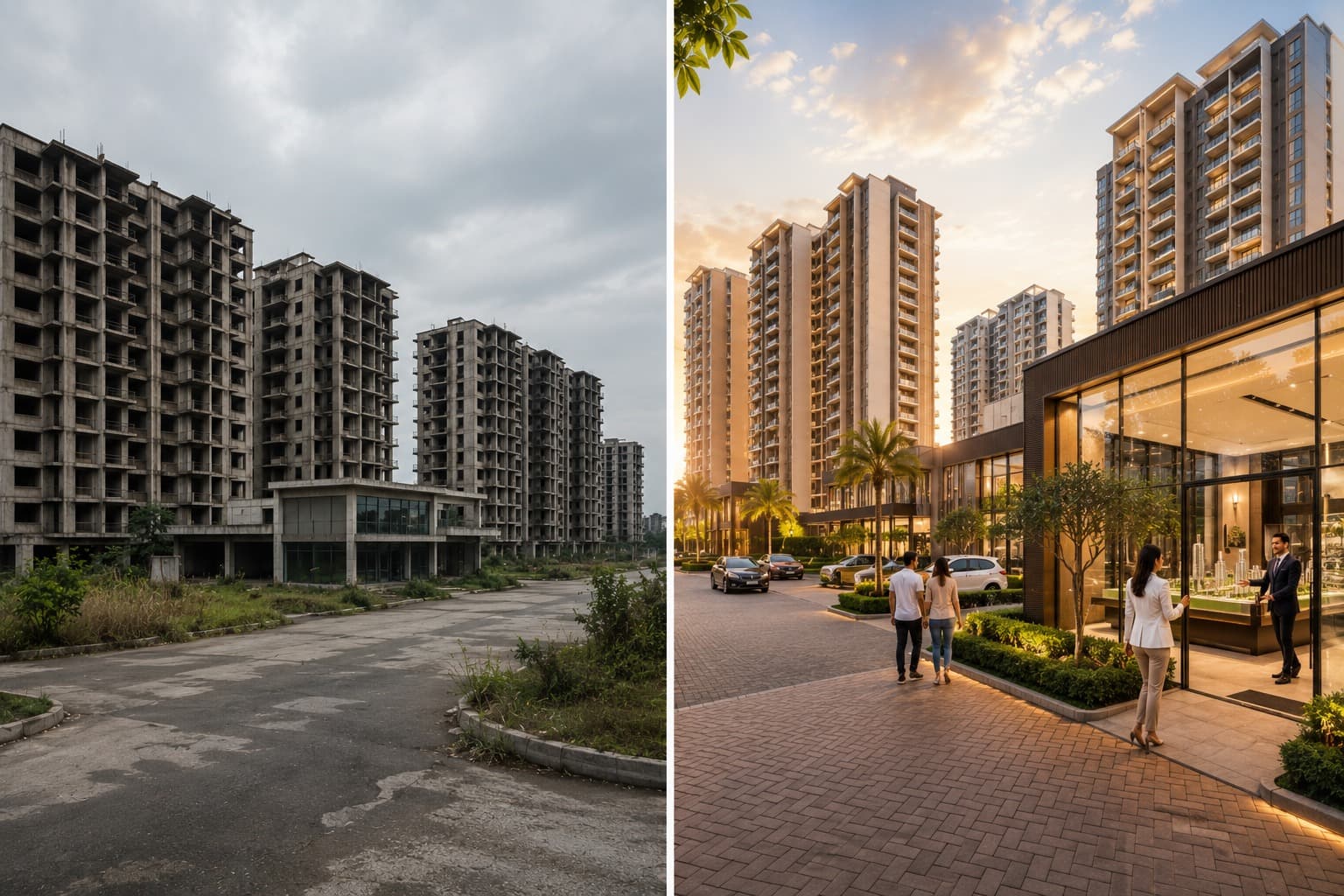
There is also a quieter trend buried in the numbers. New supply outpaced sales growth nationally, at 43 percent against 19 percent. After several quarters where developers held back launches, builders appear to be releasing inventory they had been sitting on, betting that absorption will keep up. So far in this quarter, that bet has paid off.
What This Means Going Forward
The bigger takeaway from this quarter is not any single city's number but the overall resilience of demand across very different kinds of markets, mature ones like Mumbai and Pune, fast-growing ones like Bengaluru and Navi Mumbai, and steadier ones like Chennai. India housing market 2026 is clearly not being driven by one factor or one region alone, which generally makes for a more durable growth story than a single-city boom would.
For Delhi-NCR and Kolkata, the next couple of quarters will be worth watching closely to see whether this softness is temporary or the start of a longer correction.
Summary
Housing sales rise 19 percent across India's top nine cities in Q2 2026, with Navi Mumbai, Chennai, and Hyderabad posting some of the strongest year-on-year gains, according to PropEquity. Bengaluru retained its position as the country's largest housing market by sales and new supply, while Delhi-NCR and Kolkata lagged behind with notable declines. With new launches growing faster than sales nationally, the India housing market 2026 appears to be entering a phase defined by stronger supply confidence and broadening demand across cities rather than concentration in any single region.