
India Housing Sales Fall 4% in Q1 2026: A Detailed Analysis
Summary
India's housing sales saw a 4% dip in Q1 2026, influenced by price pressures and geopolitical events. While affordable housing declines, some cities still grow, signaling market consolidation, not collapse.

Introduction
After several years of extraordinary growth, India's residential property market has hit a visible speed bump. Housing sales in Q1 2026 dropped four percent annually across eight major cities to 84,827 units in the January-March period, down from 88,361 units in the same quarter last year, according to Knight Frank India. The decline was not uniform. Three cities pulled the national average down while five others actually grew. And the reasons behind the numbers are a mixture of structural and situational forces that tell you a great deal about where Indian real estate stands right now.
The Three Cities That Dragged the Market
Mumbai housing sales bore the sharpest pain, falling seven percent annually to 23,185 units in Q1 2026. Delhi-NCR dropped eleven percent to 12,734 units, and Pune fell by the same margin to 12,711 units. Three of India's largest and historically most active residential markets all contracting simultaneously is not a random event. It points to a common pressure: prices have climbed so far and so fast over the past multi-year upcycle that affordability has begun to genuinely strain buyer capacity in these three markets, all of which have seen among the highest price appreciation in the country over the past five years.
High prices colliding with flat or modest income growth is a recipe for deferred purchase decisions, and that is precisely what the Q1 2026 data reflects in Mumbai, NCR, and Pune.
Five Cities Held Their Ground
The story looks entirely different when you move to the other cities in the survey. Bengaluru grew five percent annually to 13,092 units. Chennai rose nine percent to 4,763 units. Kolkata added five percent to reach 4,043 units. Ahmedabad posted two percent growth at 4,758 units. Hyderabad managed a one percent annual gain at 9,541 units.
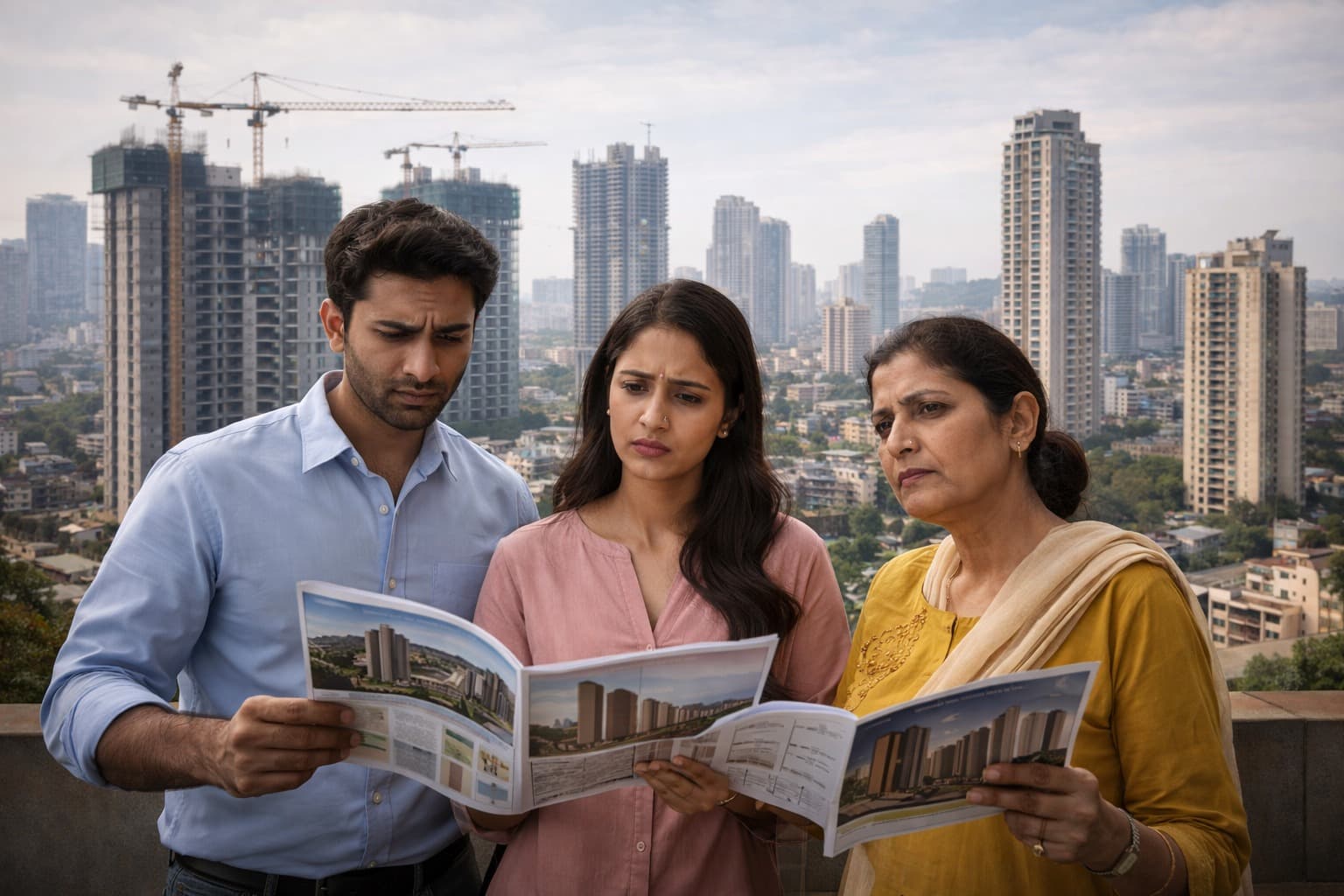
The contrast matters. Cities where prices, while rising, have not yet pushed past what middle-income buyers can absorb are still seeing active transaction volumes. Bengaluru in particular stands out as the market that has most cleanly replaced Mumbai as the most dynamic residential property destination in India right now.
The Geopolitical Factor
Beyond pricing pressure, the US-Iran war introduced a specific layer of uncertainty in Q1 2026 that dampened buyer sentiment, particularly among investors with exposure to West Asian markets. India's luxury real estate segment has historically attracted meaningful investment from the Indian diaspora based in the Gulf region. When a conflict of this scale breaks out in that geography, those buyers pause. Anuj Puri, Chairman of Anarock, described this as the short-term tremors of the Iran conflict affecting buyer sentiment, particularly for Middle Eastern buyers active in Indian real estate.
Shishir Baijal of Knight Frank India framed it carefully, noting that while natural post-upcycle consolidation plays a role, the volatile geopolitical situation has also resulted in subdued interest in residential demand. These are two distinct but simultaneous pressures.
Affordable Housing Continues Its Retreat
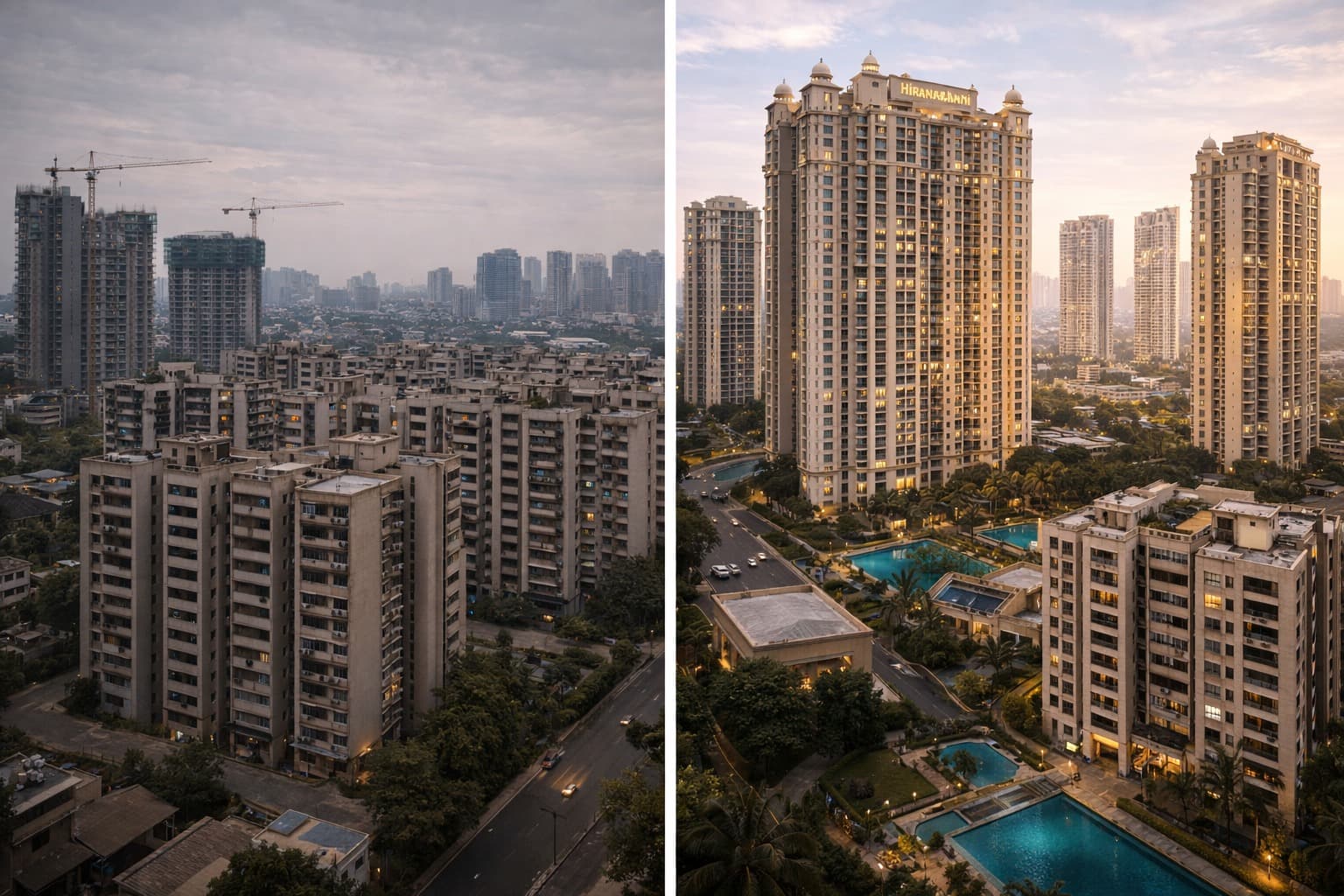
Perhaps the most concerning long-term trend in the Q1 2026 data is the continued erosion of the affordable housing segment in India. Properties priced below Rs 40 lakh now account for only ten percent of new supply across the top cities. Meanwhile, the Rs 1.5 crore to Rs 2.5 crore bracket has become the largest segment at 32 percent of new launches, and properties above Rs 2.5 crore account for another 20 percent.
This tilt toward premium supply is market-rational from a developer's perspective. Rising land and construction costs make affordable projects increasingly difficult to execute profitably. But the social consequence is a widening gap between what the market offers and what the majority of urban Indians can actually buy. Prices rose seven percent year-on-year even as volumes dipped, confirming that the premium end is holding firm while the volume end softens.
Inventory Is Building Up
One direct consequence of the mismatch between launches and sales is rising unsold inventory. Total unsold housing across the top cities crossed 6.01 lakh units by the end of Q1 2026, up four percent quarter-on-quarter and seven percent year-on-year. New supply also fell two percent annually to 94,855 units. When launches consistently exceed absorption, as they did in Q1 2026, inventory builds. That inventory could eventually prompt developers to offer payment flexibility or deferred possession schemes, though outright price cuts in premium segments are unlikely.
The Long-Term View Holds
Despite the headline decline, context matters. Annual average property prices across the top cities rose to approximately Rs 9,456 per square foot in Q1 2026, up seven percent from Rs 8,868 in Q1 2025. Year-on-year sales volumes across a broader seven-city ANAROCK count were up nine percent. The structural demand story of India's housing market, driven by urbanisation, household formation, and rising aspiration, has not reversed.
Summary
India's housing sales fell four percent in Q1 2026 to 84,827 units per Knight Frank, with Mumbai, NCR, and Pune dragging the overall figure down through declines of seven, eleven, and eleven percent respectively, driven by high property prices and geopolitical uncertainty from the US-Iran conflict. The affordable housing segment continued its decline, now representing only ten percent of new supply. But Bengaluru, Chennai, Ahmedabad, Kolkata, and Hyderabad all posted annual growth, confirming that the demand slowdown is concentrated in markets where affordability has been most severely tested. India's residential real estate market in 2026 is in a consolidation phase, not a collapse, with long-term structural drivers still firmly intact.
Video will be embedded from: https://www.youtube.com/watch?v=HAuTq2dYLa0