
Impact of Zoning Changes: A Guide for Property Owners and Investors
Summary
Zoning changes significantly impact property values and urban development. Understanding these laws is crucial for owners and investors to navigate new opportunities and potential challenges, ensuring informed decisions and community growth.

Introduction
Zoning laws play a critical role in shaping the urban landscape. They define how land can be used, determine building types, and set limits on development. For homeowners, developers, and investors, understanding zoning laws, land use, and property rules is essential. Changes in these regulations can influence property values, create new development opportunities, and reshape neighborhoods. This article explores the impact of zoning changes in your area, how they affect real estate prices, and what residents and investors need to consider.
1. Understanding Zoning Laws and Land Use
At its core, a zoning law is a real estate regulation that governs what can be built and where. Municipalities categorize areas into residential, commercial, industrial, and mixed-use zones. Each zone has specific development plans governing building height, density, setbacks, and permissible activities. These rules aim to manage urban growth, prevent conflicts between different land uses, and protect community resources. Knowing your area’s zoning framework helps property owners navigate legal requirements and make informed decisions.
2. Why Zoning Changes Occur
Cities continuously adapt land use policies to meet growing population demands, economic shifts, or infrastructure needs. Government zoning revisions affecting builders often reflect urban planning goals, such as promoting higher density, mixed-use development, or commercial hubs. For example, a residential area might be reclassified to allow retail spaces, or an industrial zone could become a mixed-use corridor. Zoning changes are a way for local governments to balance growth, sustainability, and economic vitality.
3. How Zoning Changes Impact Property Value
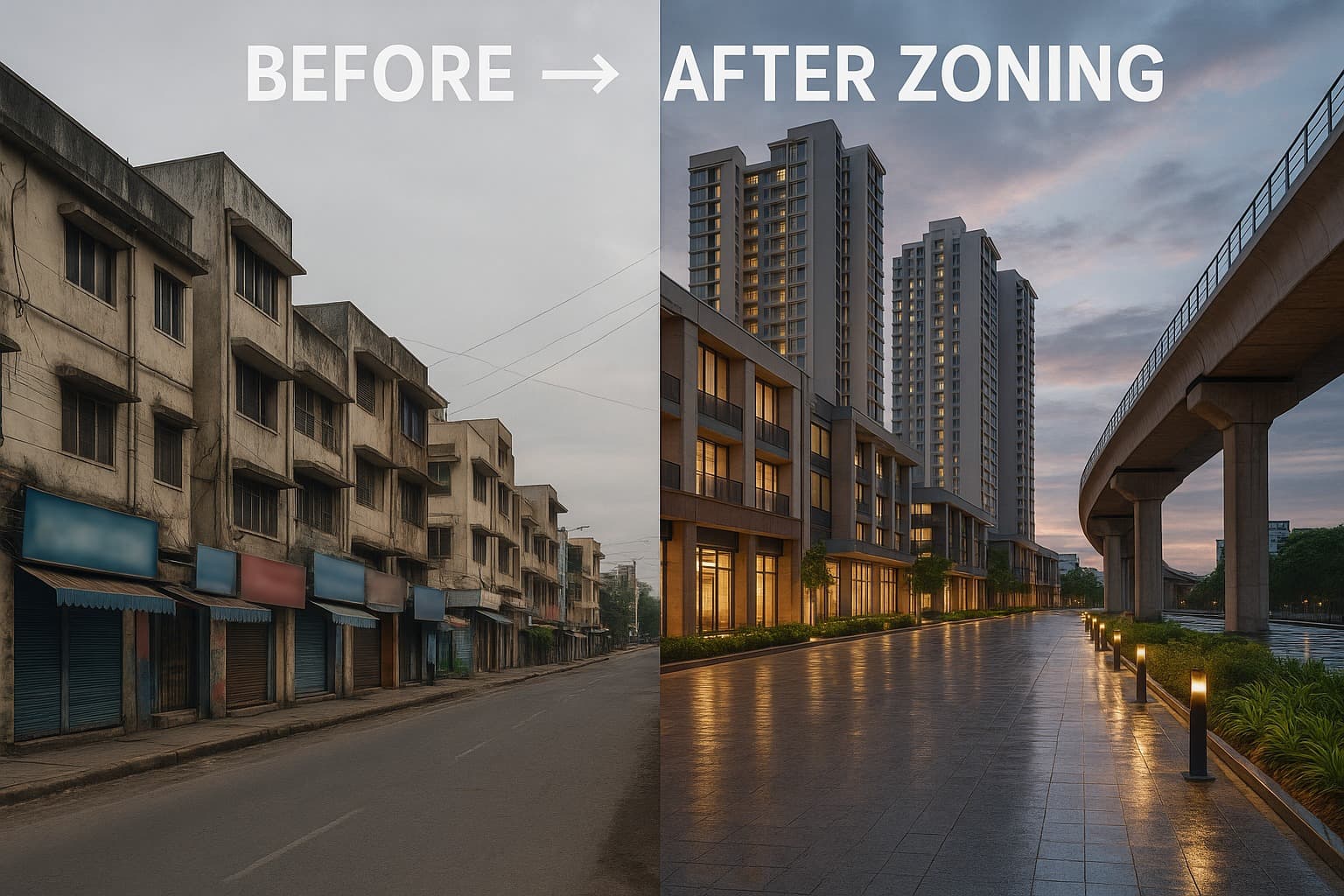
The impact of zoning changes on property value can be significant. When a plot is reclassified for higher-density development or commercial use, it often increases in market value due to greater potential income. Conversely, stricter zoning restrictions can limit expansion or renovation possibilities, potentially lowering property value. Understanding how zoning changes in your area impact real estate prices helps owners and investors anticipate gains or challenges from upcoming regulations.
4. Residential and Commercial Zoning Rules
Residential and commercial zoning rules define the permissible use of properties. Residential zones dictate housing types, building heights, and open space requirements. Commercial zoning regulates the types of businesses, floor area ratios, and parking needs. Developers and buyers must understand these rules to comply with local regulations and plan projects efficiently. In areas with frequent zoning revisions, keeping updated ensures compliance and prevents potential legal complications.
5. Effects of Land Use Reclassification
Effects of land use reclassification on property appreciation can be transformative. A residential plot upgraded for commercial or mixed-use development can command higher prices and attract investors. Reclassification often brings modern infrastructure, better connectivity, and enhanced neighborhood amenities. However, it can also increase traffic, change community dynamics, or require additional investment for compliance with new regulations. Awareness of potential impacts is key for long-term property planning.
6. Zoning Changes and Urban Development
How zoning laws shape city development is evident in the way neighborhoods evolve. Zoning determines the placement of residential complexes, shopping centers, and public facilities. Strategic zoning fosters high-density, transit-oriented development, reducing urban sprawl and creating vibrant, accessible communities. Conversely, poorly planned zoning can cause congestion, inadequate infrastructure, and inefficient land use, affecting overall property value and quality of life.

7. Opportunities for Buyers and Investors
Zoning modifications often create real estate opportunities from zoning modifications. Early awareness of zoning changes allows investors to acquire properties with high potential for appreciation. Residential areas reclassified for mixed-use or commercial development provide chances for rental income, retail ventures, or larger projects. Investors familiar with urban zoning regulations buyers and investors should know can make strategic decisions to maximize returns while mitigating risks.
8. Social and Economic Impacts
Zoning changes influence social dynamics and local economies. Inclusive zoning encourages mixed-income housing and equitable access to resources, whereas exclusionary zoning can limit opportunities for certain groups. Updated city planning and zoning updates reshaping housing markets can either revitalize neighborhoods or inadvertently create inequality. Developers, buyers, and local governments must balance economic gains with social considerations to create sustainable communities.
9. Staying Informed and Planning Ahead
To benefit from zoning updates, property owners and investors should monitor new land use policies in their city or state, review municipal development plans, and seek guidance from real estate consultants or urban planners. Participating in public consultations and staying aware of proposed zoning changes allows stakeholders to make informed choices and leverage opportunities created by regulatory shifts.
Summary
Zoning changes influence property values, urban growth, and neighborhood development. From residential to commercial reclassifications, understanding zoning laws, land use, and property rules is critical for buyers, investors, and developers. Changes in real estate regulation can create opportunities for property appreciation, new business ventures, or higher-density development, while also posing challenges related to infrastructure and social equity. Staying informed about city planning and zoning updates reshaping housing markets enables stakeholders to make strategic decisions, capitalize on opportunities, and contribute to sustainable, thriving communities.