
How Redevelopment Is Reshaping Gujarat’s Real Estate Landscape
Summary
Redevelopment is reshaping Gujarat's real estate, modernizing cities and enhancing housing quality. This trend, driven by policy and buyer preferences, offers benefits to residents, developers, and investors, promoting sustainable urban growth.

Introduction
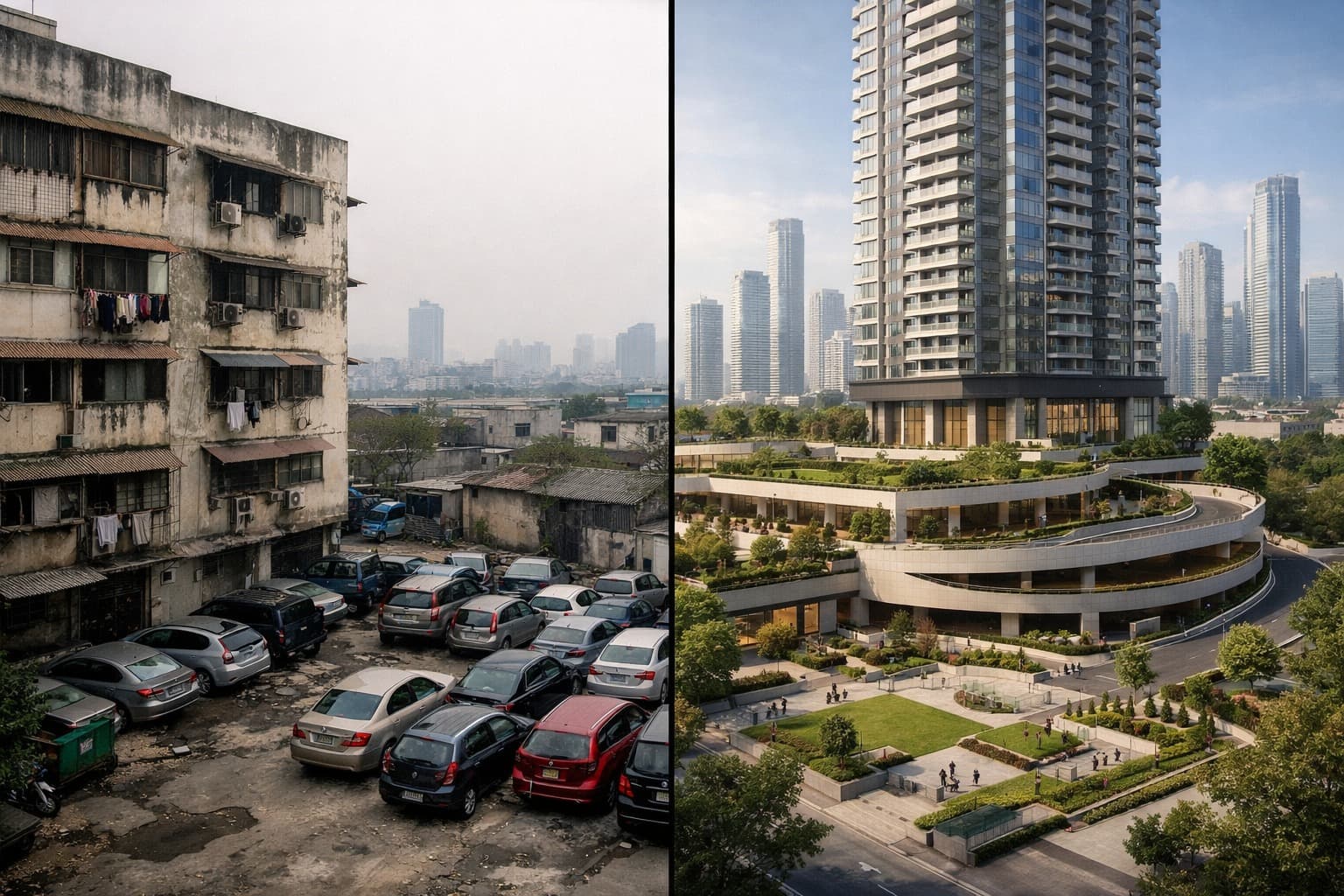
Gujarat’s real estate market is entering a new phase of transformation driven by large-scale redevelopment across major cities. Instead of expanding endlessly into new land parcels, developers and authorities are now focusing on upgrading existing urban areas. Ageing buildings, congested neighbourhoods, and outdated infrastructure are being replaced with modern housing and mixed-use developments. This shift highlights how a redevelopment wave reshaping Gujarat real estate landscape is redefining urban living, investment patterns, and long-term city planning.
What Redevelopment Means in the Gujarat Context
Redevelopment refers to demolishing old or structurally weak buildings and reconstructing them with modern facilities while utilising the same land parcel. In Gujarat, redevelopment is becoming a practical solution to address space constraints in established urban zones. Cities like Ahmedabad, Surat, and Vadodara have many old residential clusters where redevelopment offers safer housing and better infrastructure without expanding city boundaries.
Why Redevelopment Has Gained Momentum
Several factors are driving redevelopment in Gujarat. Many buildings constructed decades ago no longer meet safety standards. Growing urban populations have increased pressure on housing availability. Redevelopment allows better land utilisation while upgrading amenities. Government support, relaxed development norms, and infrastructure improvements have further accelerated redevelopment in Gujarat across residential and mixed-use segments.
Role of Urbanisation and Infrastructure Growth
Rapid urbanisation has changed housing needs in Gujarat’s cities. Improved road networks, metro projects, and commercial hubs have increased land value in central locations. Redevelopment helps align older areas with current infrastructure standards. This integration supports urban redevelopment trends in Gujarat cities, ensuring that growth is balanced and sustainable rather than scattered.
Benefits for Existing Residents
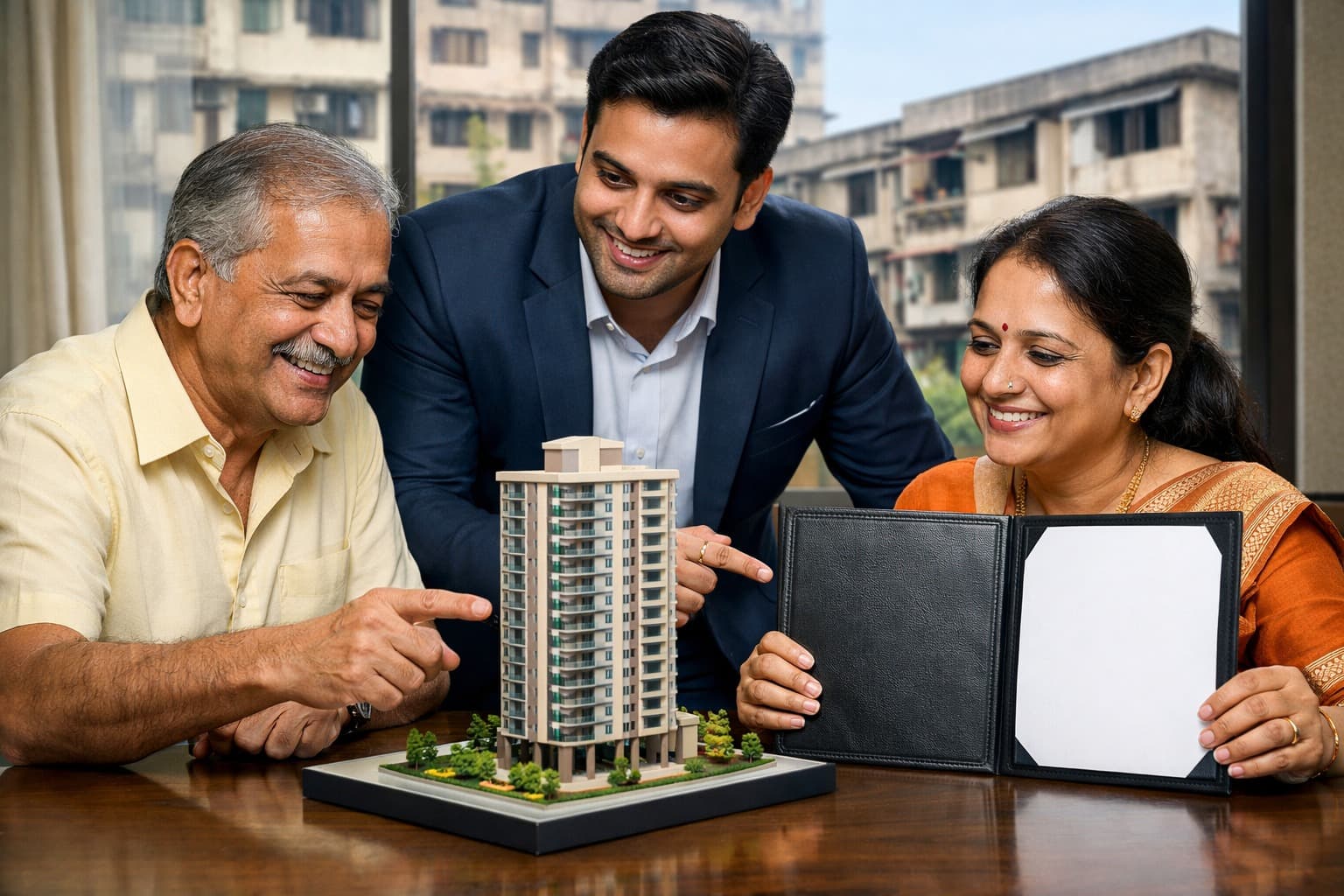
For existing residents, redevelopment offers multiple advantages. They receive new homes with improved safety, better layouts, and modern amenities without paying the full cost of a new property. Larger carpet areas, elevators, parking, and improved utilities significantly enhance living standards. These benefits make redevelopment an attractive option for housing societies considering long-term security and comfort.
Developer Perspective on Redevelopment Projects
From a developer’s point of view, redevelopment projects offer access to prime locations where new land acquisition is difficult. While such projects involve complex negotiations and approvals, they also promise stable demand. Redevelopment aligns well with Gujarat real estate growth by focusing on value creation rather than speculative expansion into distant suburbs.
Impact on Housing Supply and Pricing
Redevelopment adds new housing units in already developed areas, improving supply without increasing urban sprawl. This helps stabilise property prices in premium city locations. While redevelopment homes may be priced higher due to location advantage, they offer better value compared to older structures. The impact of redevelopment on Gujarat housing sector is therefore both quantitative and qualitative.
Changing Buyer Preferences
Homebuyers today prioritise safety, amenities, and connectivity. Redeveloped projects meet these expectations by offering modern design within familiar neighbourhoods. Buyers who prefer central locations over distant townships increasingly choose redeveloped properties. This shift reflects how urban housing redevelopment aligns with evolving lifestyle needs.
Regulatory Support and Policy Framework
State policies play a crucial role in facilitating redevelopment. Simplified approval processes, development incentives, and infrastructure alignment encourage participation from both residents and developers. Transparent regulations reduce disputes and delays. Such support strengthens confidence in redevelopment projects Gujarat and encourages long-term investment.
Redevelopment Versus Greenfield Development
Unlike greenfield projects, redevelopment does not require new land acquisition. It focuses on maximising existing land potential. While greenfield developments expand city limits, redevelopment strengthens core urban areas. This balance helps Gujarat manage growth sustainably while preserving accessibility and infrastructure efficiency.
Economic and Employment Impact
Redevelopment projects generate employment across construction, planning, and allied industries. They also stimulate local economies through increased commercial activity. Upgraded neighbourhoods attract businesses, improving overall urban vitality. The broader real estate Gujarat market benefits from these multiplier effects.
Challenges in Redevelopment Execution
Despite its advantages, redevelopment comes with challenges. Resident consent, relocation planning, and project timelines require careful management. Financial structuring and regulatory compliance add complexity. Successful redevelopment depends on transparent communication and professional execution to maintain trust among stakeholders.
Long-Term Urban Transformation
Over time, redevelopment contributes to safer cities, better land utilisation, and improved infrastructure efficiency. It replaces fragmented growth with structured urban renewal. This transformation supports Gujarat’s vision of modern, resilient cities capable of supporting future population growth.
Investor Outlook on Redevelopment
For investors, redevelopment projects offer stable long-term potential rather than quick gains. Prime locations, modern construction, and sustained demand support appreciation. Investors focusing on fundamentals find redevelopment a lower-risk opportunity compared to speculative peripheral projects.
Sustainability and Resource Efficiency
Redevelopment promotes sustainable urban development by reducing pressure on new land and infrastructure. It encourages vertical growth and efficient resource use. Modern construction standards also improve energy efficiency and environmental performance.
What This Trend Signals for Gujarat
The ongoing redevelopment wave reflects maturity in Gujarat’s property market. It signals a shift from expansion-driven growth to quality-driven urban renewal. As cities continue to modernise, redevelopment will play a central role in shaping housing, infrastructure, and investment patterns.
Final Perspective
The redevelopment wave reshaping Gujarat real estate landscape represents a strategic evolution rather than a temporary trend. By upgrading existing urban areas, Gujarat is creating safer, more efficient, and more livable cities. This approach balances growth with sustainability and positions the state’s real estate sector for long-term stability and resilience.
Summary
Redevelopment is transforming Gujarat’s real estate market by modernising ageing urban areas and improving housing quality without expanding city limits. Driven by infrastructure growth, policy support, and changing buyer preferences, redevelopment offers benefits to residents, developers, and investors alike. It enhances safety, amenities, and land utilisation while supporting sustainable urban growth. As Gujarat’s cities continue to evolve, redevelopment will remain a key driver shaping the future of housing, investment opportunities, and overall urban development across the state.
Video will be embedded from: https://www.youtube.com/watch?v=6iHhdINn-Kg