
House of Hiranandani Enters Co-Working Office Space Market in Mumbai
Summary
House of Hiranandani enters Mumbai's co-working market with a 160-seat pilot in Powai, targeting startups and freelancers. The move diversifies revenue, leverages brand reputation, and addresses the rising demand for flexible workspaces.

India’s real estate sector is rapidly evolving. Developers are no longer limited to residential or commercial projects; many are exploring flexible office solutions to cater to startups, freelancers, and small businesses. Recently, the House of Hiranandani, a trusted name in Indian real estate, announced its entry into the co-working office space market by launching a 160-seat pilot in Mumbai’s Powai area. This bold step has drawn attention from entrepreneurs, corporate tenants, and industry analysts.
Changing Trends in Urban Workspaces
The modern workplace has undergone a major transformation. Post-pandemic work patterns, the rise of hybrid work models, and the growth of freelance and gig economies are reshaping office demand. Professionals increasingly seek affordable, flexible office solutions without committing to long-term leases or heavy infrastructure investments. This shift has prompted both traditional developers and co-working specialists to rethink how office spaces are designed, managed, and marketed.
Why House of Hiranandani is Entering Co-Working Spaces
Several factors motivated House of Hiranandani’s decision. First, Mumbai’s office market, particularly in suburban hubs like Powai, has seen growing demand for cost-effective and well-managed office spaces. Powai’s proximity to tech parks, corporate offices, and residential areas makes it an ideal location for startups, freelancers, and small consulting firms.
Second, co-working spaces allow developers to diversify revenue streams. Traditional income relies heavily on property sales or long-term commercial leases, which fluctuate with market cycles. Flexible office solutions, on the other hand, generate recurring income through monthly or quarterly subscriptions, providing financial stability.
Lastly, the company’s strong brand reputation in residential and commercial projects gives it an edge. Tenants value quality, safety, and reliable delivery — traits that are synonymous with House of Hiranandani.
Design and Features of the Powai Pilot
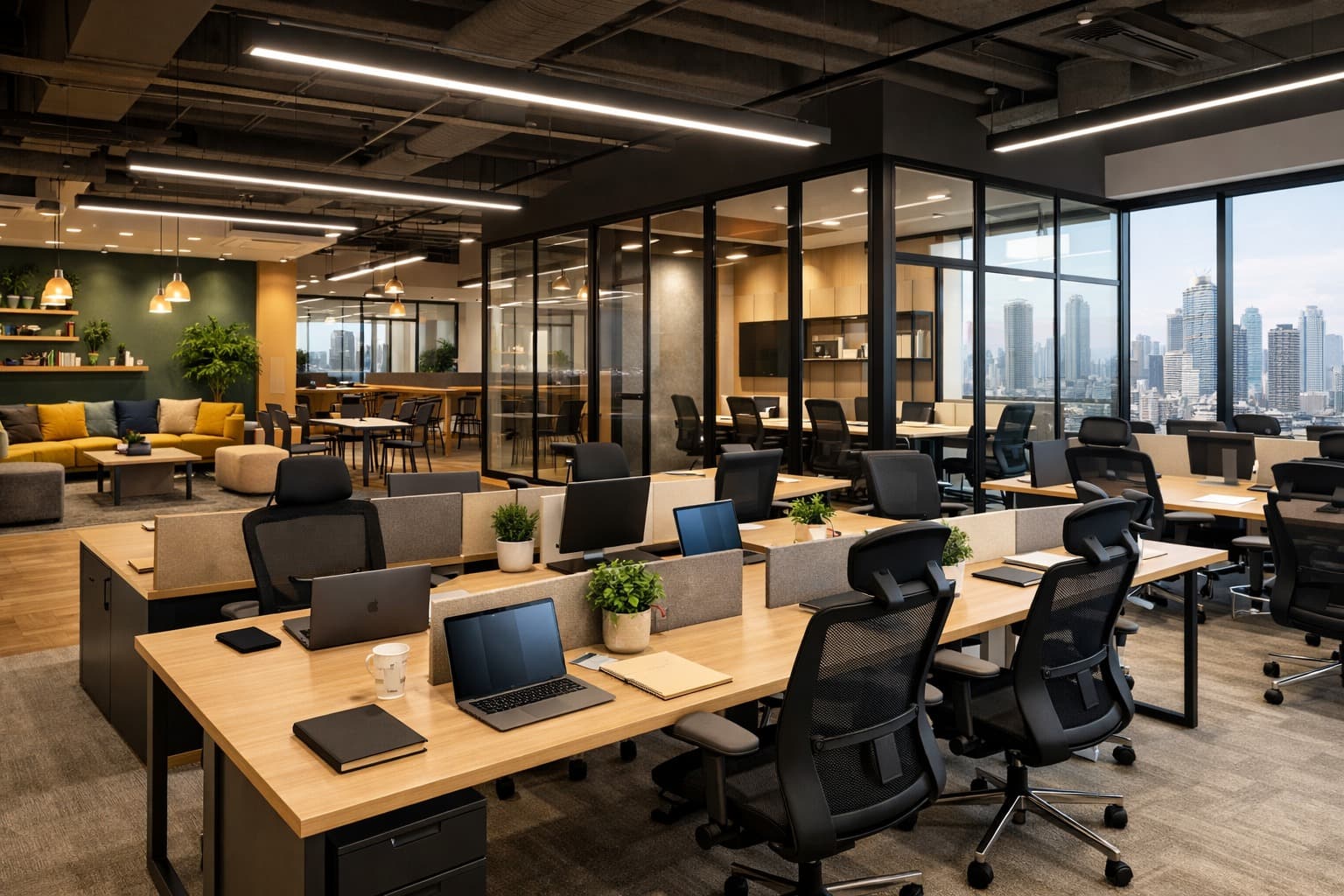
The Powai pilot has been carefully planned to meet modern workspace needs. With 160 seats, it combines collaborative zones for team interaction with private cabins for focused work. Amenities include high-speed internet, ergonomic furniture, meeting rooms, pantry facilities, and breakout areas. The layout is designed to encourage networking while also respecting privacy.
Sustainability is a key focus, with energy-efficient systems and eco-friendly designs integrated throughout. The pilot reflects a modern workspace philosophy, balancing comfort, professional aesthetics, and functional efficiency.

Supporting Market Trends
India’s co-working sector has seen consistent growth over recent years. Rising urbanization, hybrid work trends, and increased demand from startups and small enterprises have boosted the popularity of shared offices. Professionals prefer ready-to-use spaces that reduce the financial and operational burden of managing their own office.
Investors are also noticing the potential for stable returns. Unlike conventional office spaces that may remain vacant for months, co-working setups attract a continuous stream of tenants. This makes them appealing for long-term investment if managed well.
Strategic Advantages for the Developer
Entering the co-working space market offers multiple advantages for House of Hiranandani:
Brand Leverage: Established reputation builds trust among tenants.
Market Reach: Residential and commercial expertise allows targeting of professionals living in the company’s housing projects.
Portfolio Diversification: Recurring income from co-working spaces complements traditional revenue from property sales.
Urban Integration: Powai, a high-demand suburban hub, ensures proximity to corporate and residential clusters.
Scalability: The pilot model can be replicated in other cities and suburbs, reducing operational risk.
By combining brand strength, strategic location, and flexible design, the company positions itself as a serious competitor in Mumbai’s co-working segment.
Challenges and Considerations
The co-working sector, while promising, is not without challenges. Competition in Mumbai is intense, with established players like WeWork, Awfis, and 91Springboard already operating successfully. House of Hiranandani will need to differentiate its services through pricing, amenities, and a community-focused experience.
Financial management is another key concern. Recurring revenue may not immediately cover operational costs and loan repayments, especially during slow market phases. Maintaining occupancy rates, subscription pricing, and service quality is essential for profitability.
Finally, long-term success depends on innovation. Tenants now expect technology-enabled environments, wellness-focused designs, and hybrid work solutions. Meeting these expectations will determine whether the company retains clients and maintains steady growth.
The Future of Co-Working in Mumbai
If the Powai pilot succeeds, House of Hiranandani could expand its co-working footprint across Mumbai and other urban hubs. The developer may integrate these spaces into mixed-use developments, combining residential, retail, and office spaces in one ecosystem.
This move signals a broader industry trend: traditional developers are evolving beyond building homes or offices. Co-working spaces represent a fusion of real estate, community-building, and professional services, allowing developers to stay relevant in changing markets.
By offering flexible, modern, and accessible office solutions, House of Hiranandani positions itself at the forefront of real estate innovation while meeting the evolving needs of urban professionals.
Summary
House of Hiranandani has launched a 160-seat co-working pilot in Powai, Mumbai, targeting startups, freelancers, and small businesses. The project emphasizes collaborative zones, private cabins, modern amenities, and eco-friendly design to meet the evolving needs of professionals. Co-working spaces offer recurring income, portfolio diversification, and scalable growth for developers. While challenges like competition, operational costs, and tenant expectations exist, strategic planning, strong branding, and innovation position the company for long-term success, marking a significant step in India’s flexible workspace revolution.
Video will be embedded from: https://www.youtube.com/watch?v=Uf0I46KGZQ0