
Goa's Mhaje Ghar Scheme Is Finally Putting Ownership Papers Into Hands That Waited Generations
Summary
Goa's Mhaje Ghar Scheme grants legal ownership to Goan families on public land, ending generations of title uncertainty. It regularizes pre-2014 homes, delivering documents directly to eligible residents.

The Problem Nobody Could Fix for Decades
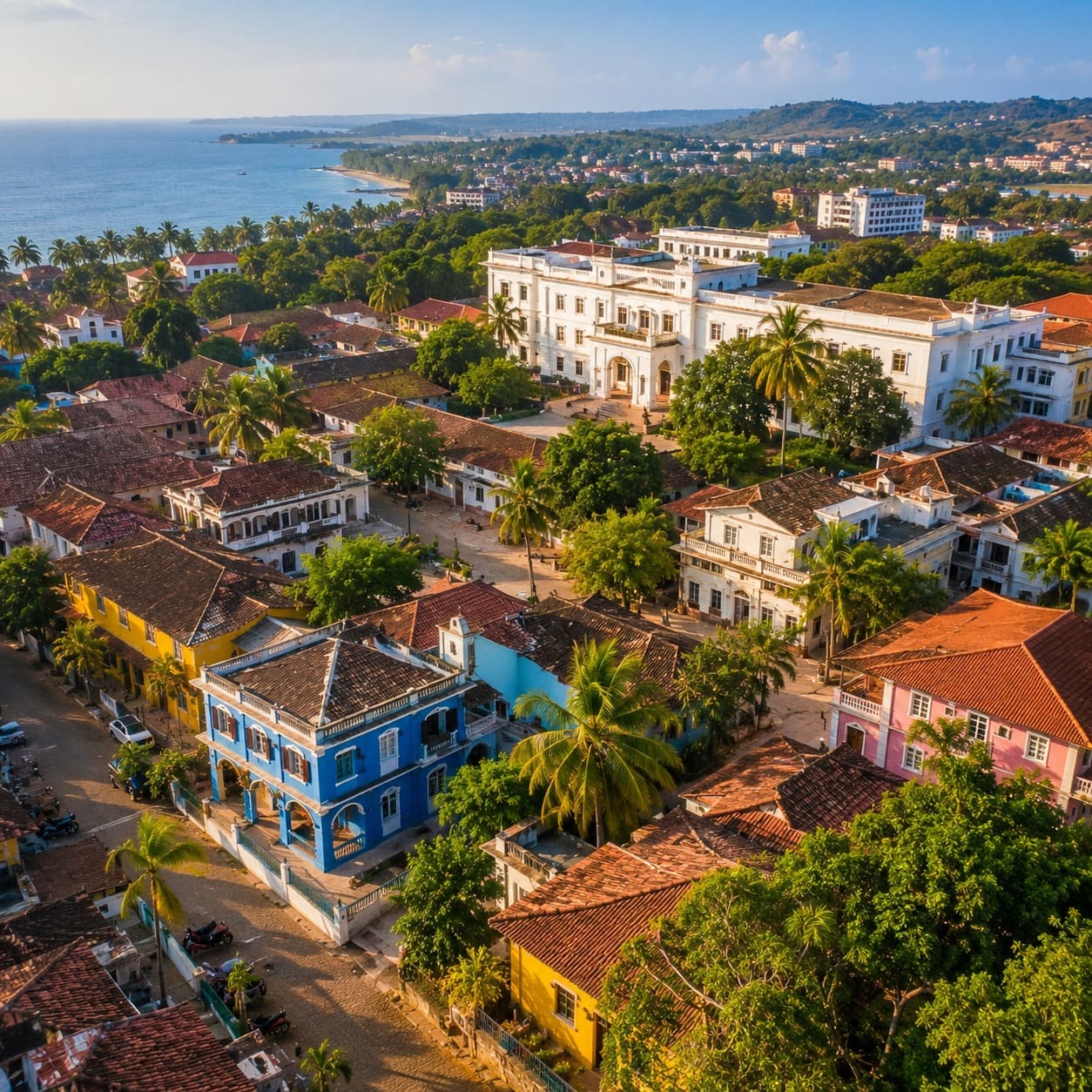
In Goa, a particular kind of housing anxiety has existed since long before liberation. Families who have occupied the same plot of land for three and sometimes four generations, raising children, extending rooms, planting gardens, paying local taxes every year. Yet on paper, none of it officially belongs to them.
The land beneath their homes is classified as government land or comunidade land, a legacy community ownership structure from Goa's colonial and pre-colonial periods. Without a sanad, which is the legal ownership certificate, these families carried no security, no access to housing finance, and no reliable way to pass clear title to the next generation.
The Mhaje Ghar Yojana is the Goa government's answer to that problem. And as of June 2026, that answer is finally arriving at people's doorsteps.
What the Scheme Is and Who It Covers
Launched on October 3, 2025 by Chief Minister Pramod Sawant alongside Union Home Minister Amit Shah as a Chavath gift to Goans, the Mhaje Ghar Yojana translates simply as My Home Scheme. It was designed to grant legal ownership recognition to families living on government, comunidade, or other public land without valid title documentation.
The scheme covers two clear categories. Houses built before 1972 without occupancy certificates are now eligible for full regularisation. For homes constructed before February 28, 2014, ownership rights are being conferred under Section 38A of the Goa Land Revenue Code of 1968. Village Panchayats and Municipalities have been directed to issue relevant certificates within seven days of application at a processing fee of just ₹1,000. That timeline and that cost are both deliberately within reach.
The Numbers Behind the Effort
More than 50,000 applications were filed by November 2025 alone, well within the scheme's six-month application window. CM Sawant has consistently cited a target of approximately one lakh households across Goa as the eventual coverage of this initiative.
Running alongside this, the Goa Regularisation of Unauthorised Construction Bill, 2025 received 28,000 applications and has already legalised 10,000 homes. Separately, around 6,000 families who received land plots under the earlier 20-Point Programme but were denied Class I occupancy certificates will now finally receive them as part of the same broader housing push. These are not trivial numbers for a state of Goa's size.
Ownership Documents Being Delivered at the Door
The most recent and significant announcement came on June 9, 2026. CM Sawant addressed a state-level distribution programme in Panaji and committed publicly that every eligible beneficiary under the Mhaje Ghar scheme would receive their ownership documents delivered directly to their home within the next six months.
That commitment matters more than it might first appear. In India, the distance between a scheme being enacted and a citizen actually holding the document is where implementation most often collapses. By committing to doorstep delivery, the Goa government is accepting responsibility for the last mile of execution rather than leaving it to the applicant.
At the Panaji event, several beneficiaries received their documents in person in the presence of ministers Atanasio Monserratte, Rohan Khaunte, and Nilkant Halarnkar.
Only for Goans: A Clarification That Was Necessary
As the Mhaje Ghar Yojana gained momentum, a misconception started spreading. Some interpreted the regularisation framework as a potential opening for migrants occupying government land to formalise their position.
CM Sawant addressed this without any ambiguity at a document distribution event in Margao on June 4, 2026. The scheme exists exclusively for Goan residents. It was introduced to resolve ownership uncertainty for families who are fundamentally Goan, many of whom built their homes in an entirely different regulatory era. Migrant-occupied structures have no place in the scheme's scope. That clarification redirected attention back to the families the programme was always intended to serve.
How Eligible Families Can Apply
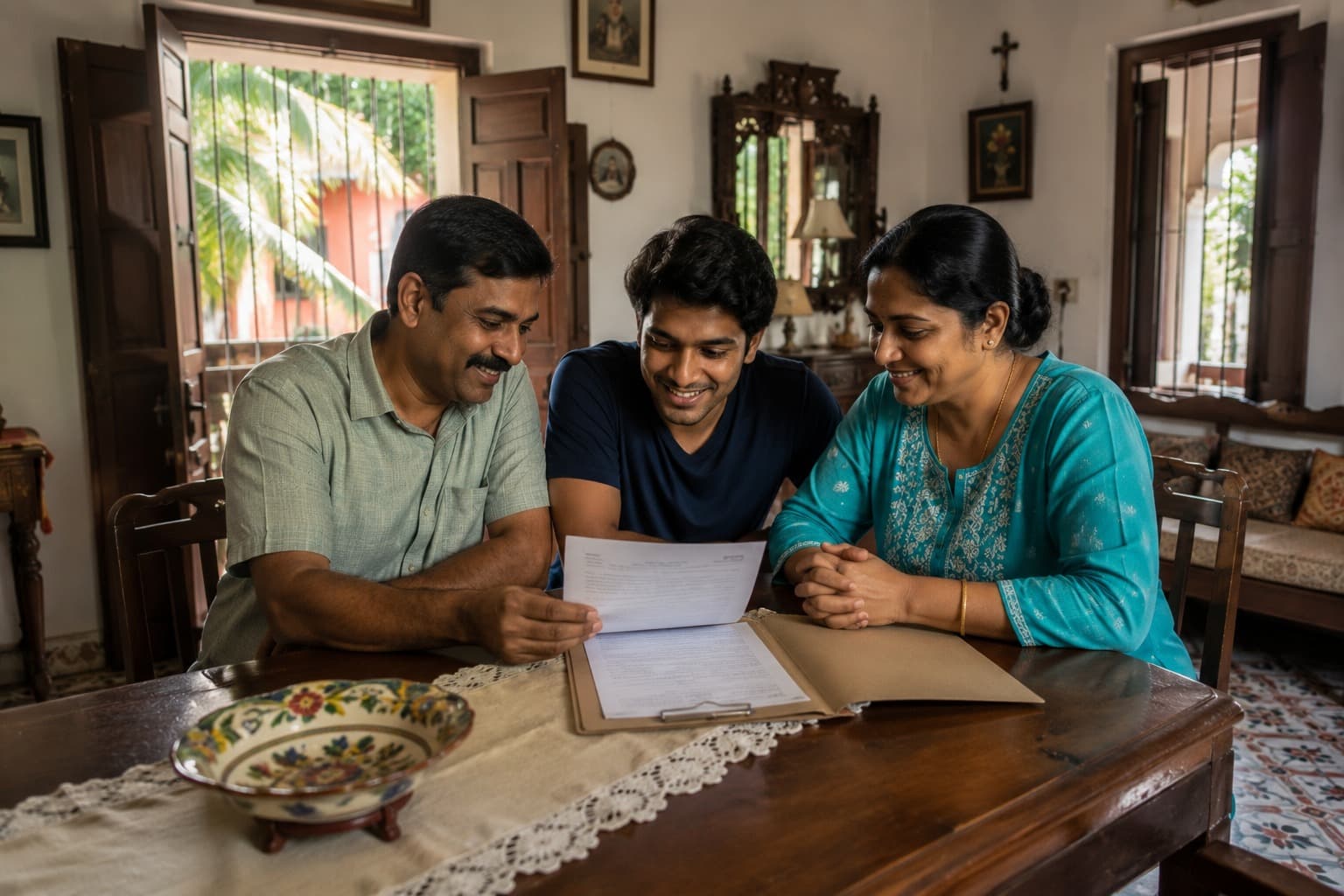
Applications can be submitted online through the state portal at goaonline.gov.in or in person at the nearest Tehsildar centre or Deputy Collector office. Applicants need standard identity proof such as Aadhaar, voter ID, or PAN, alongside a domicile or residence certificate confirming the applicable years of stay. The structure must be an occupied residential building. Open plots do not qualify. Properties in coastal regulation zones or forest land face separate review.
What Legal Ownership Actually Changes for a Family
A sanad is not just paperwork. For a family that has never held one, receiving it fundamentally alters their relationship with the home they have built.
Banks will now finance construction or renovation on a documented property. Children can inherit with clear title rather than through informal understanding. The constant dread of demolition notices tied to unauthorised occupation disappears. The home can be transacted through proper registration.
For a family that has waited across three generations for this certainty, the Mhaje Ghar Yojana is not a government programme. It is the closing of a wound that should have been addressed long ago.
Summary
Goa's Mhaje Ghar Yojana is the state's most consequential housing regularisation initiative in recent memory, targeting approximately one lakh families living without legal ownership documents on government or comunidade land. With homes built before 1972 being fully regularised, ownership rights extended to structures built before February 2014 under the Goa Land Revenue Code, over 50,000 applications already filed, and CM Pramod Sawant committing to doorstep sanad delivery within six months, the Mhaje Ghar scheme has crossed from announcement into meaningful action for thousands of Goan families.
Video will be embedded from: https://www.youtube.com/watch?v=kDgiqov9beo