
From Garbage Mounds To Building Blocks: What The Mulund Land Deal Means For Dharavi
Summary
Mumbai's civic body leased Mulund landfill land to the Dharavi Redevelopment project for construction material production, mirroring an earlier Deonar allocation. This move, alongside a major Deonar cleanup, transforms waste sites into crucial real estate, accelerating the controversial redevelopment and reshaping Mumbai's urban future.

Introduction
Mumbai's relationship with its own garbage mountains is entering a strange new chapter, one running straight through the city's most talked about redevelopment project. The Brihanmumbai Municipal Corporation has agreed to hand over a portion of the Mulund dumping ground to the company building new housing for Dharavi residents, and the arithmetic behind that decision says a lot about how Mumbai plans to grow next.
What Just Happened At Mulund
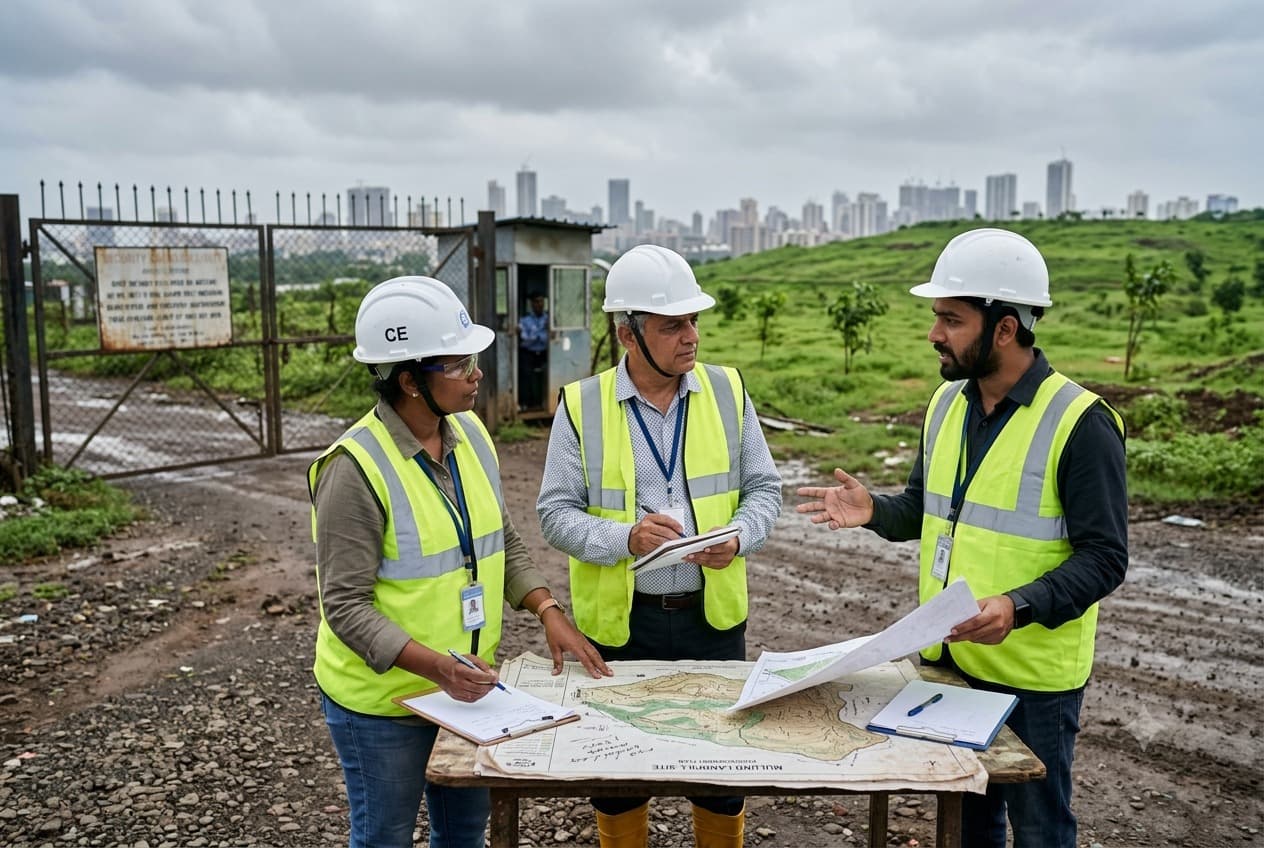
The civic body has leased around 15 acres inside the Mulund landfill to Navbharat Mega Developers Private Limited, the special purpose vehicle steering the Dharavi Redevelopment Project. The land will not house flats directly. Instead it becomes a base for casting yards and ready mix concrete plants, essentially a manufacturing hub feeding construction material into the redevelopment work.
The lease runs for five years and brings in a yearly rent that adds up to a little over ninety crore rupees for the corporation, translating into roughly ninety two crore over the full term. For a civic body constantly short on funds, that is not small change.
Why This Follows The Deonar Story
This is not the first time a Mumbai landfill has been pulled into the Dharavi project. Close to a year earlier, the state government cleared 124 acres of the much larger Deonar landfill for housing meant for residents who do not qualify for free rehabilitation under the scheme. Deonar has been operational since the late 1920s and remains the oldest active landfill in the city.
Mulund, by comparison, is smaller and has received waste since the late 1960s. Its location near the Eastern Express Highway makes it a convenient logistics point, likely why the developer wanted it specifically for material production rather than housing.
Who Actually Controls The Redevelopment Company
Government filings show Adani Properties holding an eighty percent stake in the special purpose vehicle, with the Slum Rehabilitation Authority, a state government body, holding the remaining twenty percent. This structure has kept the project at the centre of political debate in Maharashtra for a while now, with opposition leaders repeatedly questioning how public land is being allocated to a private led venture.
The Bigger Cleanup Contract Running Alongside
Separately, the corporation had already awarded a contract worth over twenty five hundred crore rupees to clean up the Deonar site, covering roughly 271 acres of accumulated legacy waste. That contract went to Navayuga Engineering Company, a firm with prior infrastructure experience in Mumbai.
Cleaning a landfill this size is a slow technical process called bioremediation, where microorganisms break down decades of buried waste before the land becomes usable again.
What This Means For The Housing Timeline
Officials expect the Mulund land to speed up construction because having a material production unit close to the work site cuts down transport time and cost considerably. For a project of this scale, that logistical advantage genuinely matters.
The state had also earlier flagged that anywhere between three and four lakh households connected to the redevelopment would eventually need rental housing, which explains why the government keeps reaching for landfill and salt pan land across the eastern suburbs.

Why Mumbai Real Estate Watchers Should Care
Every acre of dumping ground that gets repurposed changes the city's land supply equation in a market where usable land is scarce and expensive. Whether one views this as smart monetisation of dead assets or a shortcut around environmental caution, the Mulund and Deonar decisions are shaping how Mumbai's eastern and northern suburbs will look a decade from now.
For homebuyers and investors tracking these corridors, the direction is becoming clear. Land once written off as waste is quietly becoming some of the most consequential real estate in the city's development story.
Summary
Mumbai's civic body has leased Mulund landfill land to the company executing the Dharavi Redevelopment Project, following an earlier allocation of Deonar landfill acreage for the same scheme. The Mulund site will host casting yards and concrete plants supporting construction, while a separate contract handles Deonar's cleanup through bioremediation. Together these decisions reveal how Mumbai is repurposing decades old landfill land to solve its most ambitious and controversial urban redevelopment challenge yet.