
From Demolished to Delivered: The GTB Nagar Redevelopment Story Mumbai Needed to Hear
Summary
The GTB Nagar redevelopment project in Mumbai marks a turning point, offering 1,200+ displaced families new homes. This MHADA-Rustomjee collaboration sets a precedent for private land redevelopment, providing modern amenities and a replicable model for urban renewal.

Introduction
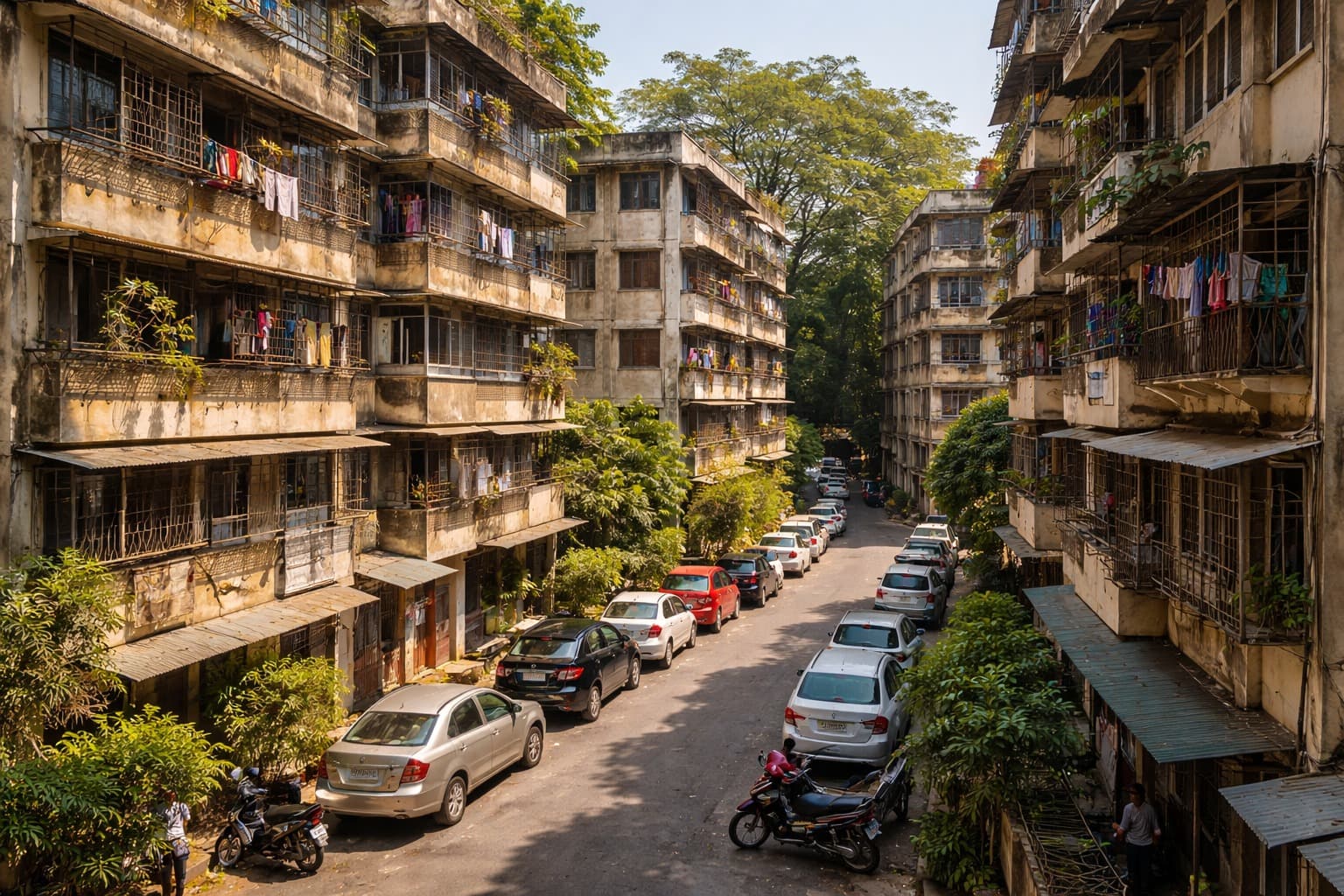
Some redevelopment stories in Mumbai carry more emotional weight than others. The Guru Tegh Bahadur Nagar colony in Sion Koliwada is one of them. Built in 1958 to house Sindhi refugee families who arrived after Partition, the 25 buildings stood for over six decades before the BMC declared them dangerous in 2020 and brought them down. For the 1,200-plus families who lost their homes overnight, the wait for a proper resolution stretched into years. On March 6, 2026, that wait finally moved decisively forward with the signing of a tripartite agreement between MHADA, Keystone Realtors (Rustomjee Group), and all the housing societies of GTB Nagar.
What Was Signed and Who Was in the Room
The agreement formalised two separate documents simultaneously. A Development Agreement was signed between the housing societies and MHADA, and a Construction and Development Agreement was executed between MHADA and Keystone Realtors through its subsidiary, Keymidtown Developers Private Limited. The signing took place at MHADA headquarters in Bandra, with MHADA CEO Sanjeev Jaiswal, Chief Officer Milind Borikar, and Keystone Realtors Chairman and MD Boman Irani all present. Getting every society on board before the ink dried is itself a meaningful achievement in a city where redevelopment pacts are notorious for dragging on due to holdout residents.
The Project Numbers That Define Its Scale
The GTB Nagar redevelopment spans approximately 11.54 acres of land in Sion. Three high-rise residential towers between 39 and 48 storeys will rise on this footprint. The total saleable area unlocked by the project is approximately 20.7 lakh square feet, carrying a gross development value of Rs 4,521 crore. Each of the 1,200-plus eligible beneficiaries will receive a flat measuring 635 square feet at no cost. The project will be executed using aluminium formwork technology, a construction method that delivers faster completion timelines and more consistent structural quality compared to conventional building techniques.
What Residents Get During the Wait
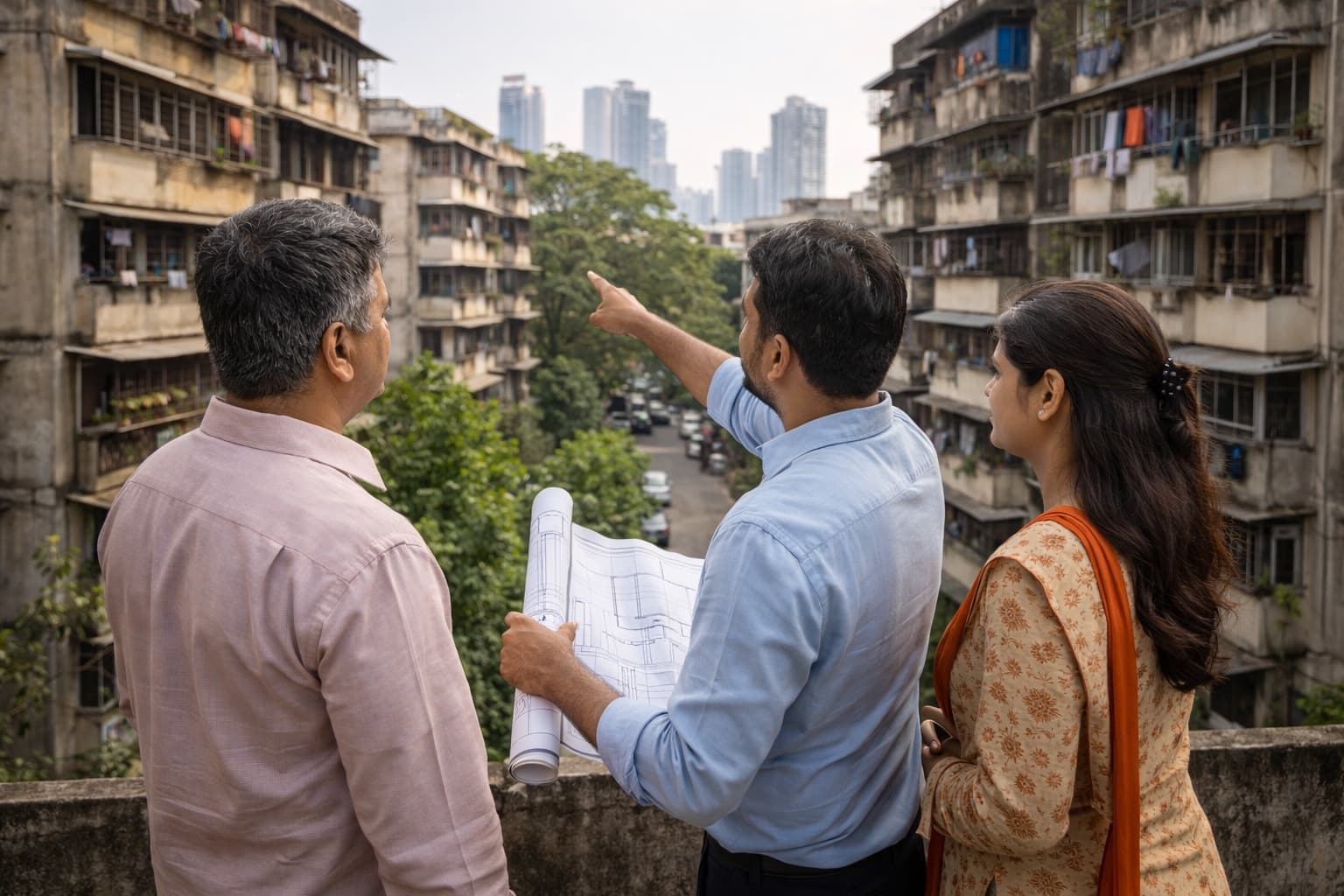
Displaced residents are not simply handed a future promise and left to manage. From the date a Commencement Certificate is issued for the new towers, MHADA will pay every eligible resident a monthly rent compensation of Rs 20,000. That financial support continues until the new apartments are ready for handover. Beyond possession, MHADA has committed to managing and maintaining the buildings for five years after completion, which means residents move into professionally managed homes rather than having to immediately form committees and coordinate maintenance arrangements from scratch.
Amenities That Go Beyond Basic Housing
The project is not just about square footage. The residential complex will include a fully equipped gymnasium, an indoor games zone, a yoga and multi-purpose studio, a children's play area, a library, and a banquet hall of approximately 4,000 square feet with an attached kitchen. For families who spent decades in aging, cramped buildings with minimal shared facilities, this is a generational leap in quality of living. The design intent is clearly to create a community, not just a housing cluster.
A First of Its Kind for MHADA
This project carries institutional significance beyond the 1,200 families it will house. MHADA CEO Sanjeev Jaiswal has described it as the authority's first-ever redevelopment on private land executed through the Construction and Development Agency model. That matters because it sets a legal and procedural precedent. Mumbai has thousands of private land parcels with aging buildings, expired tenancies, and displaced residents whose situations have resisted resolution for years. A successful GTB Nagar delivery would demonstrate that MHADA can step in as a Special Planning Authority on private land and drive outcomes that the usual market-led developer approach could not achieve.
The Regulation 33(9) Framework
The legal scaffolding for this project rests on Development Control Regulation 33(9), which permits a minimum FSI of 4.5, inclusive of fungible FSI, for qualifying redevelopment projects. Cabinet approval for this approach came in February 2024, followed by a Government Resolution designating MHADA as Special Planning Authority shortly after. The project's path through the Bombay High Court and the Supreme Court had already been navigated before the formal agreements were signed, which is why the ceremony in March 2026 could proceed without outstanding legal uncertainty clouding it.
Why Rustomjee Was the Right Fit
Keystone Realtors received the Letter of Acceptance for this project back in June 2025 following a formal bidding process. The company brings a relevant track record in Mumbai's redevelopment space, having already rehoused over 17,000 families across various initiatives in the city. Their other active redevelopment pipeline, covering sites in Andheri West, Malad, and Bandra, adds up to a combined GDV exceeding Rs 9,400 crore. Boman Irani framed the GTB Nagar assignment as carrying personal meaning, referring to it as restoring faith and rebuilding lives. That framing is accurate. This project has been waiting since 2020. The families waiting for it have been patient long enough.
Summary
The MHADA Rustomjee GTB Nagar redevelopment agreement 2026 is a landmark moment for Mumbai's urban renewal story. Over 1,200 families from a historic Sindhi refugee colony will receive 635-square-foot homes free of cost inside modern high-rise towers on the same Sion Koliwada land. The Rs 4,521 crore Keystone Realtors MHADA project unlocks 20.7 lakh square feet of saleable area while also setting a replicable model for MHADA redevelopment on private land in India. For a city that desperately needs scalable solutions to its aging housing stock problem, GTB Nagar just became the blueprint worth watching.
Video will be embedded from: https://www.youtube.com/watch?v=vP14yO_pEBg