
Dabur India's Warehousing Expansion in Uttar Pradesh: A Sign of India's Industrial Real Estate Boom
Summary
Dabur's warehousing expansion in Uttar Pradesh highlights the booming industrial real estate market in North India. The lease signifies growing FMCG demand and UP's improved logistics infrastructure, making it a key indicator of market health.

A single warehousing transaction does not make a market story by itself. But when it involves one of India's oldest and most recognised FMCG companies expanding its logistics infrastructure in one of the country's fastest-growing industrial states, it is worth examining closely. Dabur India Limited has leased approximately 1.62 lakh square feet of warehousing space in Uttar Pradesh at a monthly rental of ₹26 lakh. The transaction, reported via property registration data, points to something larger than one company's supply chain decision. It reflects the accelerating momentum of industrial and warehousing real estate demand across North India's logistics corridors.
Dabur's Deep Roots in Uttar Pradesh
Dabur India is not new to Uttar Pradesh. The company's corporate headquarters sits in Kaushambi, Ghaziabad, and its Research and Development Centre is located in Sahibabad, also within the Ghaziabad district. The state has historically been central to Dabur's manufacturing and distribution operations. Brands like Dabur Amla, Hajmola, Vatika, Real, and Odonil serve hundreds of millions of Indian consumers, and the supply chain required to keep these products moving from factory to retailer shelf across North India is vast and complex.
Expanding warehousing capacity in Uttar Pradesh is therefore a logical step for Dabur as it scales production and seeks to optimise last-mile distribution across the densely populated Hindi heartland. The ₹26 lakh monthly rent for 1.62 lakh square feet translates to roughly ₹16 per square foot per month, consistent with prevailing warehousing rental rates in Uttar Pradesh's industrial belts, which typically range between ₹12 and ₹22 per square foot depending on Grade, infrastructure quality, and location.
Why Uttar Pradesh Is Attracting Industrial Capital
The story of warehousing and industrial real estate in Uttar Pradesh is inseparable from the state's infrastructure buildout over the past five years. The Purvanchal Expressway, the Bundelkhand Expressway, the Ganga Expressway, and the expansion of the Yamuna Expressway Industrial Development Authority zone have collectively remapped how logistics operators and manufacturers think about North Indian distribution.
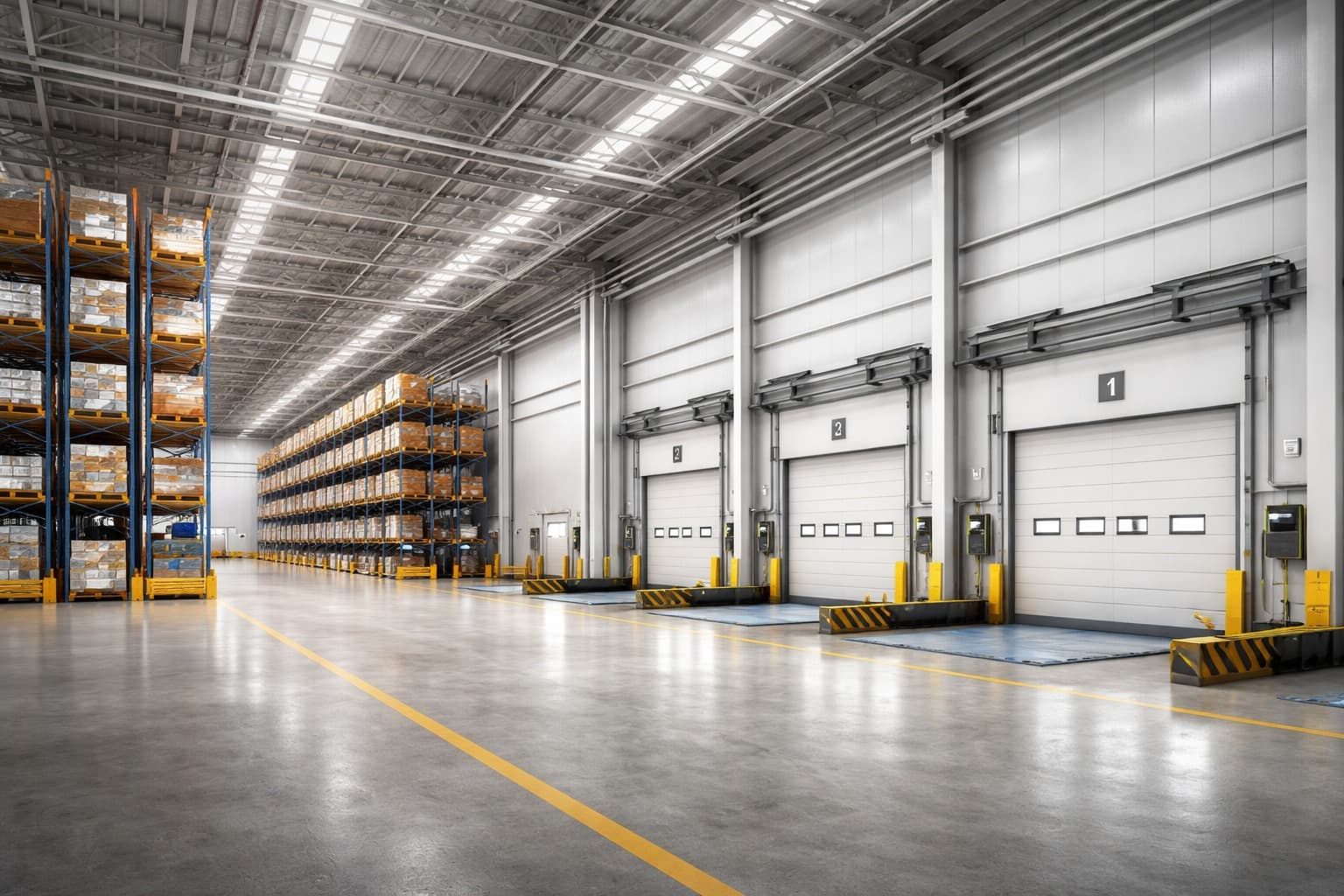
Simultaneously, the UP government's Logistics Policy and its incentives for warehouse park developers have encouraged institutional players to build Grade A industrial parks across corridors including Noida, Greater Noida, Ghaziabad, Lucknow, Kanpur, and Agra. Where Grade A infrastructure arrives, FMCG companies, third-party logistics operators, e-commerce players, and manufacturers follow. The pipeline of quality warehousing space in Uttar Pradesh has grown meaningfully, giving large occupiers like Dabur the option to consolidate and expand operations in modern, compliant facilities rather than staying in older, fragmented godowns.
The Broader Warehousing Picture in India
Dabur's transaction fits within a national trend that has been building steadily. Industrial and warehousing leasing across India's top eight cities reached 36.9 million square feet in 2025, a 16 percent year-on-year increase, according to Colliers data. Delhi-NCR led all markets with a 24 percent share of total absorption. Uttar Pradesh, lying adjacent to the NCR logistics belt and increasingly part of its extended distribution geography, captures a meaningful portion of this demand.
Grade A warehouse rentals in prime locations within the Delhi-NCR influence zone, which includes parts of western Uttar Pradesh, range between ₹25 and ₹45 per square foot monthly. Further into the state's interior and secondary cities, rates settle in the ₹15 to ₹30 per square foot band. The market is maturing rapidly, with institutional developers like IndoSpace, ESR, Welspun One, and others building large, modern parks that meet global occupier standards for floor load capacity, clear height, fire safety, and connectivity.
What FMCG Demand Means for Industrial Real Estate Investors
The FMCG sector is among the most consistent and credit-worthy tenants in Indian industrial real estate. Companies like Dabur, HUL, Marico, Emami, and Godrej Consumer Products have large, predictable distribution requirements that translate into long-term leases with structured rent escalation clauses, typically in the range of 5 percent annually. They anchor industrial parks, improve occupancy metrics for developers, and provide the kind of stable cash flow profile that attracts institutional capital.

For investors tracking the Indian warehousing real estate market, FMCG-led lease transactions serve as leading indicators of corridor quality and demand sustainability. When a company with Dabur's scale and distribution history chooses to expand in a specific geography, it validates that geography's logistics infrastructure, connectivity, and potential for long-term occupancy. Other occupiers in adjacent sectors, including pharmaceuticals, personal care, and consumer durables, often follow.
The Rate Check: Is ₹16 Per Square Foot Reasonable?
At ₹26 lakh per month for 1.62 lakh square feet, the effective rent works out to approximately ₹16 per square foot monthly. This positions the transaction at the lower to mid end of the Uttar Pradesh warehousing market rate range, suggesting either a location slightly outside prime corridors, a longer-term deal with rent concessions built in, or a functional Grade B facility that meets Dabur's operational requirements without the premium attached to the newest Grade A parks. For reference, similar-sized warehouses in Ghaziabad's prime industrial areas or along the Noida-Greater Noida belt would typically command ₹22 to ₹28 per square foot at current market rates.
Summary
Dabur India's lease of 1.62 lakh square feet of warehousing space in Uttar Pradesh at ₹26 lakh monthly is a transaction that reflects both the company's distribution strategy and the growing depth of industrial real estate demand across North India's logistics corridors. As FMCG companies continue expanding their supply chains and Uttar Pradesh develops its infrastructure, warehousing leasing activity in the state will remain a key barometer of India's industrial real estate market health through 2026 and beyond.
Video will be embedded from: https://www.youtube.com/watch?v=oK24XYe7850