
Budget 2026 and Real Estate: Long-Term Fixes for Sustainable Growth
Summary
Budget 2026 should focus on long-term real estate reforms, not short-term fixes. Addressing affordability, tax clarity, and approval delays are key for sustainable growth and stronger economic contributions.

Introduction
As the Union Budget 2026–27 approaches, the real estate sector is watching closely. Buyers, developers, and investors all have expectations. The focus this year is not on short-term relief, but on long-term solutions. The industry wants reforms that improve affordability, simplify taxes, and speed up project approvals. While demand for homes and offices remains steady, several old problems still slow down growth.
Real Estate Sector Enters Budget Season Carefully
Last year’s budget focused on affordable housing and lowering transaction costs. This helped the sector to some extent. However, many challenges remain. Rising property prices, high taxes, approval delays, and weak infrastructure in some areas continue to affect both buyers and developers. Because of this, the sector is hoping Budget 2026 will bring practical and lasting changes.
Housing Affordability Is Still a Big Issue
Housing affordability remains one of the biggest concerns, especially in large cities. Property prices in metro cities have increased, but tax limits have not changed much. As a result, many homes no longer qualify as “affordable” under current rules.
Tax benefits under Section 80-IBA helped increase the supply of affordable housing. However, strict limits on home prices reduced their usefulness. There is a strong need for the government to revise these limits based on city-wise market prices.
Buyers Want Better Tax Benefits
From the buyer’s side, higher tax relief is a key demand. Many homebuyers want an increase in the deduction on home loan interest under Section 24(b). Bringing back special benefits for first-time buyers, similar to earlier schemes, could also help.
Such steps would reduce the financial burden on buyers and support genuine end-user demand instead of speculation.

Tax Confusion Slows Down Transactions
Tax-related confusion is another major concern. Stamp duty rates vary across states, which increases costs and creates uncertainty. There is also a lack of clarity on GST for under-construction homes, redevelopment projects, and joint development deals.
Clear and consistent GST guidelines, especially on input tax credit, would reduce disputes and improve project planning. This clarity is important for faster execution and smoother transactions.
Capital Gains Rules Need Simplification
Current capital gains reinvestment rules under Sections 54 and 54F are complex. Simplifying these rules could encourage people to reinvest in residential properties. This would help money flow more smoothly within the real estate market and support housing demand.
Approvals and Land Records Remain a Problem
Slow project approvals and unclear land records continue to delay many real estate projects. While single-window approvals and digital land records have been discussed for years, implementation remains weak.
Faster approvals and better land record systems would reduce delays, lower costs, and improve investor confidence. Budget support for these reforms could make a real difference.
Liquidity Support Has Shown Results
Earlier government efforts to support liquidity, especially through the SWAMIH Fund, have helped revive stalled housing projects. This has brought relief to many homebuyers waiting for possession.
Building on this success, the government can improve rules under the Insolvency and Bankruptcy Code to help complete viable projects faster and protect buyers.
Growth Beyond Metro Cities
Future growth in real estate will not come only from metro cities. Smaller cities are seeing rising demand due to infrastructure development. Support for rental housing, REITs, and better implementation of tenancy laws can help this growth.
Simpler tax rules for REITs and wider adoption of the Model Tenancy Act would encourage more organised rental housing across India.
A Chance for Real Change
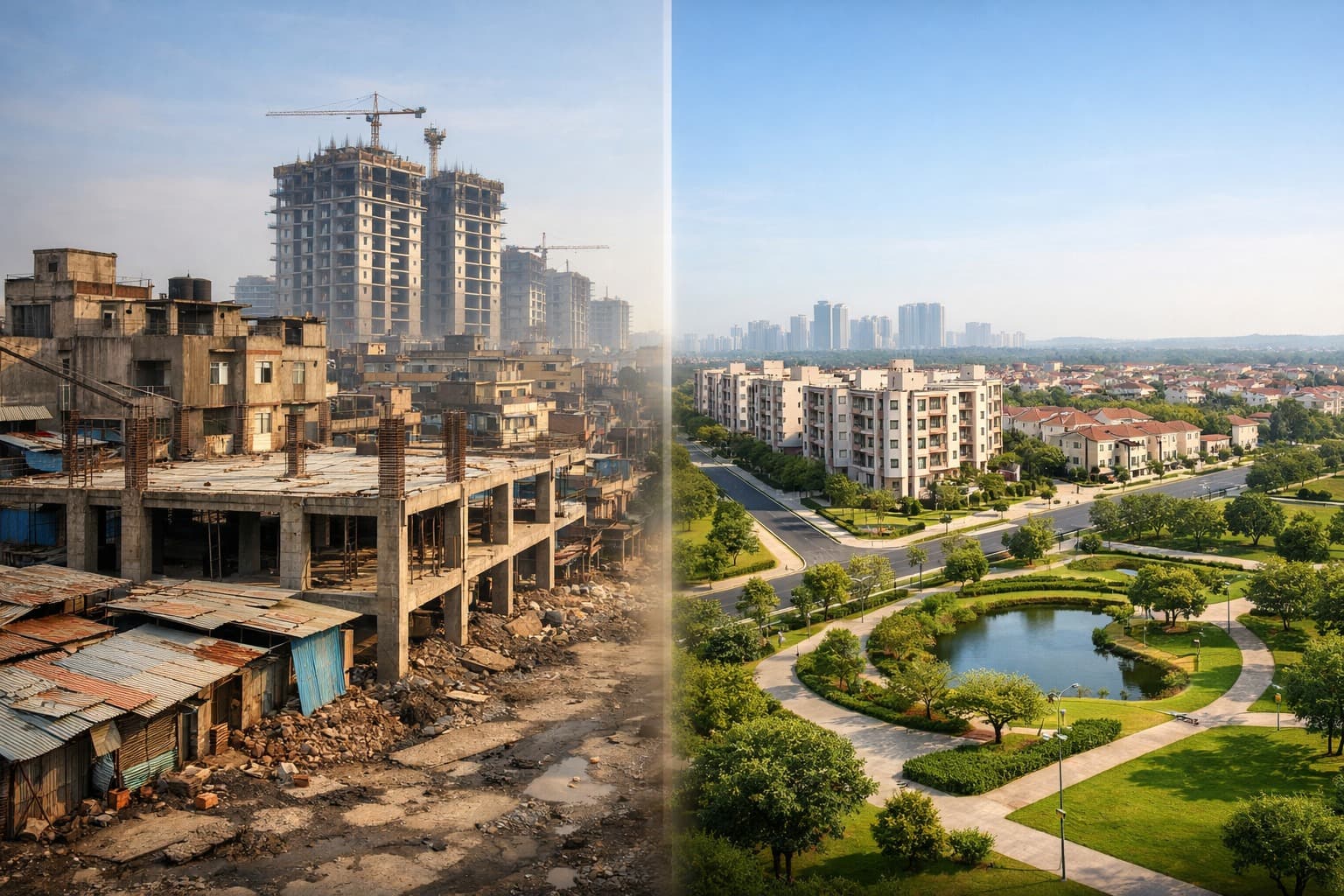
Budget 2026–27 offers a chance to move beyond temporary fixes. The real estate sector needs stable policies, clear taxes, faster approvals, and strong execution. If these areas are addressed, real estate can contribute more strongly to economic growth and urban development.
Summary
As Budget 2026 approaches, the real estate sector is seeking long-term reforms rather than short-term relief. Key concerns include housing affordability, tax clarity, slow approvals, and infrastructure gaps. Buyers want better tax benefits, while developers need faster approvals and simpler rules. Past liquidity support has helped, but more structural changes are needed. A focus on tax certainty, efficient regulation, and support for rental housing and non-metro growth can help real estate play a stronger role in India’s economic future.
Video will be embedded from: https://www.youtube.com/watch?v=CGINKdb32zk