
Bombay High Court Intervenes in Danda Koliwada Land Dispute
Summary
The Bombay High Court intervened in the Danda Koliwada land dispute, forming a committee to resolve claims between the Koli community and a redevelopment project. The court emphasized protecting traditional livelihoods amidst urban development.

Introduction
The Bombay High Court has intervened in a long-pending land dispute in the Danda Koliwada area of Khar West, Mumbai, by ordering the formation of a three-member committee to examine and resolve competing claims over a disputed parcel of land.
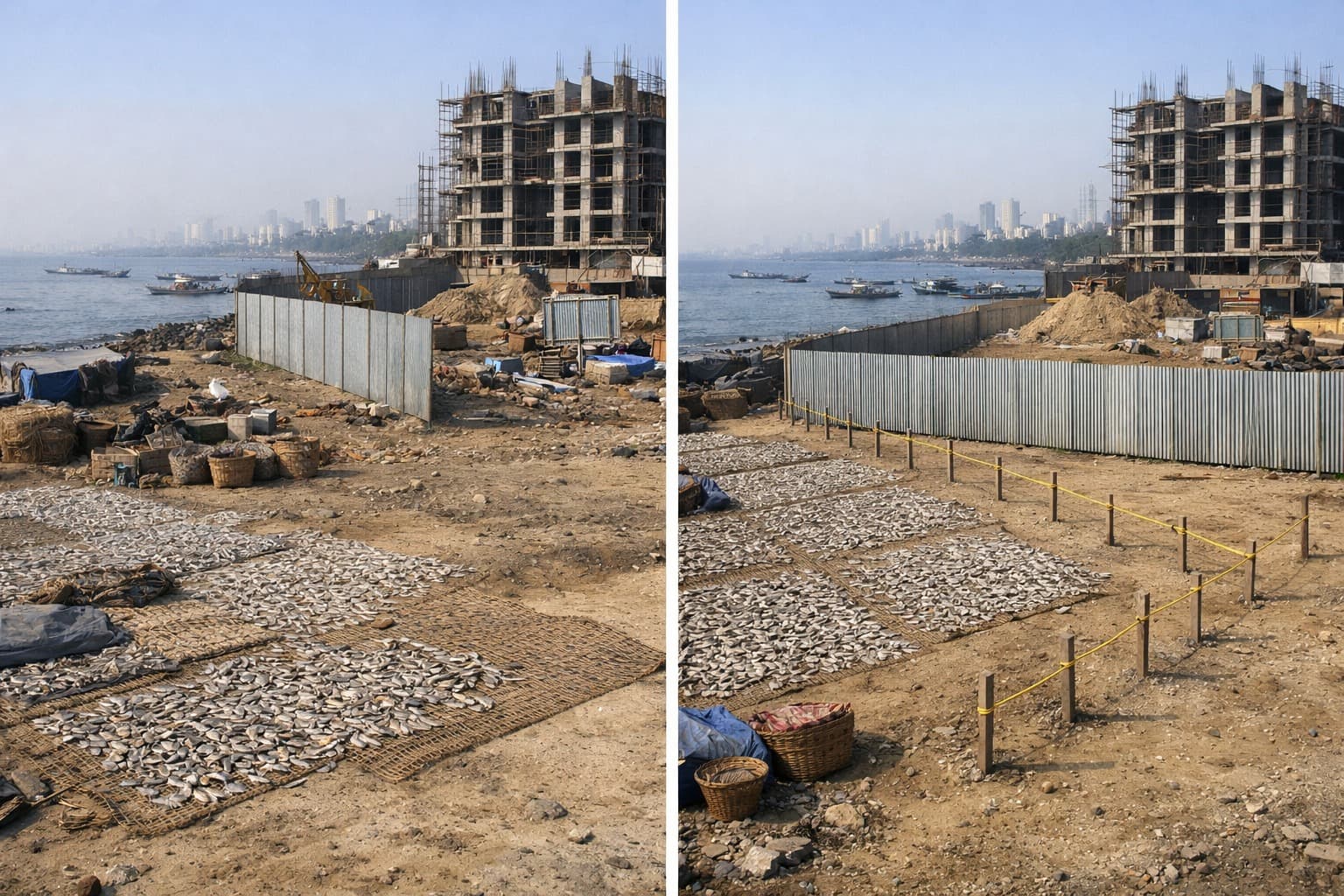
The land has historically been used by the Koli fishing community for drying fish and nets. In recent years, it has become part of a controversy linked to a slum redevelopment project, raising serious concerns about the protection of traditional livelihoods amid rapid urban redevelopment.
The court’s intervention reflects the growing need to balance development goals with the rights of long-established communities in the city.
Background of the Dispute
The matter reached the Bombay High Court through petitions filed by representatives of the Koli fishing community. The petitioners alleged that land used by them for generations was being encroached upon and diverted for redevelopment without proper consultation or legal clarity.
They argued that the disputed land is essential for everyday fishing-related activities and forms a critical part of their economic and cultural life. According to the petitioners, the lack of proper boundary verification and consultation has caused deep uncertainty and hardship for families dependent on fishing.
The court noted that disputes involving livelihood-linked land require careful and sensitive handling.
Court Directs Formation of a Three-Member Committee
A division bench comprising Justices Girish Kulkarni and Aarti Sathe directed the state government to constitute a three-member committee to examine the issue and attempt an administrative resolution.
The committee will consist of the Additional Principal Secretary of the Urban Development Department, the Suburban District Collector, and the Chief Executive Officer of the Slum Rehabilitation Authority (SRA).

The court instructed the panel to hear all stakeholders, including the Koli fishing community, the concerned slum rehabilitation society, and the developer executing the slum redevelopment project.
Focus on Land Demarcation and Fact Verification
A central task assigned to the committee is conducting a fresh land demarcation exercise. The court observed that conflicting records, unclear boundaries, and overlapping claims have played a major role in escalating the dispute.
By ordering a detailed survey and verification of records, the court aims to bring clarity to the actual status of the land. The involvement of senior officials such as the Suburban District Collector is intended to ensure accuracy, transparency, and credibility in the process.
The court emphasised that decisions must be based on verified facts rather than assumptions.
Interim Relief and Protection from Coercive Action
To safeguard the interests of all parties during the inquiry, the Bombay High Court ordered that no coercive action be taken on the disputed land until the committee completes its work.
This means that construction activity, eviction, or enforcement measures related to the land must remain suspended. The interim relief ensures that the situation does not worsen while the committee examines the matter. The court made it clear that maintaining the status quo is essential to ensure a fair and unbiased resolution.
Court’s Message to the State Government
In strong observations, the court stated that the state government cannot remain a “mute spectator” in disputes involving government land. The judges stressed that when public land is subject to competing claims, the responsibility to resolve the matter lies squarely with government authorities.
While the court declined to conduct the land demarcation itself, noting that it falls under the administrative domain, it firmly directed the government to act decisively and lawfully. The message was clear: governance cannot be passive when community livelihoods are at stake.
Competing Claims of Community and Developer
The Koli fishing community claims that around 1,500 square metres of land in Danda Koliwada has been used for decades for drying fish, repairing nets, and other essential activities. They argue that this usage predates modern planning systems and redevelopment schemes.
On the other hand, the developer and the slum rehabilitation society involved in the slum redevelopment project have denied any wrongdoing. They maintain that the land was lawfully included in the redevelopment plan and that all required approvals were obtained from authorities. These conflicting claims have made administrative intervention unavoidable.
Broader Impact on Urban Redevelopment
The Danda Koliwada land dispute highlights a larger challenge faced by Mumbai, where urban redevelopment increasingly overlaps with traditional settlements. Koliwadas are among the city’s oldest habitations, and their residents rely on open land and coastal access for survival.
The case underscores the need for redevelopment policies that recognise historical land use and protect traditional livelihoods. It also points to the importance of involving local communities early in planning processes to prevent conflict and ensure inclusive development.
What Lies Ahead
With the formation of the three-member committee, responsibility now rests with the state government to ensure a fair, transparent, and timely resolution. The panel has been directed to inspect the site, hear all parties, and submit its findings by January 10, 2026.
Until then, the disputed land will remain protected from coercive action. The outcome of this case may set an important precedent for handling disputes involving government land, redevelopment projects, and traditional communities across Mumbai.
Summary
The Bombay High Court has ordered the creation of a three-member committee to resolve the Danda Koliwada land dispute in Khar West, involving land traditionally used by the Koli fishing community and linked to a slum redevelopment project. The court directed the state government to actively intervene, ordered a fresh land demarcation, and restrained coercive action until a decision is reached. The case highlights ongoing tensions between urban redevelopment and the protection of traditional livelihoods.
Video will be embedded from: https://www.youtube.com/watch?v=zhMm_8r8XW0