
AstraZeneca India's ₹3,400 Crore Bengaluru Land Sale: A Strategic Repositioning
Summary
AstraZeneca India is selling its Bengaluru manufacturing plant for ₹3,400 crore, signaling a strategic shift towards a knowledge-based hub. This complex land deal, requiring a CMO buyer, highlights Bengaluru's evolving real estate landscape.

Introduction
When a global pharmaceutical giant decides to exit its manufacturing footprint in a city where it has operated for nearly five decades, it is tempting to read it as a retreat. But AstraZeneca India's plan to sell its 64-acre production facility in North Bengaluru for an estimated ₹3,400 crore is something more nuanced than that. It is a deliberate capital reallocation decision, and the land it leaves behind is one of the most consequential parcels to come onto the Bengaluru land sale market in recent memory.
AstraZeneca Pharma India Limited, the UK parent's listed subsidiary, has been working through this exit for several years. A global mandate has been issued to property consultants to identify buyers. The land, valued at over ₹50 crore per acre across 64 acres, sits in one of North Bengaluru's most sought-after corridors. And the conditions attached to the sale make it an unusual and complex transaction that has tested the market's appetite more than once.
The History of the Sale
AstraZeneca India first disclosed its intention to exit the Bengaluru manufacturing site through a regulatory filing in November 2023, describing it as part of a strategic review of the parent company's global manufacturing and supply network. The company was unambiguous that the exit would happen "in due course" and that it intended to sell the facility as a fully operational unit rather than as a stripped asset.
The site struggled to find a buyer initially, largely because the asking price was considered aggressive by the market. Previous attempts to close a deal ran into the same wall: the land commanded a valuation that few Indian buyers were willing to match without more certainty about the regulatory and operational transition.
By September 2025, the subsidiary surrendered its manufacturing licence to India's Drugs Controller and Licensing Authority, a licence that would otherwise have remained valid until December 2027. That formal surrender marked the point of no return on the manufacturing exit. Operations were confirmed to be winding down across the FY2025-26 period. The first quarter closure costs alone ran to approximately ₹63.64 crore, underlining just how substantial a physical and operational presence the company is unwinding.
What Makes This Site Unusual
Most large land transactions in Bengaluru's corporate land monetisation cycle involve a straightforward handover: company sells land, developer builds apartments or offices, city absorbs new supply. The AstraZeneca Bengaluru plant sale is structured differently, and that distinction matters enormously for prospective buyers.
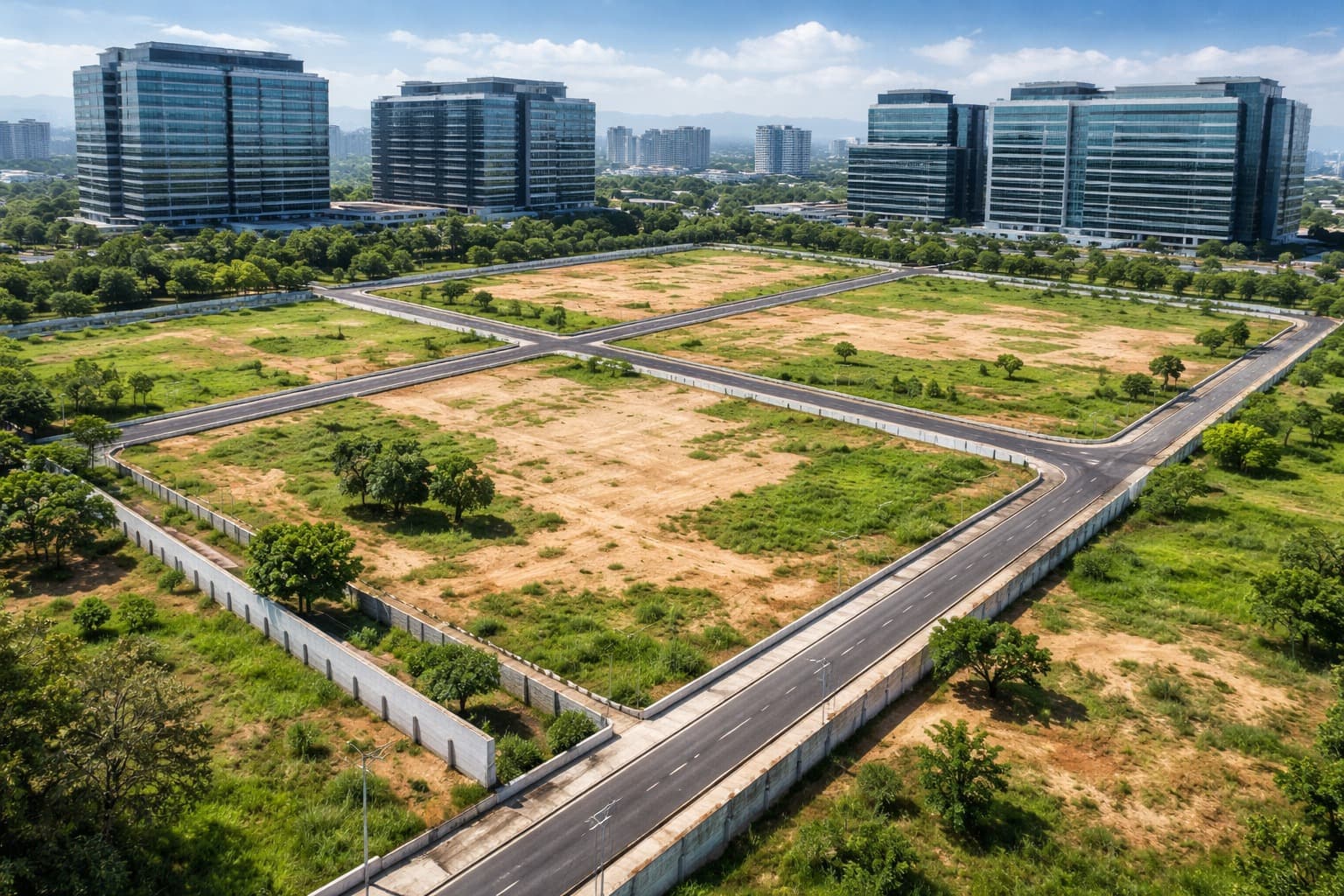
AstraZeneca India has been explicit that it needs a buyer who can also serve as a Contract Manufacturing Organisation, or CMO, for the pharmaceutical products currently being manufactured and packaged at the Bengaluru site. This means the ideal acquirer is not a developer looking to redevelop the site but an operational pharmaceutical or contract manufacturing company capable of running the facility while simultaneously acquiring it as a real estate asset.
That is a genuinely narrow buyer profile. It requires capital depth to absorb a ₹3,400 crore land purchase, pharmaceutical manufacturing credentials, regulatory clearances to operate as a CMO, and the operational willingness to absorb a supply contract from a global company that is simultaneously divesting. Finding an entity that ticks all those boxes has taken time, which explains why the sale has been in motion for years without closing.
The Bengaluru Real Estate Angle
Set aside the pharmaceutical complexity for a moment and look at the land itself. Sixty-four acres in North Bengaluru, in a corridor that property consultants have described as one of the city's most prominent real estate belts, is a rare thing. Bengaluru's tech-driven growth has pushed premium land values sharply upward, particularly in corridors with strong infrastructure access and established corporate density.
At ₹50 crore per acre as the floor valuation, and with the updated figure sitting at ₹3,400 crore, the implied per-acre rate has moved to approximately ₹53 crore. That is a valuation that says something precise about where industrial and commercial land in favoured North Bengaluru corridors is now trading. Land transactions across major Indian cities saw a 47 percent increase in 2024, with over 2,000 acres transacted. The AstraZeneca India parcel, if it closes, would represent one of the most significant single-company land disposals in the city in years.
What AstraZeneca Is Building in Bengaluru Instead
Here is the part of the story that gets overlooked. At the same time AstraZeneca India is selling its 64-acre manufacturing site, it has simultaneously been expanding its research and technology presence in the city. In June 2025, the company announced a ₹166 crore investment to expand its state-of-the-art Global Hub in Bengaluru, adding 400 new jobs and bringing the hub's total workforce to nearly 1,300. The Global Hub focuses on AI-powered healthcare solutions, clinical research, data analytics, and regulatory compliance work spanning the parent company's global operations.
This is the corporate strategy laid bare. AstraZeneca is not leaving Bengaluru. It is repositioning within it. Out of a large manufacturing campus that no longer fits the parent's asset-light global manufacturing model, and into a high-value, talent-intensive knowledge centre that directly serves the company's global R&D ambitions. The land sale funds that transition. The Bengaluru Global Hub is the destination it is funding.

What It Means for Bengaluru's Commercial Real Estate
For the pharma land monetisation and corporate land sale India market, the AstraZeneca Bengaluru 64 acre sale is a signal worth watching closely. Several other pharmaceutical and industrial companies with large legacy landholdings in Indian metro cities are making similar calculations. As manufacturing becomes more capital-efficient and more geographically flexible, the land value locked inside old industrial campuses often exceeds the operational value of the manufacturing activity itself.
Bengaluru, with its strong infrastructure base and deep pool of institutional real estate capital, is well-positioned to absorb these assets once they come free. The North Bengaluru real estate corridor, in particular, has seen sustained institutional interest as tech parks, logistics hubs, and pharmaceutical campuses have all competed for the limited premium land available.
Summary
AstraZeneca India's planned ₹3,400 crore sale of its 64-acre North Bengaluru manufacturing site is the result of a deliberate global strategic shift, not a distress exit. With the manufacturing licence surrendered, operations winding down in FY2025-26, and a global mandate issued to find a buyer who can also function as a CMO, this is one of the most structurally complex and financially significant Bengaluru land sale events in the city's recent corporate land monetisation history. The proceeds will help fund AstraZeneca India's pivot toward knowledge-intensive operations, a shift already visible in its ₹166 crore Bengaluru Global Hub expansion.
Video will be embedded from: https://www.youtube.com/watch?v=empWZJ2pI3s