
Affordable Housing in India: PMAY-U Delivery Milestone and Economic Survey Insights
Summary
India's PMAY-U achieves significant milestones in affordable housing delivery, as highlighted by the Economic Survey 2025-26. While progress is evident, challenges persist in peripheral locations, demanding integrated urban planning and infrastructure development.

Introduction
Affordable housing remains one of India’s most important urban priorities. Rapid urbanisation, rising property prices, and growing migration have increased pressure on city housing systems. The Economic Survey 2025-26 highlights major progress under PMAY-U, while also drawing attention to emerging challenges in urban housing and housing finance. This blog explains the key findings of the survey, the scale of affordable housing delivery, and what these trends mean for homebuyers, developers, and city planners.
PMAY-U and Its Role in Urban Housing
The Pradhan Mantri Awas Yojana Urban was launched to address India’s urban housing shortage by supporting low and middle-income households. The programme focuses on improving access to formal housing through subsidies, credit support, and policy incentives. Under PMAY-U, the government aims to ensure dignified living conditions for urban residents who were earlier excluded from the formal housing market.
Homes Sanctioned and Delivered So Far
According to the Economic Survey 2025-26, a total of 122.06 lakh homes have been sanctioned under the two phases of PMAY-U affordable housing progress in India. Out of these, 96.02 lakh homes have already been completed and delivered to beneficiaries as of November 24, 2025. This large-scale delivery reflects steady execution across states and urban local bodies, making PMAY-U one of the largest housing initiatives in the country.
Government Support for Affordable Housing
The success of affordable housing India is supported by multiple policy interventions. These include tax benefits, GST relief, and priority sector lending for housing loans. Higher loan-to-value ratios reduce upfront payments for buyers, while infrastructure status improves funding access for developers. These measures have strengthened both supply and demand in the affordable housing segment.
Smart Cities Mission and Urban Infrastructure
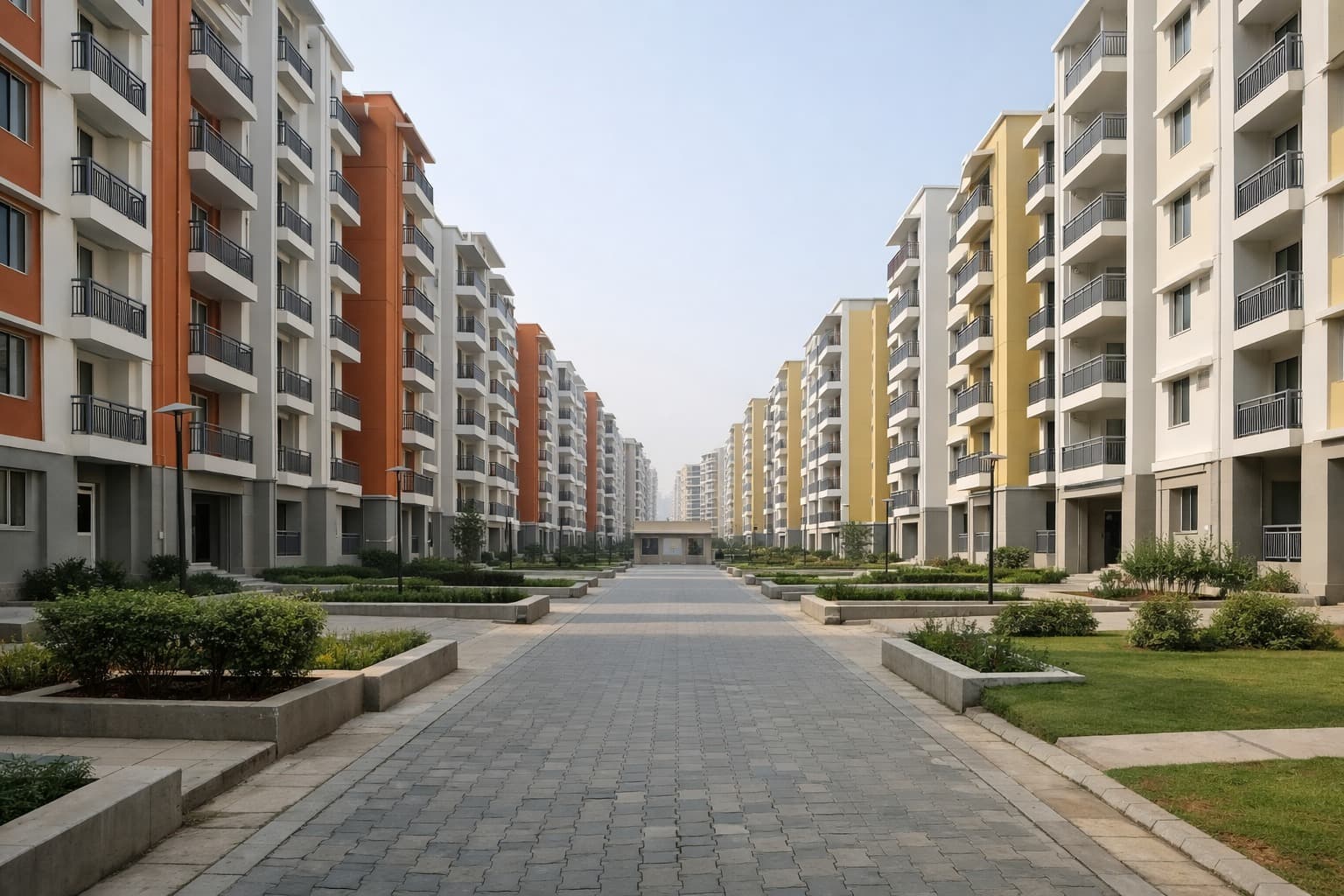
The survey also links housing outcomes with infrastructure development. Under the Smart Cities Mission, more than 90 per cent of planned projects have been completed across participating cities. Investments exceeding ₹1.64 lakh crore have improved roads, water systems, sanitation, and public spaces. Such upgrades directly influence urban housing demand by improving liveability and long-term value in cities.
Peripheral Affordable Housing and Its Challenges
The Economic Survey insights on urban housing point out a structural concern. Many affordable housing projects are located on city outskirts due to lower land costs. While this keeps prices affordable, these areas often lack strong transport links, employment access, and civic amenities. Poor connectivity and weak infrastructure reduce the liveability of these homes, creating long-term challenges for residents.
Housing Demand Versus Urban Liveability
Affordable homes on the urban periphery attract buyers due to pricing advantages. However, limited mass transit, longer commute times, and inadequate public services affect daily life. This gap between affordability and liveability highlights the need for integrated planning. The survey stresses that housing supply alone is not sufficient without parallel investments in mobility and services.
Housing Loans and Financialisation of Housing
One of the most important trends highlighted is the rapid growth of housing loans India. Outstanding individual housing loans have more than tripled over the past decade, reaching over ₹37 lakh crore in March 2025. Housing credit now accounts for over 11 per cent of GDP, reflecting the growing role of formal finance in driving housing demand.
What Rising Home Loans Indicate
The expansion of the housing finance market India shows improved access to credit and stronger buyer confidence. More households are entering the formal housing system using institutional finance. However, rising loan exposure also increases sensitivity to interest rate changes, making affordability dependent on stable financial conditions.
Urban Policy and Integrated Planning
The survey emphasises that future urban growth must focus on system-level performance rather than isolated projects. Housing, transport, sanitation, climate resilience, and financial planning must work together. Integrated urban planning is essential to ensure that urban housing remains sustainable, inclusive, and economically efficient over the long term.
Climate-Ready and Inclusive Cities
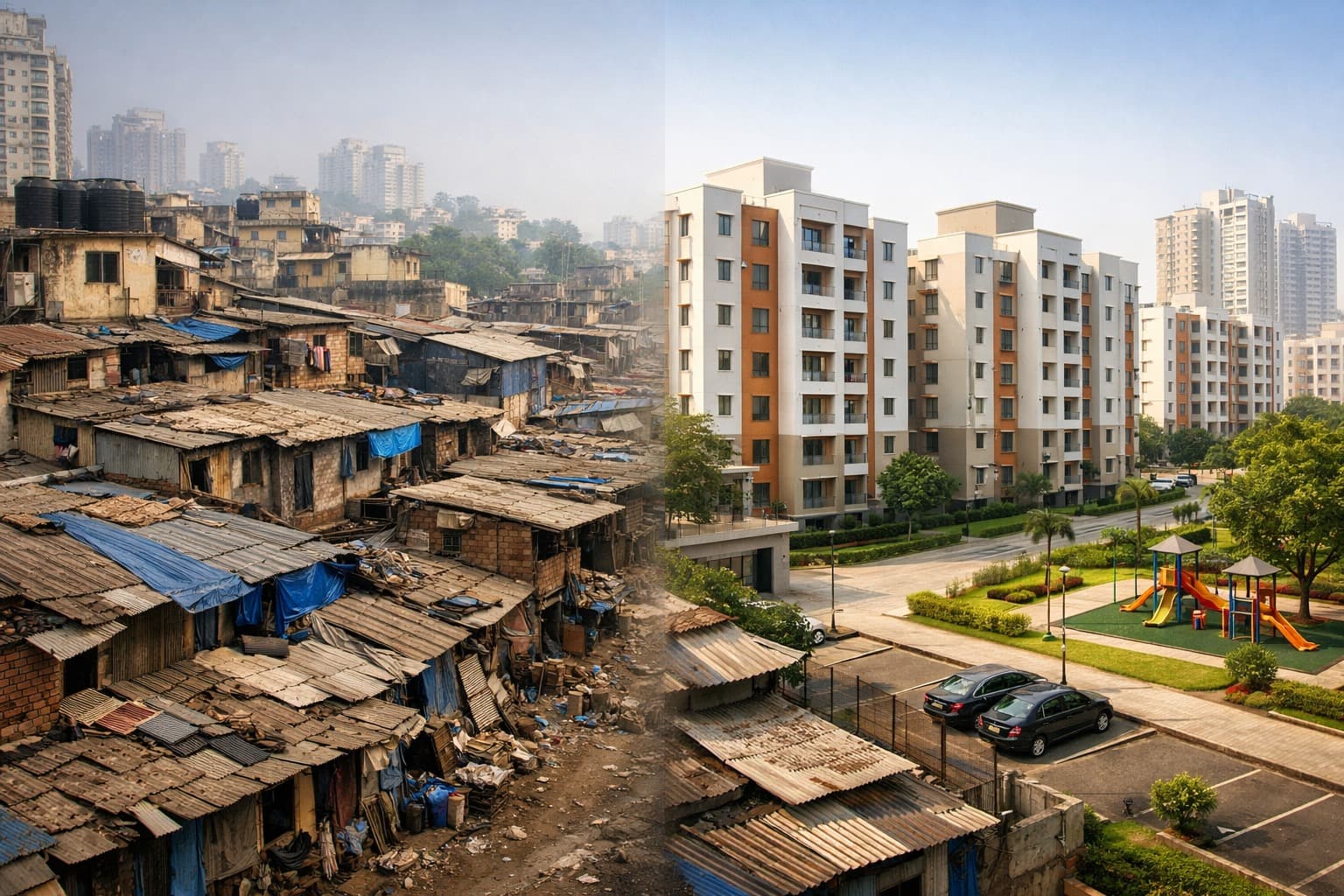
Affordable housing must also respond to climate risks and social inclusion. Energy-efficient construction, resilient infrastructure, and access to public services are increasingly important. The future of affordable urban housing in India depends on building cities that support economic activity while protecting environmental and social well-being.
Implications for Homebuyers
For homebuyers, PMAY-U delivery improves availability and access. Subsidies reduce costs, while increased housing supply stabilises prices in some segments. However, buyers must carefully evaluate location, connectivity, and future infrastructure before investing in peripheral projects. Affordability should be balanced with long-term liveability.
Impact on Developers and Lenders
Developers benefit from policy support and steady demand in affordable housing. Lenders see growing loan portfolios and wider market participation. At the same time, both stakeholders must manage risks related to location quality, repayment capacity, and infrastructure gaps to ensure sustainable growth.
Summary
The Economic Survey 2025-26 highlights major progress in affordable housing under PMAY-U, with over 96 lakh homes delivered nationwide. Policy support, housing finance growth, and infrastructure investment have strengthened urban housing supply. However, challenges remain as many affordable homes are located in peripheral areas with limited connectivity. Rising housing loans show deeper financial participation, but also require careful planning. The future of urban housing lies in integrated, inclusive, and infrastructure-led city development.
Video will be embedded from: https://www.youtube.com/watch?v=Nb68IiIJR4I