
A ₹1,260 Crore Goodbye: What Subhash Chandra's Delhi Bungalow Sale Tells Us
Summary
Subhash Chandra's ₹1,260 crore sale of his Lutyens Delhi bungalow sets a new benchmark for luxury real estate, yielding a ~15% annual return. This record deal highlights the scarcity premium and enduring value of properties in the exclusive Lutyens Bungalow Zone, while providing significant liquidity for the Essel Group founder.

Introduction
There are property deals, and then there are deals that rewrite what people thought was possible. The sale of Subhash Chandra's bungalow in Lutyens Delhi fits squarely in the second category. The Essel Group founder and Zee Entertainment patriarch has agreed to transfer his Bhagwan Das Road property to an unnamed Delhi-based business family for ₹1,260 crore, making it one of the most expensive residential transactions this country has ever recorded.
To put that in perspective: at roughly ₹1.03 lakh per square foot, this single deal has reset the benchmark for what Lutyens Bungalow Zone land is worth when it actually changes hands.
The Numbers Behind the Deal
Subhash Chandra had bought this 2.8-acre property on Bhagwan Das Road back in 2015 for ₹304 crore. Over eleven years, that investment has grown more than fourfold, clocking an annualised return of close to 14.9 percent. For a passive real estate holding in a country where fixed deposits offer seven to eight percent and many listed stocks underperform expectations, that is a quietly spectacular outcome.
The deal is expected to be formally closed by the end of December 2026, with all financial formalities tied up before that date. A Zee Group spokesperson declined to confirm or comment on the transaction publicly.
Why Bhagwan Das Road Matters
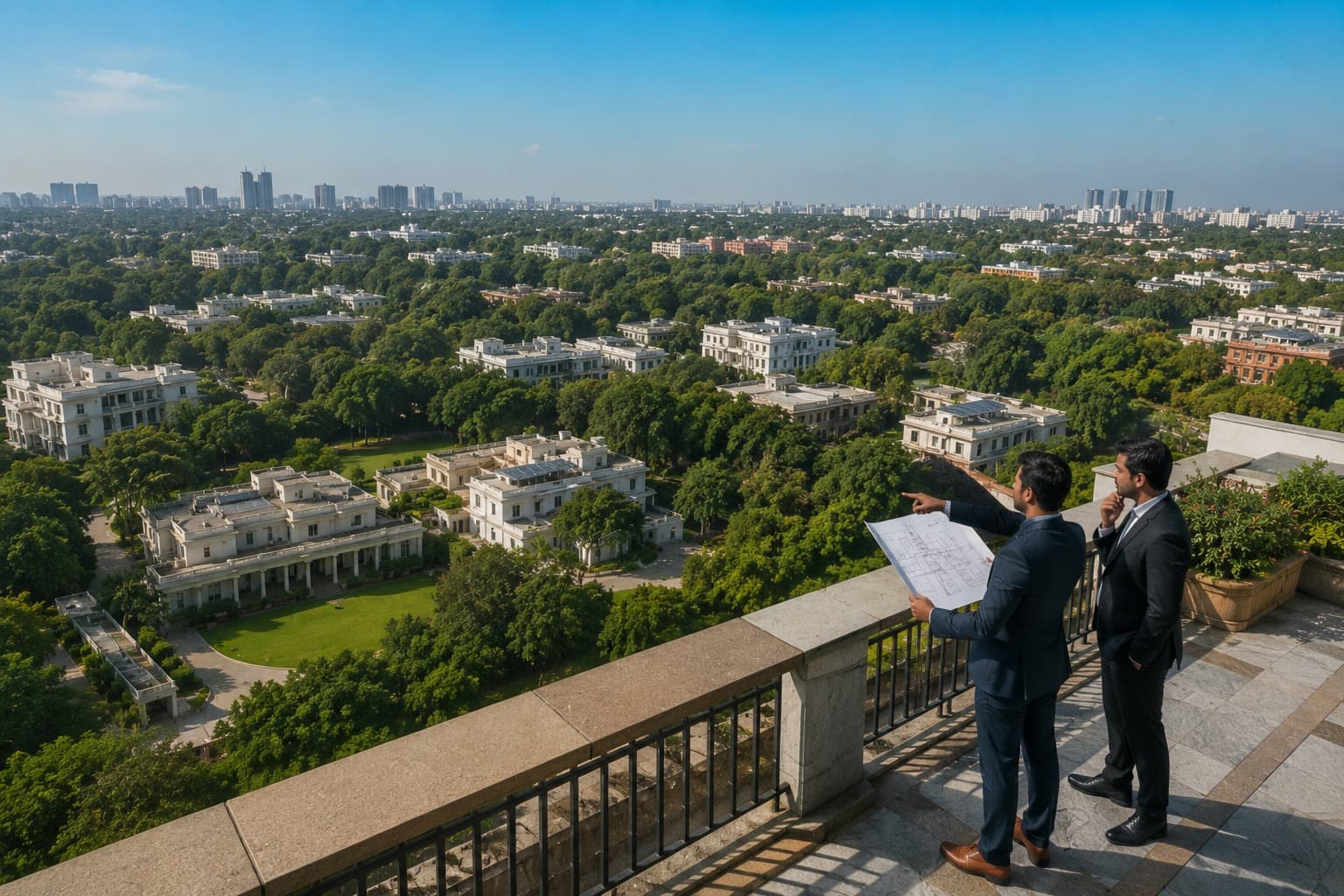
The Bhagwan Das Road property sits in a stretch of central Delhi that carries genuine historical and geographic weight. The road runs in close proximity to India Gate, Bharat Mandapam, and Mandi House, putting it at the very heart of the national capital's most significant civic corridor. Interestingly, Gautam Adani's conglomerate had purchased another plot on the same road back in 2020 for around ₹400 crore. That acquisition, which felt extraordinary at the time, now looks conservative against the price that the Lutyens bungalow sale has just achieved in 2026.
The Lutyens Zone: A Closed Market With Open Valuations
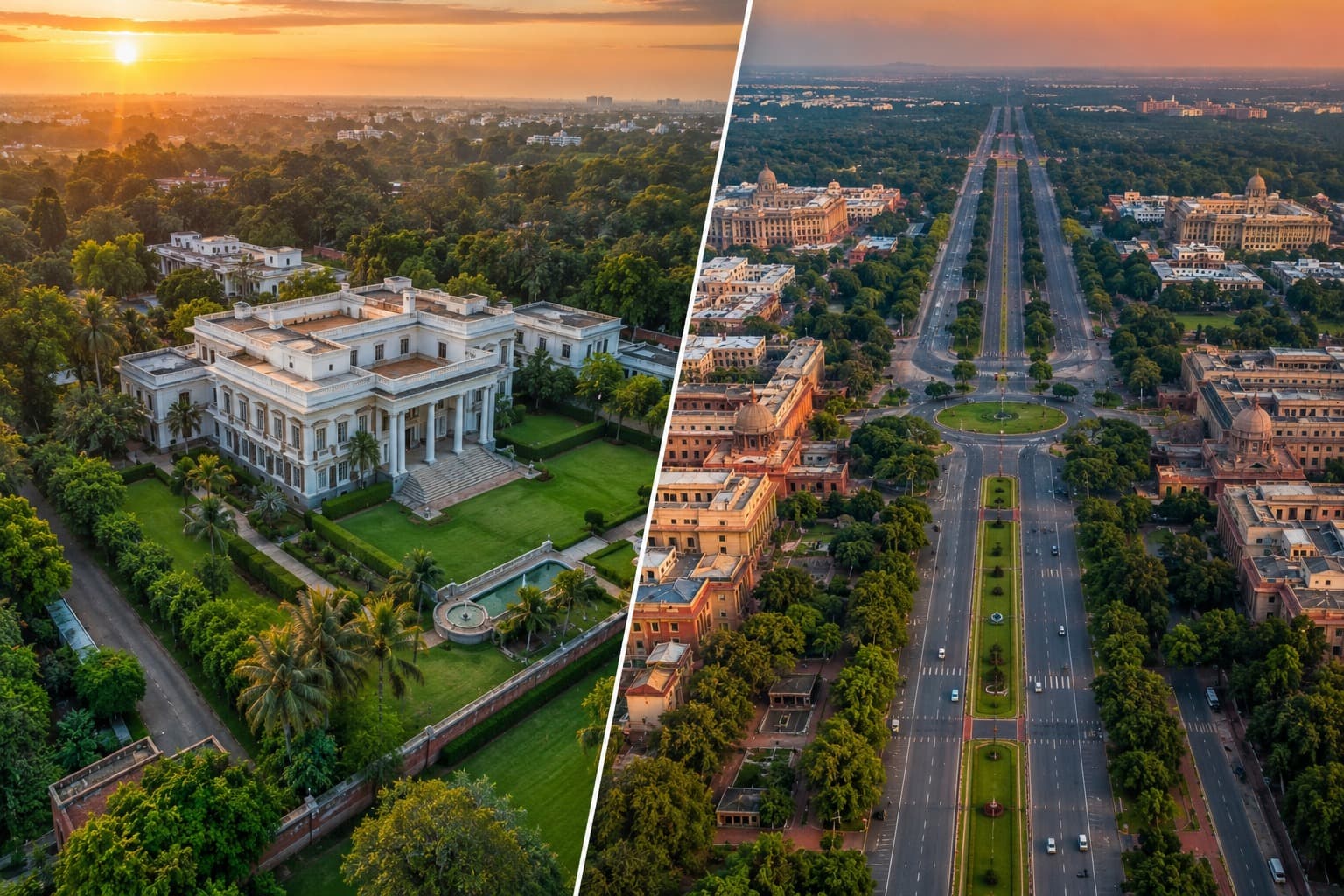
The Lutyens Bungalow Zone spans roughly 28 square kilometres of central Delhi and contains approximately 3,000 bungalows in total. Of these, around 600 are in private hands, owned by industrialists, old business families, and a select number of wealthy individuals who have held these properties across generations. The rest remain with the government, occupied by senior officials, judges, and diplomatic establishments.
What makes this zone so unusual from a market standpoint is precisely its lack of liquidity. Properties here almost never come up for sale. When they do, the scarcity premium kicks in immediately, and prices are dictated almost entirely by seller preference rather than comparable market benchmarks. That dynamic produces the kind of outcome visible in this deal: a price so high it barely computes against any conventional valuation model, yet entirely justified by the rarity of the asset.
Part of a Broader Wave
This transaction does not stand alone. It arrives at the tail end of a period of unusually active Delhi luxury real estate movement at the top end. Earlier in the same cycle, Jawaharlal Nehru's former official residence on Motilal Nehru Marg changed hands for close to ₹1,100 crore. A bungalow on APJ Abdul Kalam Road sold for ₹310 crore. Another on Feroze Shah Road transacted at ₹241 crore. The Maharaja of Tehri Garhwal's 3.2-acre property on the same belt is reportedly in the process of being transferred for over ₹1,000 crore.
What this cluster of deals confirms is that the appetite for Lutyens Delhi addresses among India's wealthiest buyers has not cooled despite broader economic uncertainty. If anything, the concentration of high-value transactions in a short window suggests that more owners of legacy properties are reading the current market as a once-in-a-generation opportunity to monetise.
What This Signals for the Broader Market
For Subhash Chandra personally, the timing of this sale invites natural scrutiny. The Essel Group has navigated a demanding few years, managing debt restructuring and business consolidation across several verticals. A liquidity event of this magnitude provides a meaningful cushion, and market observers are likely to interpret it in that context. Asset monetisation at this scale, especially from a promoter's personal portfolio, tends to be read as a calculated move to strengthen financial positioning rather than any indicator of distress.
For the Delhi luxury property market, the deal adds yet another data point to an argument that land in the Lutyens Bungalow Zone should be treated as an asset class entirely separate from conventional residential property. The rules that govern pricing, availability, and returns here have almost nothing in common with what happens in Greater Kailash or even Golf Course Road in Gurugram.
Summary
Subhash Chandra's ₹1,260 crore sale of his Bhagwan Das Road bungalow to a Delhi-based business family is the kind of transaction that defines a market era. Purchased for ₹304 crore in 2015, the 2.8-acre Lutyens Delhi property has delivered an annualised return of nearly 15 percent and set a new per square foot benchmark of ₹1.03 lakh for the zone. In a belt where barely 600 properties sit in private hands, every Lutyens bungalow sale is less a real estate event and more a statement about wealth, scarcity, and the enduring pull of an address that Delhi simply cannot replicate anywhere else.
Video will be embedded from: https://www.youtube.com/watch?v=8q6MhMYCoCQ