
A Mumbai Company Just Turned an Old Building Plot Into ₹169 Crore, and the Story Behind It Is More Interesting Than the Number
Summary
Standard Industries monetized an old Dadar West plot for ₹169.51 crore, plus flats and parking, by assigning development rights to Prabhadevi Developer. This highlights a common Mumbai redevelopment trend where companies unlock value from land banks without undertaking construction risk. Such deals are becoming pivotal for adding housing in land-scarce areas.

The Deal in Plain Words
Sometimes a transaction looks small on paper and turns out to be a window into how an entire city's real estate machinery actually works. That is exactly the case with Standard Industries, a listed company that has just handed over the development rights of its plot in Dadar West to a builder called Prabhadevi Developer Private Limited.
The number attached to the deal is Rs 169.51 crore. But cash is only part of what Standard Industries is getting. Documents filed with the Maharashtra Stamp Authority show the company will also receive four finished flats and sixteen car parking bays once the new building comes up.
What Exactly Did the Company Own
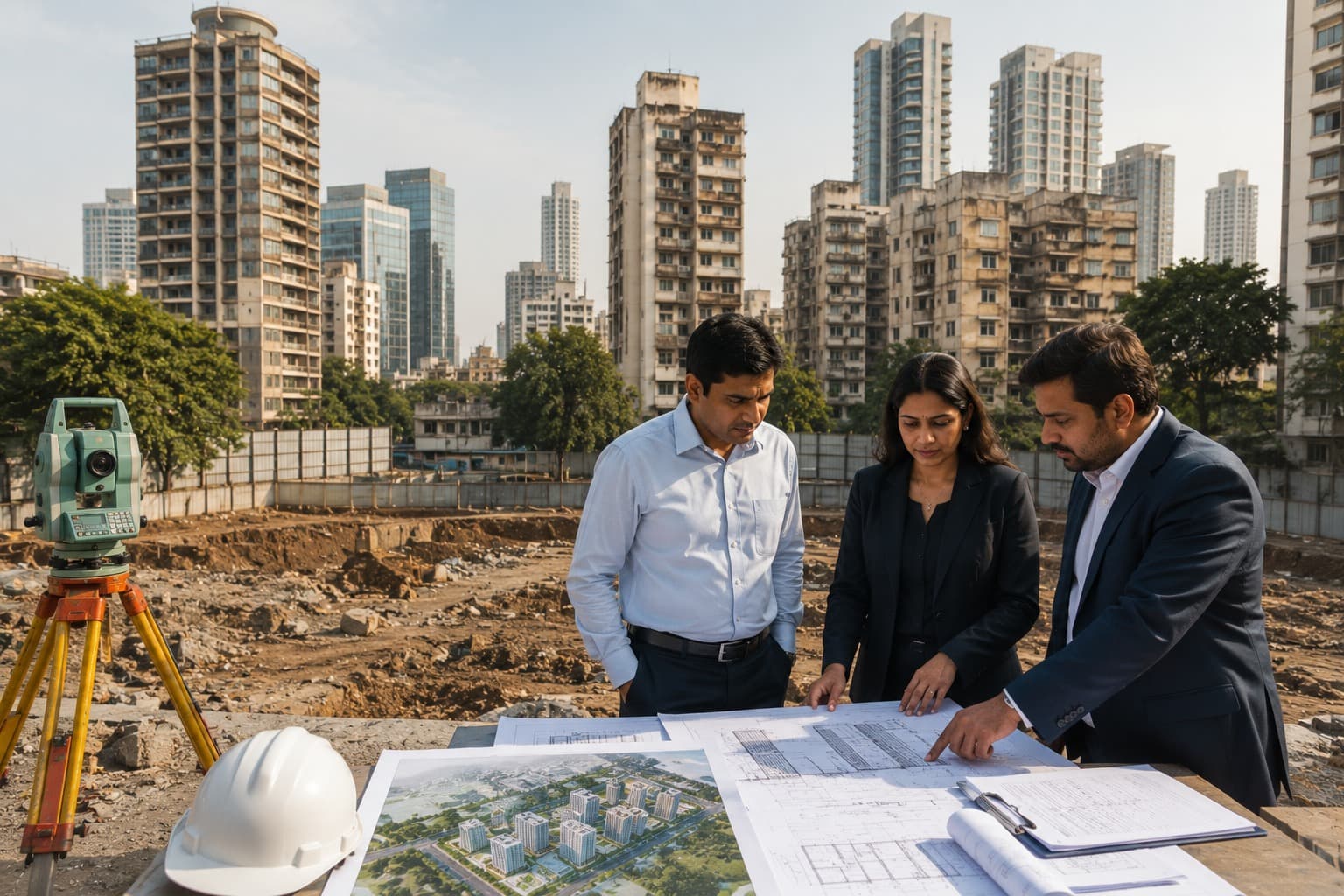
The land in question sits on Kashinath Dhuru Marg, a quiet stretch in Dadar West that has been home to an old structure called Stanrose Apartment. The plot itself measures roughly 1,937 square metres, which is not enormous by Mumbai standards, but its location inside the island city makes it valuable regardless of size.
Mumbai island city redevelopment has been gathering pace for a simple reason. There is barely any vacant land left to build on, so unlocking old, underused plots has become the only realistic way for developers to add fresh housing stock in these older neighbourhoods.
Why a Company Sells Rights Instead of the Land Itself
This is the part that often confuses people outside the property business. Standard Industries has not actually sold its land in the traditional sense. What it has handed over is the right to build on that land, along with control over the Floor Space Index, which essentially decides how much construction is legally permitted on a given plot.
This kind of arrangement, known as a Deed of Assignment of Development Rights, lets the landowner step back from the headache of construction entirely. The builder takes on every risk associated with raising the new structure, securing further clearances, and selling finished units in the market. The original owner simply waits to collect their share of the finished project, plus whatever cash component was agreed upon.
Reading the Numbers Behind the Headline
The deed for this transaction was registered on May 22, 2026, with a stamp duty payment of Rs 9.05 crore. That figure alone tells you something about how the authorities valued the overall transaction. For stamp duty purposes, the landowner's full entitlement, covering the cash, the flats, the parking, and other development benefits combined, was assessed at close to Rs 181 crore.
Under the redevelopment plan, the project is expected to use a total built-up area of more than 10,000 square metres, governed by Mumbai's current Development Control and Promotion Regulations from 2034. Of that potential built area, a portion close to 2,635 square metres has been earmarked specifically for the original landowner, with the rest going to the developer to construct and sell.
In return, Standard Industries is set to receive about 25,774 square feet of residential carpet area once the building is ready, along with the sixteen parking spaces, split between surface slots and stacked parking systems.
Why This Matters Beyond One Company
Standard Industries posted a consolidated net loss for the financial year that just ended, so this land monetisation deal arrives at a useful moment for the company's balance sheet. It is a familiar pattern across Indian listed companies sitting on old industrial or commercial land banks in cities like Mumbai. When core operations are not generating enough profit, a dormant land asset becomes the obvious lever to pull.
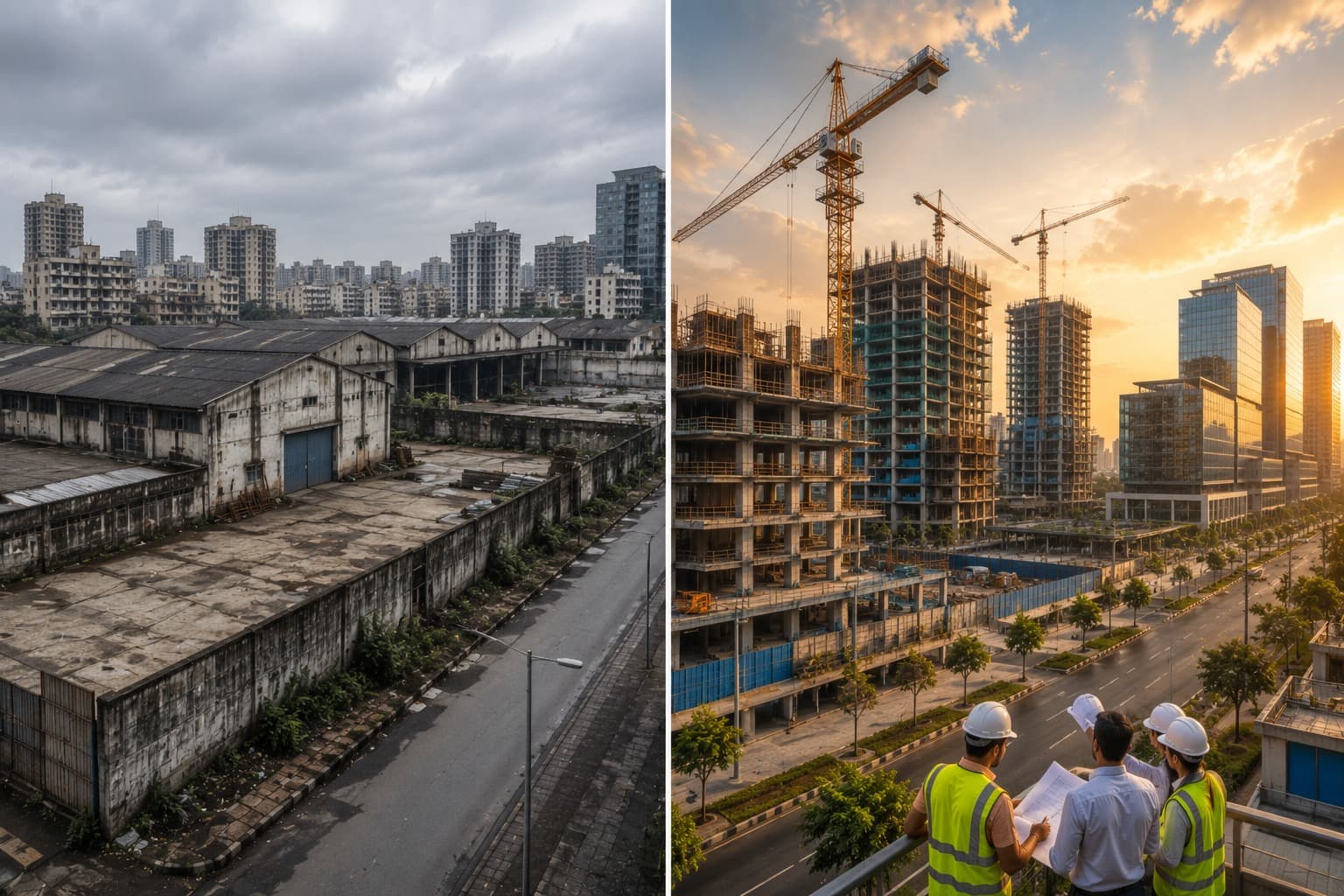
What makes this particular case worth watching is how common this structure is becoming. Several established Mumbai developers regularly pursue similar arrangements, taking over the construction risk on tenanted or company-owned plots in exchange for handing back a portion of the finished property. It keeps redevelopment moving in parts of the city where outright land sales are rare and where most owners would rather avoid the long, expensive process of construction themselves.
The Bigger Picture for Dadar and Beyond
Dadar West sits in a part of Mumbai that has resisted the kind of rapid vertical growth seen in newer corridors like the eastern suburbs or Thane. Much of its housing stock is old, low-rise, and was built decades before current building norms came into effect. That combination, ageing structures sitting on prime land close to the city's railway spine, is precisely what makes development rights sale Mumbai transactions so common in this belt right now.
As more such deals surface across Dadar, Mahim, and Prabhadevi, expect the trend to accelerate rather than slow down. Land in this part of Mumbai is simply too scarce and too valuable for old buildings to keep sitting unredeveloped for much longer.
Summary
Standard Industries has assigned the development rights of its Dadar West plot to Prabhadevi Developer for Rs 169.51 crore, receiving cash, four flats, and sixteen parking spaces in return. The deal highlights how Mumbai island city redevelopment increasingly relies on rights transfers rather than outright land sales, letting owners step away from construction risk entirely. With Dadar redevelopment Mumbai activity picking up across nearby micro-markets, this transaction offers a clear, real example of how value gets unlocked from old, undersized plots in one of the city's most land-starved neighbourhoods.