
What Every Homebuyer Must Confirm Before Signing a Property Deal in India
Summary
Buying property in India requires meticulous verification to avoid costly fraud. Homebuyers must confirm clear ownership through title deeds, government records, and an Encumbrance Certificate, complemented by a property lawyer's opinion and RERA checks for new projects.

The Mistake That Costs Buyers Everything
Buying a home is the single biggest financial commitment most Indian families make in their lifetime. The excitement of finding the right flat or plot can make even cautious people rush past the one step that matters most.
Ownership verification. It sounds procedural. It is actually everything.
Property fraud in India is far more common than most buyers realize. Forged documents, duplicate sales, disputed titles, and illegal encroachments have ruined transactions that looked perfectly fine on the surface. The only protection a buyer has is doing their homework before money changes hands.
Begin With the Title Deed
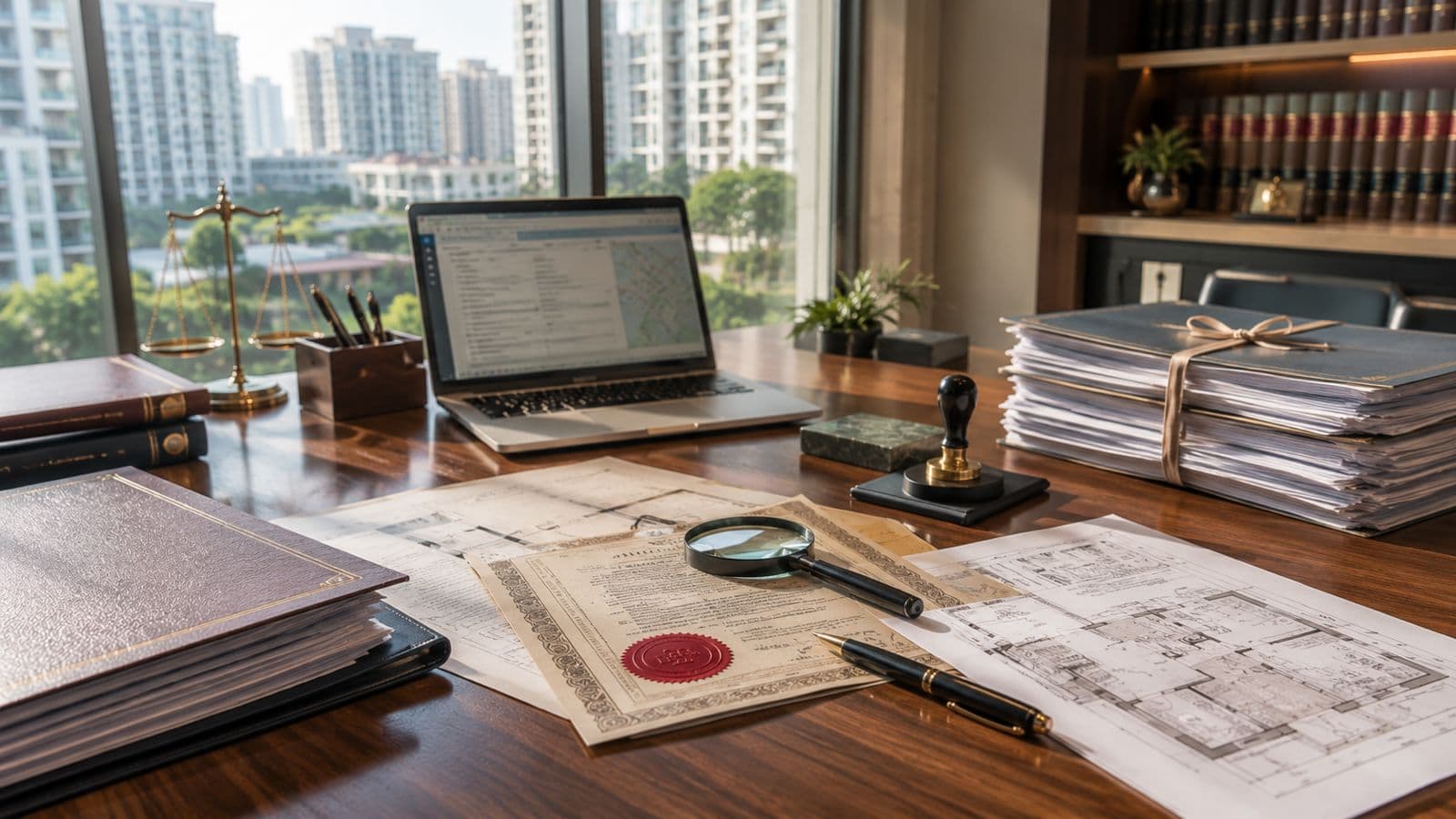
The first document to ask for is the original title deed. This paper establishes legal ownership and traces how the property moved from one person to another over the years.
You want to see at least 30 years of unbroken ownership history. Each transfer must have a corresponding registered sale deed. If the chain of ownership has unexplained gaps, treat that as a serious concern and do not move forward until those gaps are resolved.
Visit the Sub-Registrar's Office
Every legitimate property sale in India goes through the Sub-Registrar's Office. This office holds records of all registered transactions and is your most reliable source for independent ownership verification.
Ask for an Encumbrance Certificate, or EC, for the property. Specify a period of at least 15 to 30 years. The EC will reveal every registered mortgage, sale, or charge on the property during that period. If anything unexpected shows up here, the seller needs to explain it in writing.
Use State Land Revenue Portals
Most Indian states now offer online access to their land revenue records. Maharashtra has the Mahabhulekh portal. Karnataka uses the Bhoomi system. Andhra Pradesh, Telangana, and Tamil Nadu each have their own platforms.
These portals display the 7/12 extract or its equivalent, which tells you who the government officially recognizes as the landowner. If the name on this document does not match the seller sitting across from you, stop and investigate immediately.
A Property Lawyer Is Non-Negotiable
Some buyers try to handle property verification without legal counsel to save money. This decision regularly costs them several times what they saved.
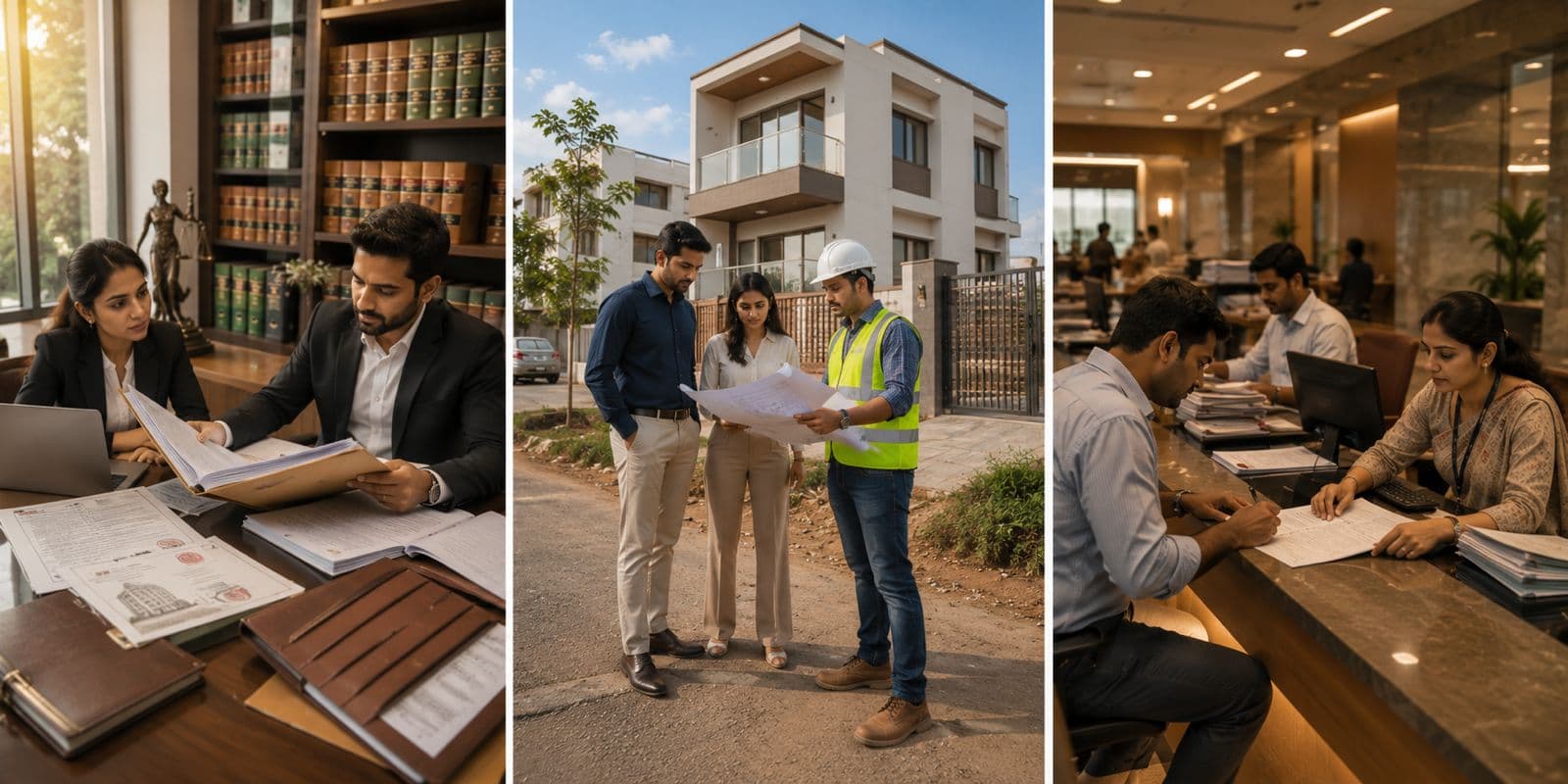
A qualified property lawyer will read the title documents properly, run a litigation check, and deliver a written title opinion. That opinion should clearly state whether the title is clean, marketable, and free of encumbrances. If the lawyer raises even a minor flag, treat it as a major one.
Search for Court Disputes
Property cases filed in Indian courts move slowly. A dispute that began before you bought the property can drag you into years of legal proceedings after you own it.
Search relevant civil and district court records for any cases involving the property or its owner. Ask the seller to provide a sworn affidavit confirming no pending litigation exists. A genuine seller will agree to this without any hesitation.
Check Every Approval for Built Properties
When buying an apartment or house, verify that the construction itself is legally approved. Many buildings in Indian cities exist without valid sanctions from local authorities.
Ask for the approved building plan, completion certificate, and occupation certificate. The occupation certificate in particular confirms that the building meets the standards required for people to legally live in it. A structure without this certificate is technically illegal, regardless of how finished it looks.
RERA Is Your Friend for New Projects
If you are purchasing an under-construction flat, your first check should be the RERA portal of your state. Every developer selling units in an ongoing project is legally required to register it under the Real Estate Regulatory Authority.
The portal shows you the project's registration number, approved layouts, declared completion timelines, and any complaints already filed against the developer. Fifteen minutes on this portal can tell you more about a developer's track record than any sales brochure ever will.
Confirm Who You Are Actually Dealing With
Never assume the person showing you the property is the legal owner. Match their government identity documents against the name on the title deed and revenue records.
If they are selling through a Power of Attorney, verify that the POA document is registered and has not been revoked. A registered POA is legally valid only for the specific actions mentioned in it. Read it carefully with your lawyer before accepting it as authority to transact.
Summary
Verifying property ownership before buying is the most important step in any Indian home purchase. Checking the title deed, obtaining an Encumbrance Certificate, confirming revenue records on state portals, getting a lawyer's title opinion, and verifying RERA registration for new projects form the core of a reliable property verification checklist. Skipping even one of these steps leaves a buyer exposed to disputes and losses that no amount of regret can undo afterward.