
A Plain-Language Guide to Estimating Annual Property Tax
Summary
This guide simplifies annual property tax estimation in India, detailing the three main calculation systems (Capital Value, Unit Area, Annual Rental Value) and showing how to apply them. Learn about exemptions, penalties, and why early payment is beneficial for homebuyers.

Why This Matters More Than Most Buyers Realise
Buying a home is the headline event. What follows quietly in its wake, year after year, is a bill most buyers underestimate. Property tax is not the largest number you will encounter as an owner, but it is one of the most consistent. And in a country where every city runs its own calculation system with its own rates, zones, and exemptions, guessing will almost always cost you more than understanding.
So let us walk through how property tax India actually works, what determines your bill, and how you can arrive at a reasonably accurate annual figure before you even sign the sale deed.
The Three Systems Every Indian Homebuyer Should Know
Indian municipalities use three distinct frameworks for property tax calculation methods India, and which one applies to you depends entirely on where your property sits.
The first is the Capital Value System. Cities like Mumbai use this approach, where the BMC charges tax as a percentage of the market value assigned to your property. That value is derived from the government-published ready reckoner rates updated by Maharashtra annually. So as property tax BMC Mumbai assessments go, your tax moves in step with what the market around you is doing.
The second is the Unit Area Value System, used in Delhi, Bengaluru, Hyderabad, and several other major cities. Here, a per-square-foot rate is assigned to your locality based on its category, ranging from prime commercial zones to peripheral residential pockets. You multiply that rate by your property's built-up area, adjust for usage and occupancy, and arrive at your taxable value.
The third is the Annual Rental Value system, where your tax is calculated based on what your property could theoretically earn as rent each year, not what it actually earns. Your municipality makes this assessment based on comparable rentals in your area.
How to Estimate Your Annual Figure
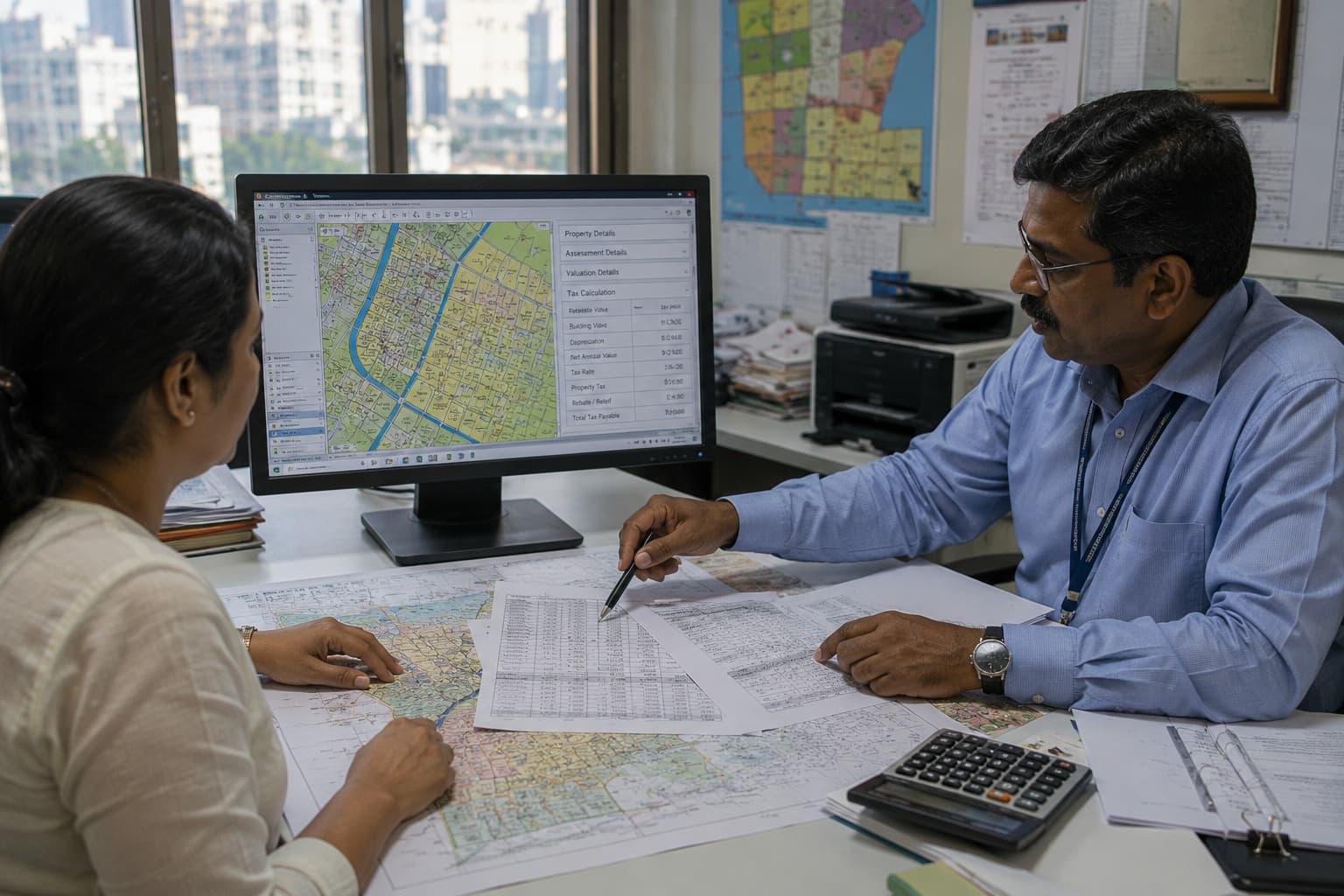
How to estimate property taxes per year is genuinely simpler once you know your city's system. For Capital Value cities, the basic formula looks like this: take the market value of your property and apply the applicable tax rate, which for residential properties typically runs between 0.1 and 0.3 percent. A home valued at Rs 80 lakh under CVS, with a 0.1 percent rate, would attract an annual tax of approximately Rs 8,000.
For Unit Area cities, multiply the per-square-foot rate assigned to your ward by your property's total built-up area. Then factor in adjustments for the building's age, which attracts depreciation relief in most municipalities, and whether the property is self-occupied or rented out. Rented properties tend to attract slightly higher effective rates.
The property tax formula India across systems can be summarised simply: assessed base value multiplied by applicable rate, minus any eligible deductions.
What Reduces Your Bill
Property tax exemptions India are more generous than most owners know. Senior citizens in several cities receive deductions of up to 30 percent on the tax amount. Properties that are owner-occupied rather than tenanted typically attract lower rates. Buildings beyond a certain age qualify for depreciation adjustments that reduce the taxable base. Agricultural land within municipal limits is usually exempt altogether.
Women-owned properties in a handful of states also attract a small rate concession. Worth checking with your local municipal corporation before you assume the full rate applies.

Penalties for Not Paying
Ignoring property tax payment is expensive. Most Indian municipalities levy interest between one and two percent per month on overdue amounts. Beyond financial penalties, an unpaid tax history blocks your ability to sell the property cleanly, since a tax clearance certificate is required for property registration. No clearance means no sale.
Most cities now offer early payment discounts of five to ten percent if you clear dues before June of each financial year. That small window is worth using.
Summary
How to estimate property taxes per year in India starts with knowing whether your city uses the Capital Value System, Unit Area Value System, or Annual Rental Value system, since each produces a different calculation entirely. Property tax India rates on residential properties typically fall between 0.1 and 0.5 percent of assessed value, with senior citizens, owner-occupants, and older buildings qualifying for meaningful exemptions. Paying on time protects both your finances and your ability to transact on the property when the time comes.