
Yerawada–Katraj 8-Lane Tunnel: Pune's Solution for Traffic and Real Estate?
Summary
The Yerawada-Katraj tunnel is proposed to ease Pune's traffic congestion by creating an 8-lane underground route. Feasibility studies are underway, balancing potential real estate and mobility benefits against financial and technical challenges.

Yerawada–Katraj 8-Lane Tunnel: Will It Ease Traffic or Boost Real Estate Value?
Pune’s Growing Infrastructure Challenge
Pune has evolved into one of India’s fastest-growing urban centres, driven by employment hubs, educational institutions, and expanding residential zones. With this growth has come a steady rise in vehicle ownership and daily commuting pressure. Existing roads are struggling to support this demand, particularly along major north–south corridors. Persistent traffic congestion affects productivity, quality of life, and overall urban mobility. This situation has pushed authorities to explore long-term solutions rather than temporary fixes.
The Vision Behind the Yerawada–Katraj Tunnel
The proposed Yerawada–Katraj tunnel is planned as a large underground connectivity solution linking the northern and southern parts of Pune. Designed as an eight-lane corridor, it aims to divert through-traffic away from surface streets. By creating a twin tunnel network, planners hope to offer a direct and uninterrupted route beneath the city. The objective extends beyond congestion relief to creating a future-ready transport corridor aligned with sustainable city growth.
Why This Corridor Is Strategically Important
Yerawada and Katraj sit at two critical ends of Pune’s urban structure. The stretch between them passes through highly developed zones where widening existing roads is no longer practical. Vehicles moving across the city currently rely on overcrowded arterial routes, leading to frequent delays. A north–south connectivity corridor beneath these areas would allow traffic to bypass surface bottlenecks entirely. This strategic relevance explains why the project continues to receive attention despite earlier delays.
Current Status of Planning and Feasibility Studies
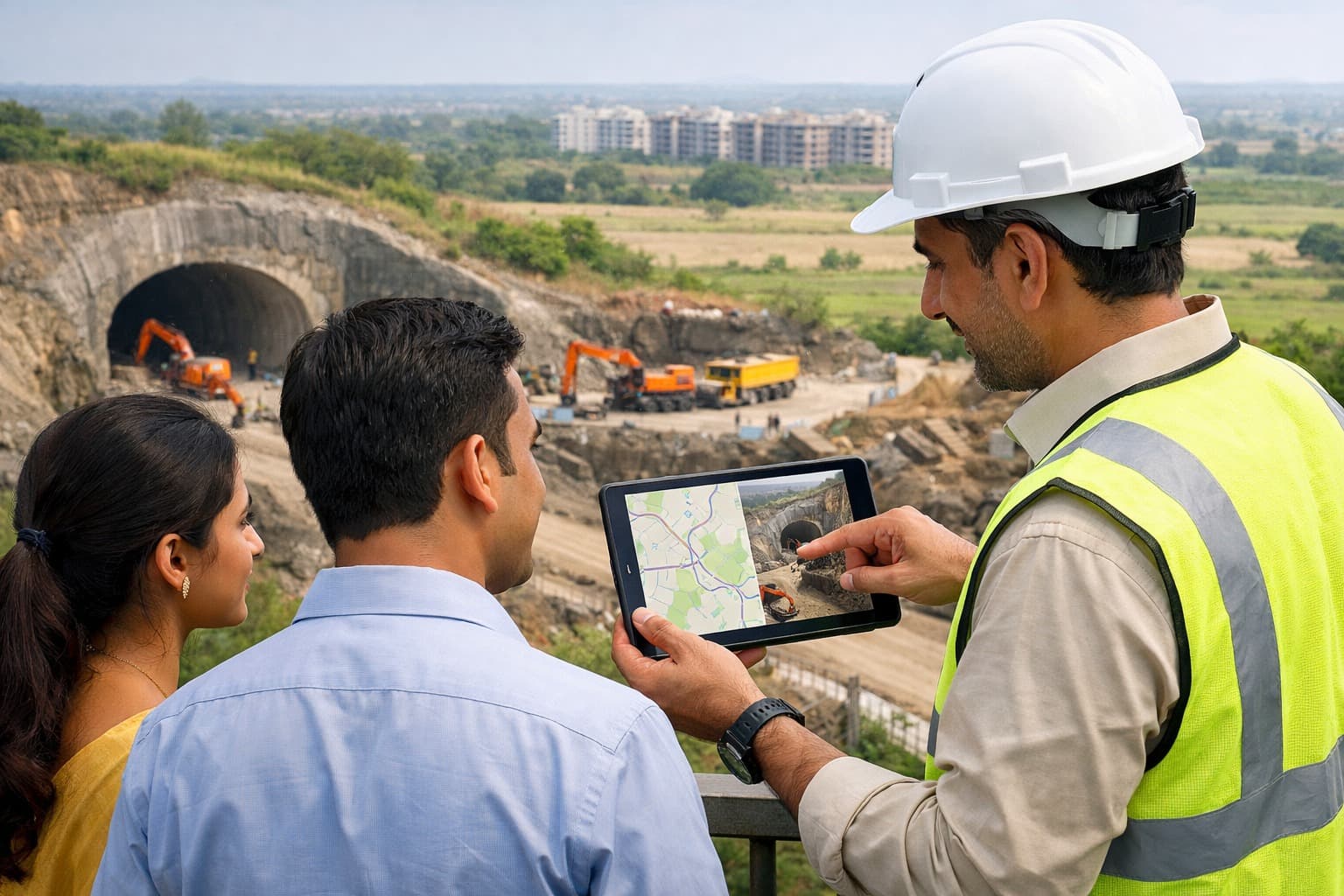
The proposal is currently undergoing a detailed project feasibility review. Authorities have appointed experts to assess technical, environmental, and economic aspects. These studies analyse ground conditions, tunnel safety measures, traffic projections, construction timelines, and environmental impact. The goal is to determine whether the tunnel can be built safely and sustainably while delivering real benefits. The findings of this feasibility study process will strongly influence the project’s future direction.
Technical and Financial Considerations
Underground infrastructure development involves complex engineering and significant investment. Tunnelling beneath a live city requires advanced technology, precise execution, and strict safety standards. From a financial perspective, the cost of construction, maintenance, and long-term operations is substantial. Decision-makers must carefully weigh these expenses against anticipated gains in mobility and efficiency. Funding models, execution strategies, and long-term sustainability remain central to ongoing discussions.
Concerns Raised by Civic Authorities
Despite its potential, civic authorities have expressed reservations. Key concerns include high capital requirements, extended construction timelines, and uncertainty over returns when compared to alternative mobility solutions. There is also concern about temporary disruption to surrounding areas during construction. These debates ensure that the project is examined through a balanced lens. Such scrutiny is essential for responsible public spending and long-term infrastructure investment planning.
Impact on Urban Mobility
If implemented, the tunnel could significantly enhance urban mobility across Pune. By shifting a portion of traffic underground, surface-level congestion may reduce, resulting in smoother movement and more predictable travel times. This could benefit daily commuters, commercial transport operators, and emergency services alike. Improved traffic flow would also support broader public transport integration, allowing the city to function more efficiently as a whole.

Implications for the Real Estate Market
Large-scale infrastructure projects often influence real estate trends. Improved connectivity generally enhances the attractiveness of nearby residential and commercial zones. Locations close to tunnel access points may see rising demand from homebuyers seeking shorter commute times. Commercial developments may benefit from improved accessibility and logistics efficiency. Over time, such infrastructure can support property value growth and strengthen long-term investor confidence.
Long-Term Urban Development Perspective
Beyond immediate traffic relief, the tunnel reflects a broader approach to planned urban expansion. Underground corridors help cities increase transport capacity without consuming scarce surface land. When aligned with metro systems, upgraded roads, and other transit projects, the tunnel could support balanced development across the metropolitan region. This approach encourages growth beyond saturated central zones and promotes more organised city expansion.
The Yerawada–Katraj 8-lane tunnel stands at the intersection of ambition and practicality. It promises meaningful traffic relief and potential benefits for the real estate market, yet presents significant technical and financial challenges. As feasibility evaluations continue, the project remains under careful consideration. Its success will depend on informed decision-making, fiscal discipline, and alignment with Pune’s long-term urban vision. For the city, this tunnel is not just a transport proposal, but a defining step in shaping future growth.
Summary
The Yerawada–Katraj 8-lane tunnel is a proposed underground corridor aimed at reducing traffic congestion between northern and southern Pune. Designed to bypass crowded surface roads, it could improve urban mobility and travel efficiency. While feasibility studies continue to assess technical and financial viability, concerns regarding cost and execution remain. If implemented, the project may influence commuting patterns, support property value growth, and play a key role in Pune’s long-term infrastructure and real estate development strategy.
Video will be embedded from: https://www.youtube.com/watch?v=rouI_lBszEI