
Yerawada-Katraj Underground Tunnel: Can Pune Solve Traffic Congestion by Going Underground?
Summary
Pune is considering an ambitious underground tunnel project to solve its traffic woes. The Yerawada-Katraj tunnel, part of a larger network, faces feasibility reviews and funding questions but has strong political backing and real estate implications.

Introduction
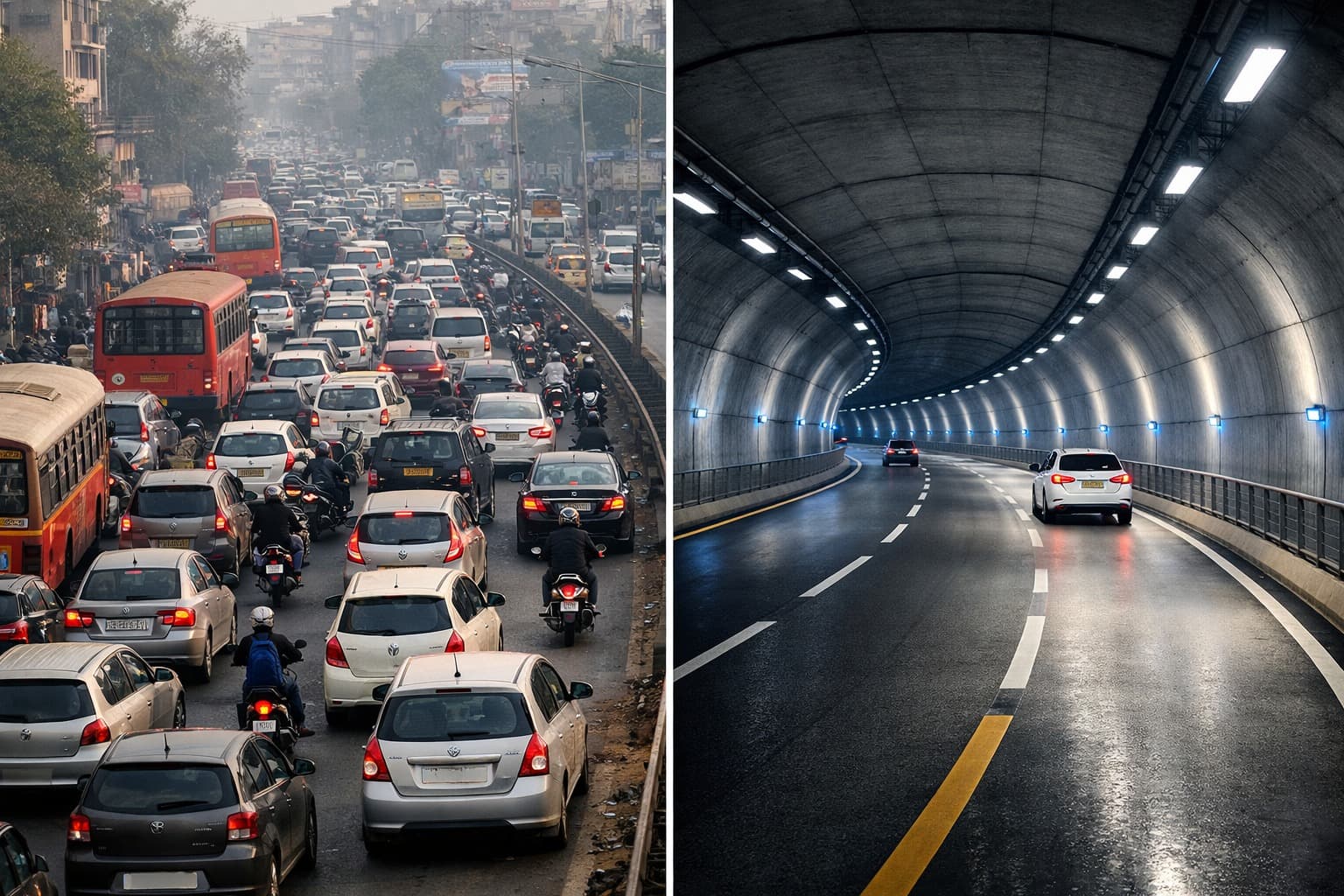
Pune has a traffic problem that its roads simply cannot solve anymore. The city has grown faster than its surface infrastructure, and the result is something every Punekari knows too well. Hours lost on Satara Road. The Katraj crawl. The Nagar Road bottleneck that stretches all the way back into the city core. Now, for the first time, the people responsible for planning this city are seriously asking whether Pune traffic congestion solution tunnel is the answer. The Yerawada Katraj underground tunnel project Pune has moved through several stages of discussion and is now, officially, in the thick of a contested feasibility review. Whether it gets built is another matter entirely.
What Is Actually Being Proposed
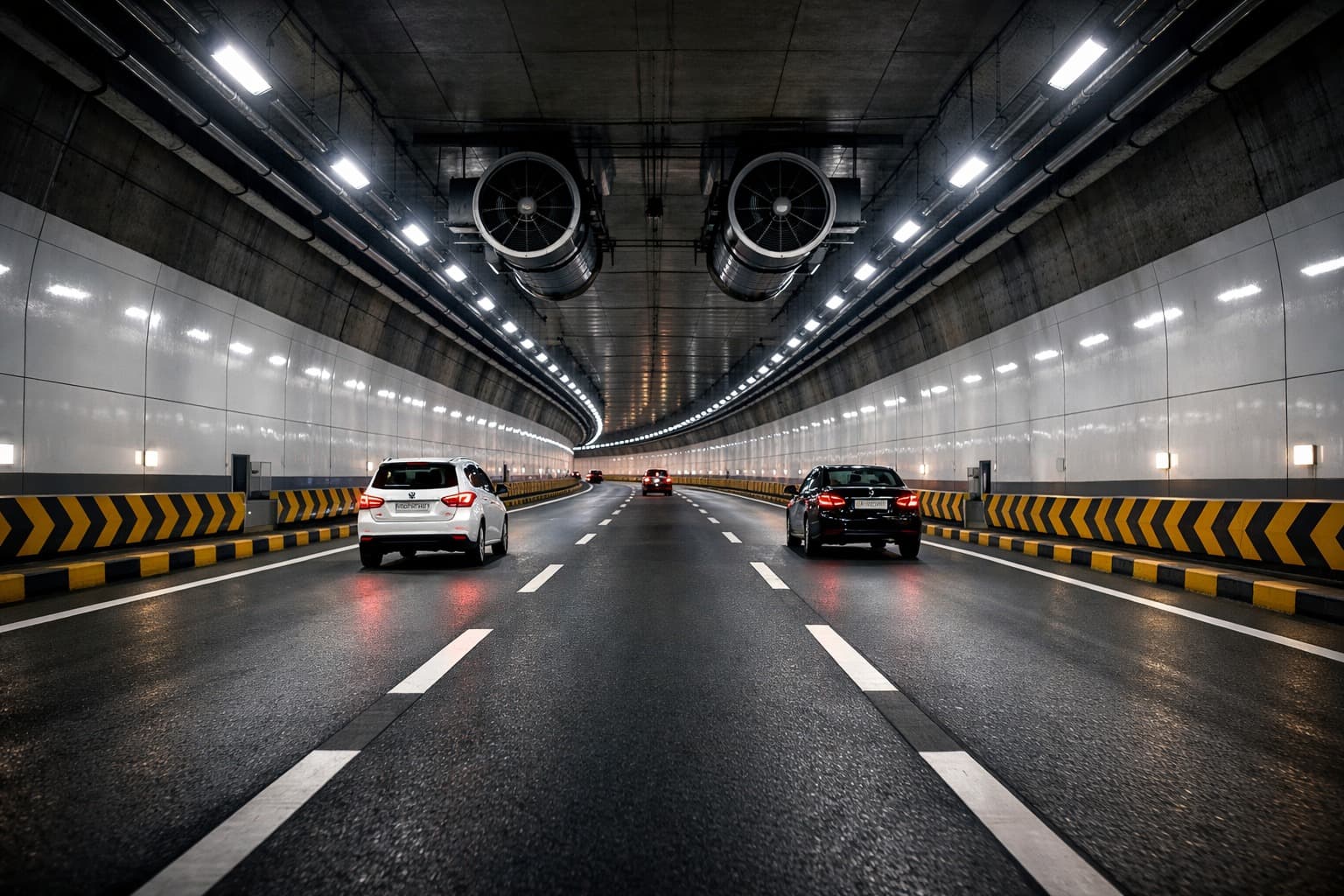
The plan, as it stands, involves a Yerawada Katraj twin tunnel running approximately 20 kilometres underground, connecting eastern Pune near Yerawada to the southern suburbs around Katraj. Each tunnel would carry three lanes of traffic in a single direction, giving the corridor six lanes in total. Multiple entry and exit points are planned at three to four locations along the route. The project is part of a wider PMRDA infrastructure Pune vision that includes a nearly 45-kilometre underground road network eventually linking four major highways: Pune-Mumbai, Pune-Satara, Pune-Solapur, and Pune-Ahilyanagar. The tunnels would pass beneath Taljai and Vetal hills, areas already earmarked in the Pune Municipal Corporation's Development Plan for infrastructure use.
The Paatal Lok Reference and What It Means
Chief Minister Devendra Fadnavis has been the most vocal political champion of this idea. At a public event in January 2026, he said surface road widening in Pune had essentially hit a wall. Roads currently account for just nine percent of the city's total area, far below what a growing metropolis typically needs. He described the proposed underground network as a Paatal Lok model Pune underground road, a reference to going beneath the city to solve what cannot be fixed above it. The framing is catchy and the logic is not wrong. When Mumbai began its underground road push, Pune planners started asking why their city should settle for anything less.
How Far Along Is This Really
Here is where things get honest. The PMRDA tunnel feasibility report 2026 story is not one of smooth, linear progress. A consultant called Monarch was appointed to prepare the pre-feasibility study, which was presented at a recent high-level PUMTA meeting chaired by Divisional Commissioner Dr. Chandrakant Pulkundwar. The meeting included senior officials from PMRDA, PMC, and PUMTA itself. But the report did not sail through. PUMTA raised concerns about insufficient supporting data and unrealistic traffic projections. Given that the project's estimated cost has now climbed to approximately Rs 32,000 crore in broader underground network terms, the authorities pushed back and asked the consultant to strengthen the study by incorporating global traffic analytics, expert consultations, and a more technically rigorous framework before resubmitting.
The Cost Question Nobody Can Avoid
Can Pune afford a 32,000 crore underground tunnel project and who will fund it is the question sitting at the centre of every serious conversation about this project. PMRDA has already approved a Rs 4,503 crore budget for the 2025-26 financial year, which includes the tunnel among 220 other infrastructure priorities. Chief Minister Fadnavis also approved Rs 32,523 crore for various development works across the Pune metropolitan region more broadly. But a single underground road network of this scale would require dedicated funding, likely through a mix of state allocations, central government grants, and some form of public-private partnership. The cost per kilometre is estimated at roughly Rs 400 crore, which is substantial even by major metro infrastructure standards. A PPP model is on the table, but no final funding structure has been locked in.
The Engineering Challenges Are Real
Pune is not flat terrain with cooperative geology. The city sits on the Deccan Plateau with significant rock formations in several corridors. The tunnels are planned at a depth of around 30 metres, which is meant to avoid interference with existing and upcoming Metro rail corridors running beneath the same city. But urban planners have flagged concerns. A PUMTA member was quoted as saying feasibility studies must assess risks realistically rather than simply project benefits. The geological surveys conducted so far have informed the preliminary design, but the entry and exit point configurations raised in the earlier submission were questioned for being impractical. Getting those right is not a minor revision. It shapes the entire user experience and traffic impact of the project.
What This Means for Real Estate Along the Corridor
The Pune north south corridor underground road is not just a traffic conversation. It is quietly a real estate story too. Property markets in Pune respond quickly to infrastructure signals, and areas along the proposed tunnel alignment including Yerawada, Hadapsar, Katraj, Swargate, and connecting zones, are already being watched by investors who understand how connectivity transforms land values. What the Yerawada Katraj tunnel means for real estate and connectivity in Pune is potentially significant. Once a project of this scale clears planning stages and moves toward implementation, the localities closest to entry and exit points tend to see renewed commercial and residential interest. That cycle is still early here, but it is worth tracking.
Where Things Stand Right Now
Once the consultant revises and resubmits the pre-feasibility report, it goes back to PUMTA for review. If cleared there, the proposal moves to the Chief Minister's desk and then to the state cabinet for policy clearance and financial approval. The Pune metro region development authority has been clear: no approval comes without a technically sound, comprehensive report. PMRDA officials have stated this firmly and repeatedly. So the project is alive, politically backed at the highest level, and technically contested at the expert level. That is not an unusual place for a major Indian infrastructure proposal to be in its early stages.
The Bigger Picture for Pune
How PMRDA is planning a 45 km underground road network for Pune city reflects something larger than one tunnel. It reflects a city that has run out of easy solutions and is now seriously considering the expensive, complex ones. The surface network cannot absorb more. Metro rail helps but does not solve the problem for private vehicle users and freight movement. An underground road network, if designed and funded properly, could genuinely transform how the city moves. Whether that happens in five years or fifteen depends on how cleanly the feasibility report gets revised and how quickly political will translates into budgetary commitment.
Summary
The Yerawada Katraj underground tunnel project Pune is one of the most ambitious infrastructure ideas currently on the city's table. With a projected cost of Rs 7,500 crore for the twin tunnel alone, and a broader Pune underground tunnel network estimated at Rs 32,000 crore, the scale is significant. The PMRDA tunnel feasibility report 2026 has been sent back for revision, which means the timeline remains open. But the Paatal Lok model Pune underground road has serious political backing, a credible planning framework, and a city that genuinely needs it. The question was never whether Pune should go underground. The question is simply when.
Video will be embedded from: https://www.youtube.com/watch?v=TosmMDYuk0s