
Pune Ring Road Project: Traffic Relief or Real Estate Boom?
Summary
The Pune Ring Road project aims to decongest traffic and boost connectivity, potentially transforming Pune's real estate landscape. This ambitious project could unlock new growth corridors and reshape urban development.

Introduction
The Pune Ring Road Project is one of the most ambitious infrastructure developments planned for the Pune Metropolitan Region. Designed as a dual ring system, the project aims to decongest city traffic while improving connectivity across highways, industrial zones, and emerging suburbs. Beyond easing daily commutes, the project is expected to reshape Pune’s real estate landscape by unlocking large peripheral areas for residential, commercial, and industrial growth.
Overview of the Pune Ring Road Project
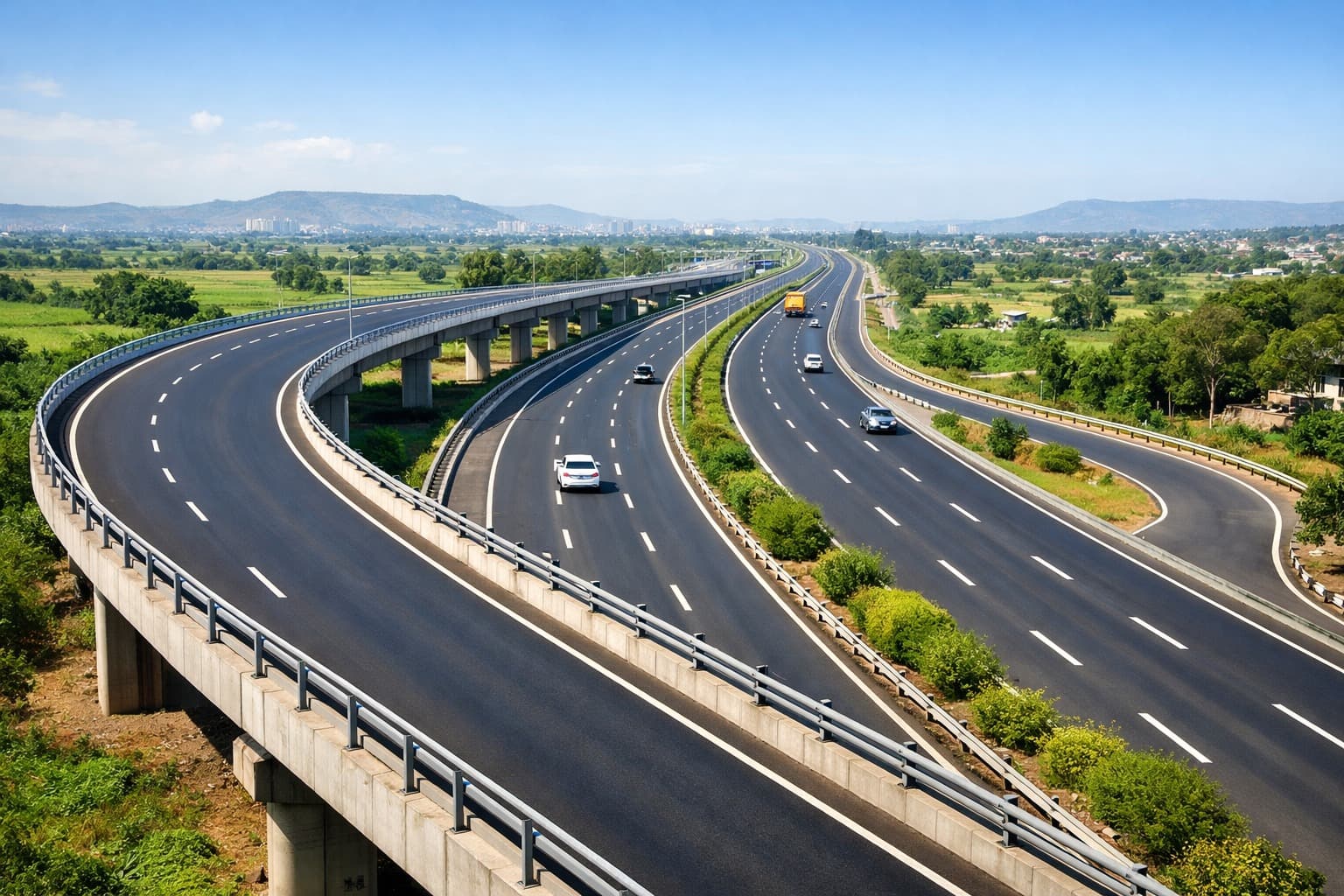
The Pune Ring Road is being developed as a dual network comprising an Outer Ring Road and an Inner Ring Road. Together, they are planned to improve traffic distribution and reduce congestion within the city. The project covers multiple talukas and villages around Pune and is expected to act as a long‑term solution for urban mobility challenges.
Dual Ring System: Outer and Inner Ring Roads
The Outer Ring Road will span approximately 173 kilometres and is planned as an eight‑lane, access‑controlled corridor connecting major highways around Pune. The Inner Ring Road, with a length of about 81 kilometres, will support internal traffic movement and link key growth corridors. Both roads are designed to work together to divert heavy and through traffic away from city centres.
Project Cost, Scale, and Timeline
The total investment for the Pune Ring Road project is estimated at over ₹40,000 crore when both rings are combined. The outer ring is targeted for completion around 2027, while parts of the inner ring are expected to be completed earlier. The project has been divided into multiple phases to ensure structured execution and manageable land acquisition.
Phase‑Wise Development Plan
The project is being implemented in four major phases, covering western, eastern, southern, and northern sections of Pune. Each phase includes multi‑lane roads, interchanges, tunnels, flyovers, and service roads. Phased execution allows gradual opening of sections while construction continues on other stretches, helping deliver early connectivity benefits.

Highway Connectivity and Regional Integration
One of the biggest advantages of the Pune Ring Road is its direct connection to major national highways, including routes towards Mumbai, Bengaluru, Nashik, Solapur, Ahmednagar, and Saswad. This integration is expected to significantly reduce travel time for inter‑city and freight movement, while improving access to peripheral regions.
Impact on Traffic and Urban Mobility
The primary objective of the Ring Road is traffic decongestion. By diverting heavy vehicles and long‑distance traffic away from city roads, the project is expected to reduce congestion by a substantial margin. Improved traffic flow is also expected to contribute to lower pollution levels and more efficient urban movement.
Real Estate Impact Across Pune’s Periphery
The Pune Ring Road is expected to have a strong impact on real estate activity along its route. Peripheral areas that were earlier considered remote are likely to emerge as attractive residential and commercial zones due to improved connectivity. This shift is expected to balance development pressure away from already saturated city locations.
Emerging Residential and Commercial Hubs
Locations near major interchanges and highway junctions are expected to see increased demand for housing, logistics parks, office spaces, and retail developments. Areas such as Talegaon, Chakan, Wagholi, Hinjewadi, Mulshi, Purandar, and parts of Haveli taluka are already witnessing early signs of infrastructure‑led interest.
Property Price Appreciation Potential
Real estate experts expect gradual price appreciation in areas located close to the Ring Road, especially during and after completion of key phases. Land parcels and plotted developments are likely to benefit first, followed by residential townships and commercial projects as infrastructure matures.
Land Acquisition and Community Impact
The project requires large‑scale land acquisition across multiple villages. Compensation packages include higher‑than‑market rates along with additional benefits and employment opportunities. Community development initiatives such as roads, schools, healthcare facilities, and utilities are also planned as part of the broader impact.
Role of Government and Key Stakeholders
The Pune Metropolitan Region Development Authority (PMRDA) and Maharashtra State Road Development Corporation (MSRDC) are the primary implementing agencies. Multiple contractors, consultants, and financial institutions are involved to ensure technical execution, funding, and project monitoring.
Current Status and Progress
Land measurement and acquisition have progressed across several villages, with construction activity underway in initial phases. While delays have occurred due to land‑related issues and external factors, the overall project timeline continues to target phased completion leading up to 2027.
What This Means for Homebuyers and Investors
For homebuyers, the Ring Road promises better connectivity and future‑ready neighbourhoods. For investors, early‑stage opportunities near key corridors may offer long‑term appreciation as infrastructure and development expand outward from Pune’s core.
Summary
The Pune Ring Road Project is more than just a traffic management initiative. While it aims to ease congestion and improve mobility, its long‑term impact on real estate and urban expansion is likely to be far more significant. By opening up new growth corridors and improving regional connectivity, the project is positioned to drive Pune’s next phase of planned development, making it both a traffic solution and a catalyst for real estate growth.
Video will be embedded from: https://www.youtube.com/watch?v=qVlW0bCEAZI