
Pune Metro Expansion: ₹9,857 Crore Project Approved for Two New Corridors
Summary
Pune Metro expansion gets a boost with ₹9,857 Cr approval for two new corridors: Kharadi-Swargate-Khadakwasla and Nal Stop-Warje. This 31.6 km project aims to improve connectivity, reduce traffic, and drive real estate growth across Pune.

Introduction
Pune is moving steadily towards becoming a better connected and more commuter-friendly city. With the latest government decision, two major metro routes have received revised administrative approval. These include the Kharadi–Swargate–Khadakwasla corridor and the Nal Stop–Warje corridor. This development has become a major Pune metro update and reflects the government’s focus on improving urban transport Pune. The new approval is expected to support daily commuters, reduce congestion, and strengthen long-term city planning.
Overview of the New Metro Corridors
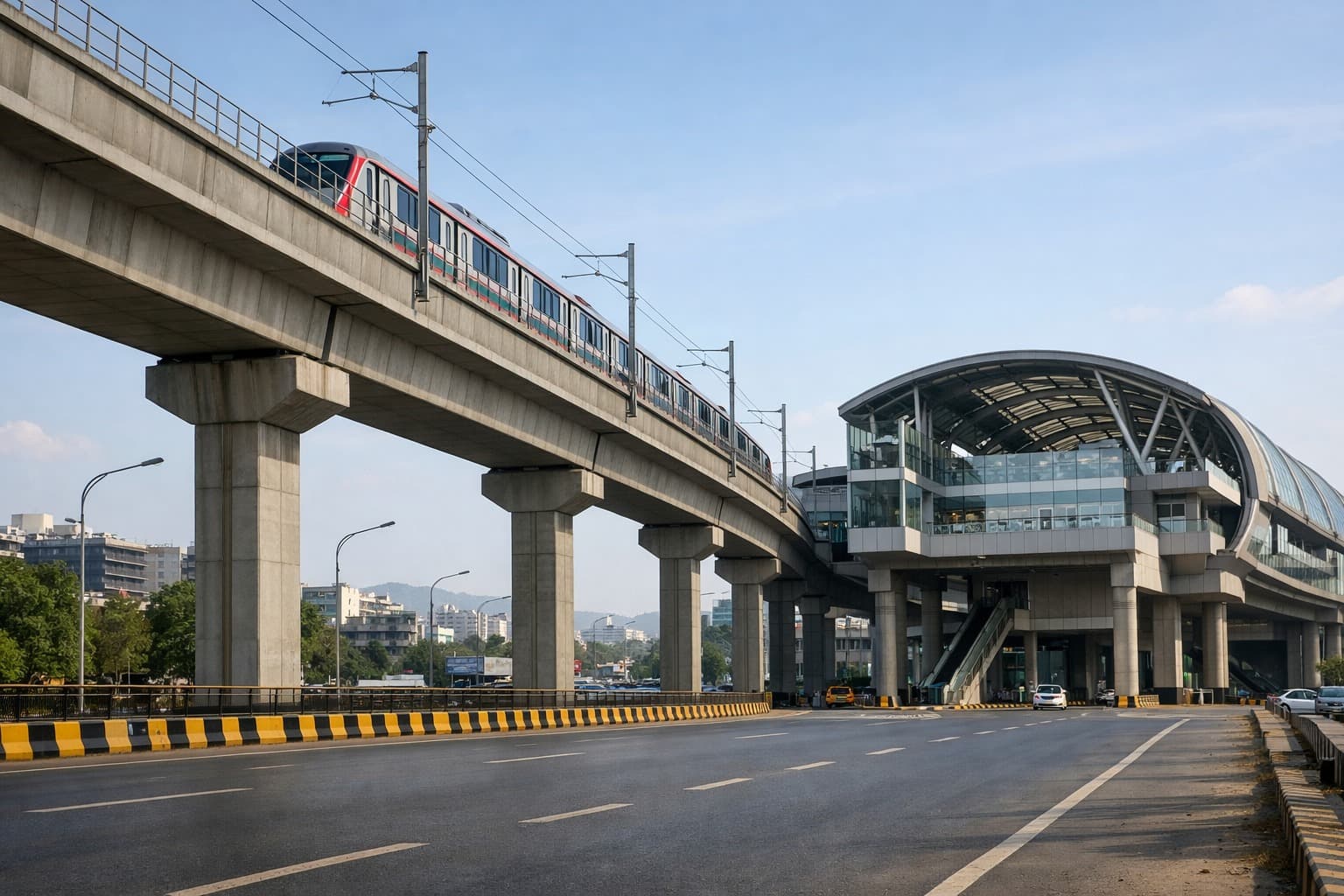
The two newly approved routes form an important part of the Pune metro corridors network. Together, they will cover a distance of 31.6 kilometres and include 28 elevated stations. The Kharadi Swargate metro line will connect key eastern and central parts of the city, while the Warje metro line will strengthen western connectivity. These corridors will improve access to major residential and commercial zones.
Government Approval and Administrative Clearance
The Maharashtra government granted revised approval after receiving earlier clearance from the Union government. This step formalises the project under the Pune metro expansion 2026 plan. A Government Resolution has authorised the signing of an agreement between the state, central government, and Maha Metro. This ensures coordinated execution of the Maha Metro Pune project and faster decision-making.
Project Cost and Funding Structure
The total estimated cost of both corridors is ₹9,857.85 crore. Under the funding arrangement, the central and state governments will each contribute ₹1,212 crore. The remaining amount will be arranged through loans and institutional funding. Under government funding for Pune metro corridors, Maha Metro will raise nearly ₹4,694 crore. This structured financing model ensures long-term project stability.
Role of Maha Metro in Project Execution
Maharashtra Metro Rail Corporation Limited has been appointed as the main executing agency. Maha Metro will oversee design, funding, construction, and monitoring. Under the Kharadi Swargate Khadakwasla metro project, the agency has already begun preliminary groundwork. It is currently finalising station locations, ramps, and minor alignment changes.

Technical Planning and Infrastructure Development
According to project estimates, around ₹1,694 crore will be spent on alignment and formation work. Station construction will require nearly ₹1,300 crore. Additional investments will go into power systems, signalling, and telecommunications. Under Nal Stop Warje metro corridor planning, modern technology will be used to ensure safety and operational efficiency.
Tendering and Construction Timeline
The tendering process to appoint construction contractors is expected to begin soon. Officials aim to complete the project within five years. This schedule is important for managing costs and meeting commuter expectations. Under revised approval for Kharadi Swargate Khadakwasla metro line, timely execution will determine public confidence in the project.
Improving Connectivity Across Pune
The new metro lines will improve access to major roads such as Nagar Road, Sinhagad Road, Solapur Road, and Hadapsar. These areas witness heavy daily traffic. Under how new metro lines will reduce traffic in Pune, commuters can expect shorter travel times and fewer traffic jams. The corridors will also connect business hubs with residential zones.
Impact on Real Estate and Property Demand
Metro expansion has a strong influence on property markets. Areas near stations usually see increased demand. Under Pune metro expansion impact on real estate, locations along these routes may experience appreciation in property values. Improved connectivity makes neighbourhoods more attractive to homebuyers and investors.
Benefits for Daily Commuters
For working professionals and students, these corridors offer affordable and reliable travel. Reduced dependence on private vehicles will lower fuel costs and stress. Under Pune public transport development, the project supports inclusive mobility and environmental sustainability.
Public Response and Commuter Expectations
Residents from eastern and western Pune have welcomed the approval. Many commuters have urged authorities to avoid delays. Regular users of public transport see this project as a long-term solution to congestion. The strong public interest reflects the importance of metro infrastructure.
Environmental and Urban Planning Perspective
Metro systems help reduce pollution by limiting private vehicle usage. These corridors will support Pune’s climate goals. Under urban transport Pune, sustainable mobility is becoming a priority. Proper planning will also prevent uncontrolled urban sprawl.
Challenges and Implementation Risks
Despite approval, challenges remain. Land acquisition, coordination with civic bodies, and funding flow may affect progress. Construction in busy zones can disturb daily life. Under Maha Metro Pune project, efficient management will be necessary to minimise inconvenience.
Long-Term Vision for Pune’s Metro Network
These two corridors are part of a larger mobility plan. Future expansions may link more suburbs and satellite towns. Over time, Pune aims to develop an integrated transport system combining metro, buses, and highways. This vision supports economic growth and urban comfort.
What This Means for Homebuyers and Investors
For property buyers, this project signals future growth zones. Areas near upcoming stations may become investment hotspots. Under Pune metro expansion 2026, informed buyers can plan purchases strategically. Investors should study alignment maps and development plans.
Conclusion
The revised approval marks a turning point for Pune’s infrastructure journey. With strong funding, clear planning, and public support, these corridors have the potential to transform daily commuting and urban development.
Summary
The Maharashtra government has granted revised approval for two major Pune metro corridors connecting Kharadi, Swargate, Khadakwasla, Nal Stop, and Warje. The ₹9,857 crore project will cover 31.6 km with 28 elevated stations and is funded jointly by the state, centre, and loans. Executed by Maha Metro, the project aims to improve connectivity, reduce traffic, support real estate growth, and strengthen public transport. Timely execution will be key to delivering long-term benefits for commuters and the city’s development.
Video will be embedded from: https://www.youtube.com/watch?v=uDNiy4frYOk