
Nariman Point to Virar in 35–40 Minutes: Mumbai’s Coastal Road Extension and its Impact
Summary
Mumbai's Coastal Road extension aims to slash travel time between Nariman Point and Virar to 35-40 minutes. This project promises to ease congestion, boost economic efficiency, and reshape real estate dynamics.

Introduction
Mumbai has long struggled with a fundamental problem—too many people, too little road space, and extremely long commute times. A recent green signal for the extension of Mumbai’s Coastal Road promises to change this equation. If executed as planned, the extended coastal corridor could reduce travel time between Nariman Point and Virar to just 35–40 minutes. This announcement has generated widespread interest, not just among daily commuters, but also among urban planners, businesses, and real estate stakeholders.
Why This Announcement Matters
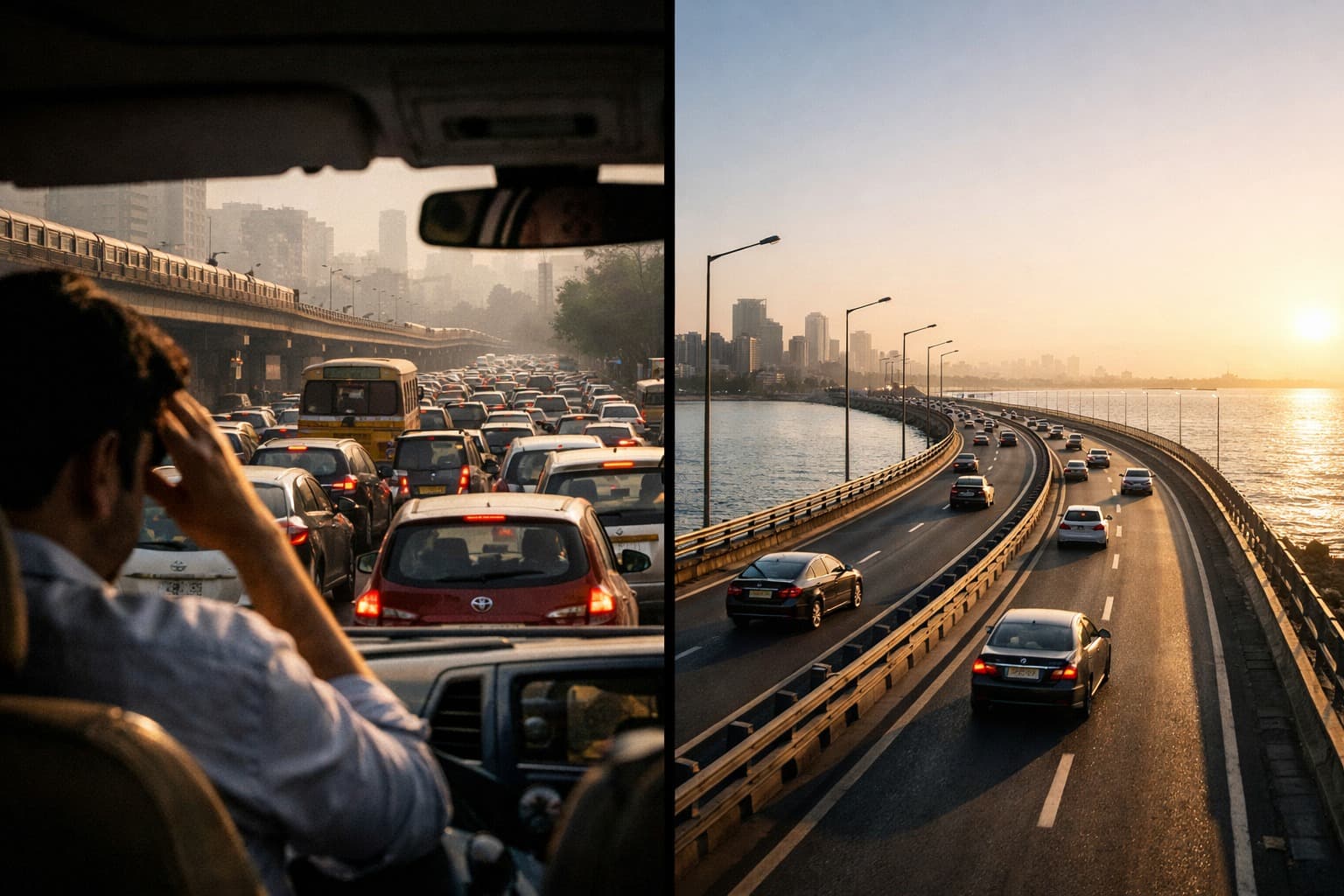
Travel between South Mumbai and the northern suburbs is currently time‑consuming and unpredictable. Peak‑hour journeys often stretch well beyond two hours. A direct, high‑speed coastal corridor has the potential to cut this time drastically, improving efficiency and quality of life for thousands of commuters.
Understanding the Coastal Road Extension
The proposed extension aims to connect Mumbai’s existing coastal road infrastructure further north, creating a continuous corridor along the western coastline. This would allow faster, signal‑free movement across major parts of the city. Unlike conventional road widening, this project leverages reclaimed land and marine alignment to bypass congested internal roads.
Why Nariman Point to Virar Is a Game‑Changer
Nariman Point represents Mumbai’s traditional central business district, while Virar is one of the city’s fastest‑growing residential zones. Linking these two ends efficiently addresses a long‑standing imbalance—jobs concentrated in the south and housing pushed to the outskirts. Faster travel narrows this gap significantly.
Impact on Daily Commuters
For office‑goers, reduced travel time translates into predictable commutes and less fatigue. Shorter journeys can improve work‑life balance and productivity. Reliability, rather than just speed, is what makes such infrastructure transformative.

Decongesting Existing Road Networks
Mumbai’s internal roads and highways are already operating at maximum capacity. A coastal corridor diverts long‑distance traffic away from crowded arterial roads like the Western Express Highway. This redistribution of traffic can ease pressure across the broader road network.
Boost to Economic Efficiency
Time saved in commuting has a direct economic impact. Businesses benefit from better employee punctuality and reduced logistics delays. Faster connectivity also strengthens Mumbai’s position as a competitive business hub by improving mobility across regions.
Real Estate Implications Along the Corridor
Infrastructure upgrades often reshape real estate dynamics. Areas in the northern suburbs and extended suburbs may become more attractive to end‑users if commute times reduce substantially. However, long‑term value will depend on actual execution and integration with local road networks.
Will This Reduce Dependence on Trains
Mumbai’s suburban railway system carries an enormous daily load. While the coastal road will not replace trains, it offers an alternative for those who currently rely on road transport. Diversifying transport options reduces pressure on any single system.
Environmental and Urban Planning Considerations
Large coastal infrastructure projects raise environmental questions. Long‑term success depends on balancing connectivity needs with ecological safeguards. Sustainable execution and maintenance will be critical to ensuring that benefits outweigh costs.
Challenges in Execution
Infrastructure timelines in Mumbai often face delays due to land, environmental, and coordination issues. For the promised travel time reductions to materialise, the project must be completed seamlessly and supported by efficient entry‑exit planning.
Importance of Last‑Mile Connectivity
A fast corridor alone is not enough. Access points, feeder roads, and traffic management near exits will determine real‑world travel efficiency. Poor last‑mile planning can dilute the benefits of even the best infrastructure.
How This Could Change Commuting Choices
If travel becomes faster and predictable, professionals may be more willing to live farther from workplace clusters. This flexibility can ease housing pressure in central zones and support more balanced urban growth.
A Long‑Term Urban Shift
The coastal road extension represents more than a commute upgrade—it reflects Mumbai’s shift toward large‑scale, high‑capacity infrastructure solutions. Such projects indicate a move away from incremental fixes toward structural transformation.
What Residents Should Realistically Expect
While the proposed travel time sounds ambitious, real benefits will become clear only after full operational stabilisation. Residents should view the project as a long‑term improvement rather than an instant solution.
Final Perspective
The approval of the coastal road extension connecting Nariman Point to Virar has the potential to redefine how Mumbai moves. If executed efficiently, it could significantly reduce travel time, decongest internal roads, and influence housing and work choices across the city. The true success of the project, however, will depend on timely completion, integration, and sustained management.
Summary
The planned extension of Mumbai’s coastal road promises to cut travel time between Nariman Point and Virar to 35–40 minutes, offering a major boost to urban mobility. By creating a fast, signal‑free corridor, the project aims to reduce congestion, improve commute reliability, and support economic efficiency. While challenges remain in execution and environmental management, the initiative signals a long‑term shift toward transformative infrastructure in Mumbai.
Video will be embedded from: https://www.youtube.com/watch?v=NFdIiWOFzug