
Nagpur Metro Phase III: Expanding to New Nagpur and Butibori MIDC
Summary
Nagpur Metro Phase 3 expands ambitiously beyond initial plans, adding four new corridors spanning 54.5 km. Key additions include links to New Nagpur township and Butibori MIDC, promising real estate and connectivity boosts.

Introduction
When Nagpur Metro was first announced, most people thought of it as a modest urban rail project for a city that was growing but not exactly overflowing. Six years into operations, Phase 1 is fully running, Phase 2 is mid-construction, and Nagpur Metro Phase 3 is now being planned at a scale that would have seemed ambitious even for a city twice Nagpur's size.
The original Phase 3 idea was relatively contained. A single corridor linking Sitabuldi with Koradi, about 11.5 kilometres, aimed at plugging the north-south gap in the existing network. But planners have been rethinking that entirely. The revised blueprint for MahaMetro Phase 3 now includes four separate corridors covering approximately 54.5 kilometres, with two headline additions that signal a very different vision for where Nagpur is heading: a new metro link to the New Nagpur township and an extension pushing 5 kilometres beyond the current Butibori MIDC metro terminal.
What Was Originally Planned and Why It Changed
Phase 3 started life as a response to a clear connectivity gap in the network. Sitabuldi to Koradi was the logical next step, a 11.5-kilometre stretch that would improve access to Nagpur's rapidly developing northern belt while reducing pressure on road corridors that carry disproportionate traffic.
But urban planning in Nagpur has been moving faster than the metro's original projections anticipated. The Samruddhi Mahamarg expressway changed the economic geography of the region. New Nagpur emerged as a serious greenfield development project. Industrial activity in and around Butibori picked up considerably. And the state government's Comprehensive Mobility Plan, finalised over the past year, forced a more honest conversation about what a metro network actually needs to accomplish over a 20-year horizon rather than just the next five.
The Four Corridors Taking Shape
The expanded Nagpur Metro Phase 3 four corridors plan is now formally incorporated into the CMP and has been sent to the Maharashtra state government for consideration.
The original Sitabuldi to Koradi corridor stays in. At 11.5 kilometres it covers the north-south connectivity gap the plan always intended to close. Alongside it, a 3-kilometre high-capacity stretch from MIDC ESR to CEAT Ltd addresses the last-mile problem for workers commuting into the Butibori industrial zone daily.
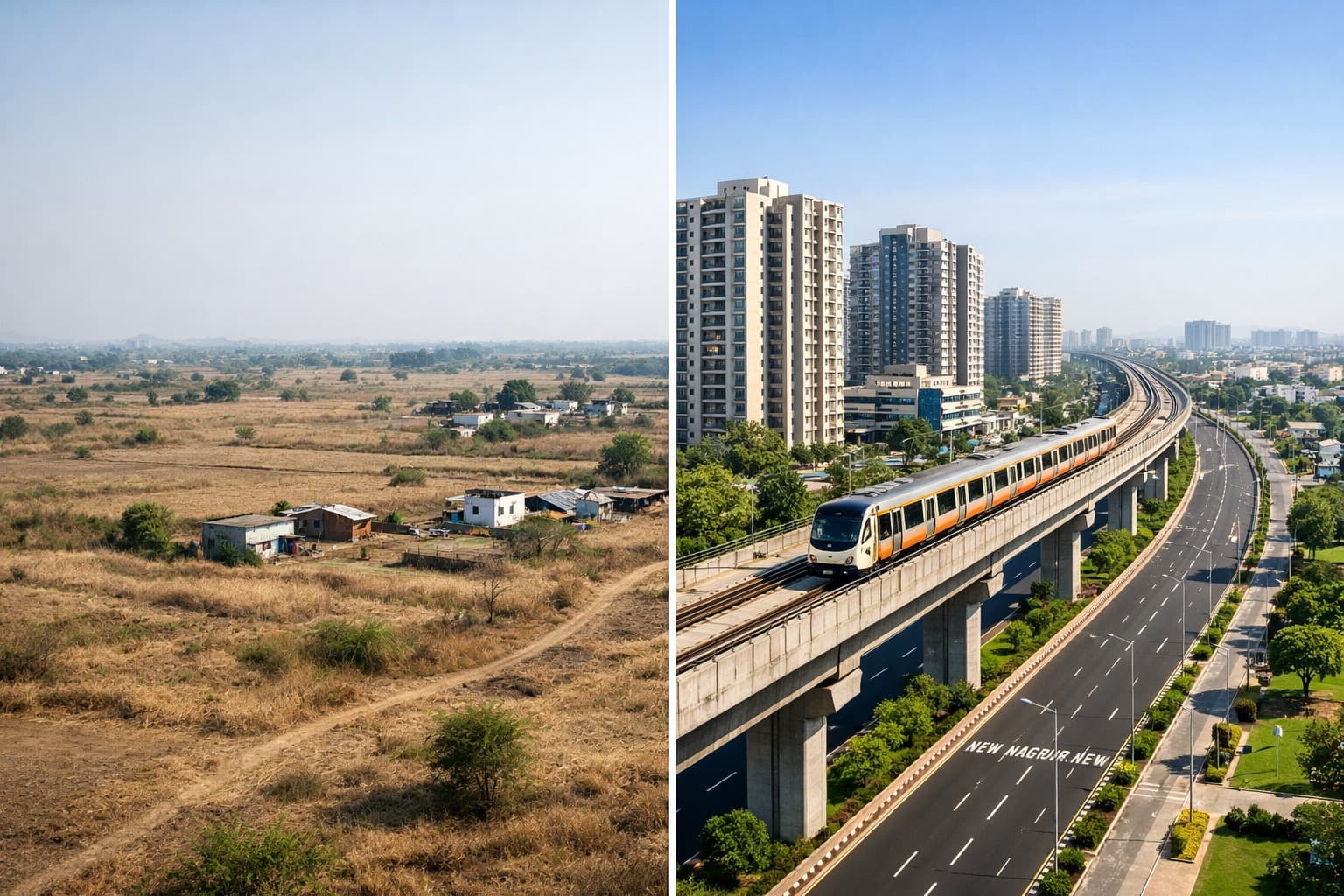
Then come the two bigger additions. A 15-kilometre corridor from Khapri toward New Nagpur township will connect the upcoming greenfield city with the metro network that currently ends at Khapri. And a 25-kilometre stretch along the Inner Ring Road, running from Mankapur Chowk to Rachana Junction near Hingna, will stitch together industrial zones, residential neighbourhoods, and employment clusters that currently have no mass transit connection between them.
Combined, these four corridors would push the total Nagpur Metro 129 km network plan considerably closer to completion.
The New Nagpur Connection Is the One to Watch
Of all the Phase 3 additions, the proposed corridor toward New Nagpur township carries the biggest long-term significance. And real estate is a large part of why.
New Nagpur is being developed near the Samruddhi Mahamarg circle by the Nagpur Improvement Trust as a planned urban extension of the city. NIT has already shared its master plan with MahaMetro, and the two agencies are working to ensure the metro alignment feeds directly into the planned residential and commercial zones of the new township. When metro connectivity is built into a greenfield city from the planning stage rather than retrofitted later, it does something very specific to property values: it makes early-stage plots and apartments significantly more attractive to buyers who would otherwise hesitate about long-term livability.
Buyers who have watched what metro connectivity did to peripheral areas of Pune, Bengaluru, and Hyderabad over the past decade will understand exactly why the New Nagpur township metro link is worth tracking closely.
Beyond Butibori: What the 5 km Extension Actually Means
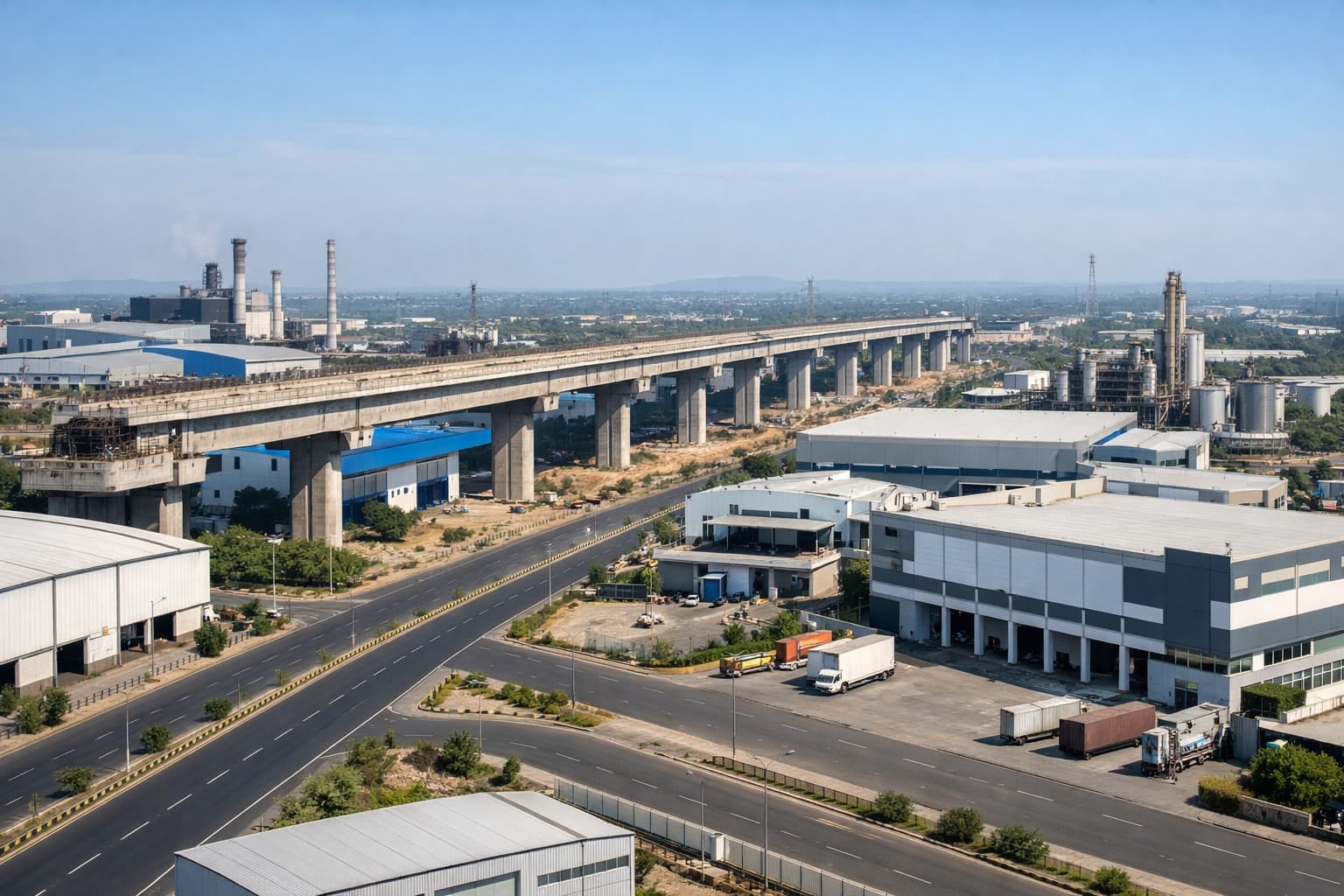
The Butibori MIDC metro extension 5 km proposal addresses a problem that Phase 2 only partly solves. Phase 2 brings the metro to Butibori MIDC ESR, which is the current boundary of the industrial zone served by the existing terminal. But Butibori's industrial activity has been expanding outward, and a meaningful portion of the workforce commuting there every day lives in parts of the city that the current terminal still leaves inconveniently far from their workplace.
The 5-kilometre push into the deeper industrial belt would serve daily commuters more effectively, reduce pressure on the road network feeding the MIDC, and support the residential development that typically follows industrial expansion into new areas.
Where Things Stand Right Now
The MahaMetro Phase 3 DPR tender process was ready to launch but got briefly paused due to the Model Code of Conduct enforced during Nagpur Municipal Corporation elections. Officials have confirmed that tenders for Detailed Project Reports across the new corridors will be issued shortly after the MCC is lifted.
Phase 3 will also introduce two firsts for Nagpur. The city's first underground metro sections and its first driverless train operations are both part of the Phase 3 plan, features that will meaningfully improve the quality and capacity of the system compared to what Phase 1 and 2 deliver.
Real Estate Implications Across the Network
Every new metro corridor in Nagpur will produce property demand clusters the way previous phases have. Areas along the Inner Ring Road corridor that currently trade as mid-value residential zones will see renewed developer interest once alignment details are confirmed. Peripheral localities near New Nagpur will attract plotted development activity from buyers who want to get in before the metro premium fully materialises.
And Butibori's extended catchment will continue drawing affordable housing demand from the industrial workforce that makes up a significant and growing portion of Nagpur's residential market.
Summary
Nagpur Metro Phase 3 has grown from a single corridor idea into a four-corridor, 54.5-kilometre expansion plan that would take the total Nagpur Metro 129 km network beyond anything the city originally imagined. Key additions include a 15-kilometre link to New Nagpur township, a 5-kilometre Butibori MIDC metro extension, a 3-kilometre industrial stretch, and a 25-kilometre Inner Ring Road corridor. The MahaMetro Phase 3 blueprint is incorporated into the city's CMP and awaiting state approval, with DPR tenders expected soon. For property buyers, each of these corridors represents a demand signal worth watching early.
Video will be embedded from: https://www.youtube.com/watch?v=aEvweDMUFn4&t=2s