
Mumbai Coastal Road Phase 2: How the Versova to Bhayandar Link Is About to Change Everything
Summary
The Mumbai Coastal Road Phase 2 (Versova to Bhayandar) is a 26.3 km extension poised to drastically cut travel times and transform western Mumbai's property market. Despite mangrove displacement concerns, the project has regulatory approval and promises significant real estate appreciation, especially in emerging northern suburbs.

Introduction
There is a particular kind of excitement that sweeps through Mumbai whenever a big infrastructure project moves from paper to pavement. The city has seen it with the Bandra Worli Sea Link. It felt it again when Phase 1 of the Mumbai Coastal Road opened up the western seafront from Marine Drive to Worli. Now, that same energy is gathering around Coastal Road Phase 2, and honestly, this one might be bigger than anything that came before it.
The plan is simple in concept but enormous in scale. A high speed coastal corridor will run from Versova all the way up to Bhayandar in Thane district, stitching together the entire western sea-facing length of Mumbai in one connected stretch.
What the Project Actually Covers
The Versova Dahisar Link Road, commonly called VDLR, forms the backbone of this phase. It covers roughly 20 kilometres between Versova and Dahisar at an estimated project cost of around Rs 16,621 crore. Beyond Dahisar, a separate elevated section of approximately 5.6 kilometres and 45 metres wide will carry the road further north to connect with Bhayandar. Put together, the full Versova to Bhayandar extension stretches about 26.3 kilometres and carries a total investment figure in the region of Rs 22,000 crore.
The Mumbai Coastal Road Phase 2 is being developed to plug directly into the existing Phase 1 alignment and extend the western corridor all the way to the Thane district boundary.
The Mangrove Question That Will Not Go Away
This is where the project gets complicated. The BMC released a public notice confirming that around 104 hectares of land will be required for the VDLR. A large part of this land falls within mangrove zones, with environmental groups warning that as many as 60,000 mangrove trees could be affected.
Environmental activists have been vocal. The ecological argument is not trivial either, because mangroves along the Mumbai western corridor serve as natural flood buffers for a coastline that already deals with serious monsoon stress. The BMC received its final working permit from the Maharashtra Mangrove Cell in late January 2026, clearing the last major regulatory hurdle for construction in sensitive CRZ zones. Preliminary work had already begun in non-CRZ pockets like Dindoshi and Goregaon through 2025.
Whether the project can genuinely offset the ecological cost remains a live debate.
Travel Time Is the Real Story
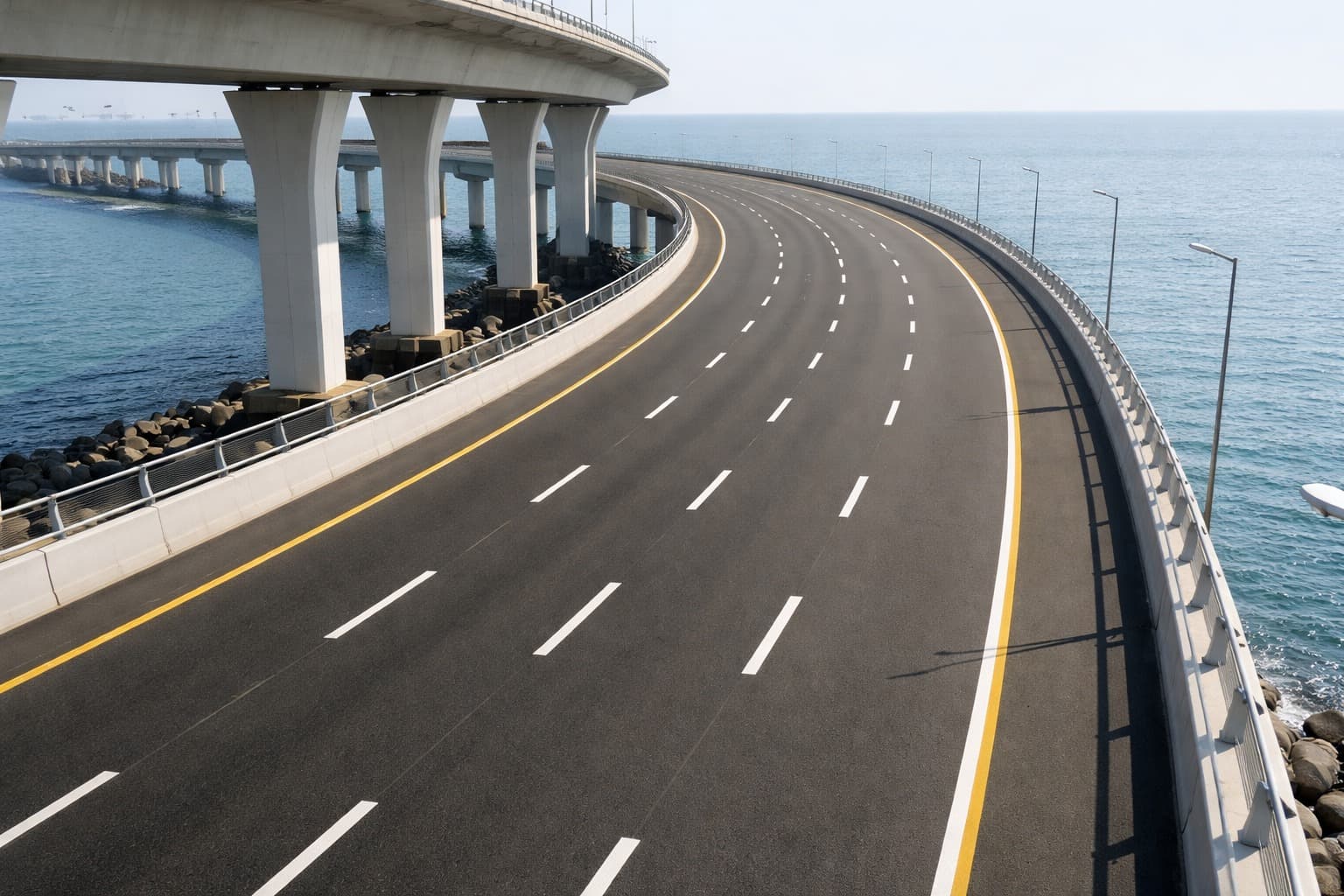
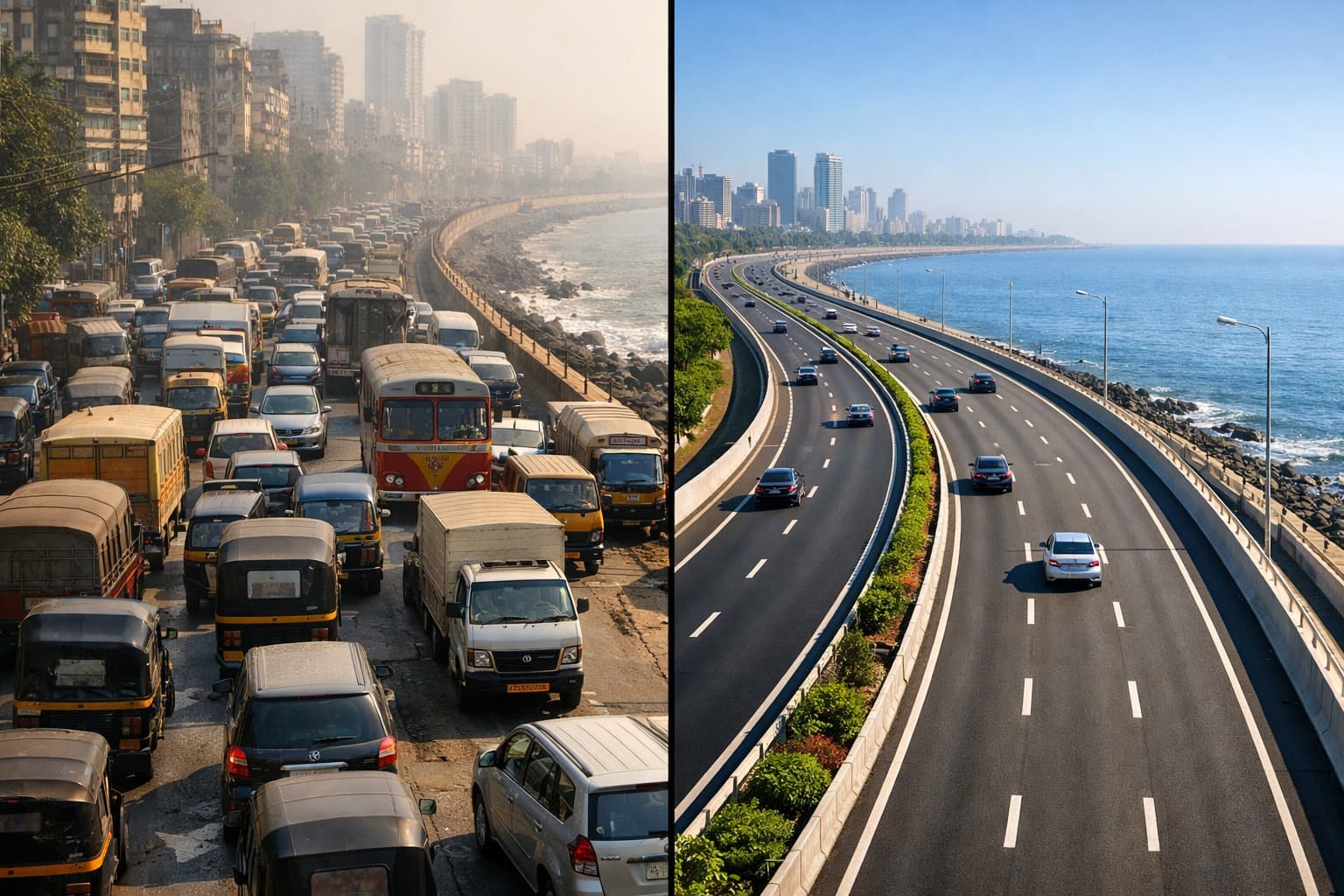
Here is the number that property buyers should pay attention to. Once complete, the journey from Versova to Bhayandar could take as little as 20 minutes. Compare that to the current reality on the Western Express Highway, where even a mid-morning drive can eat up 45 minutes to an hour on a difficult day.
Coastal road connectivity of this kind does not just make commutes easier. It restructures how people think about where to live. The same shift happened when Phase 1 reduced travel from Kandivali to Marine Drive from close to 90 minutes down to roughly 25 to 30 minutes. Suburbs that once felt distant started attracting South Mumbai professionals who never previously considered them.
What This Means for the Western Suburbs Property Market
The coastal road real estate impact on areas like Kandivali, Malad, Borivali, and Goregaon is already visible in pricing data. Annual appreciation in Kandivali has been projected at 10 to 12 percent, driven substantially by improved Mumbai western corridor connectivity. Premium sea-facing units in Kandivali could approach Rs 35,000 per sq ft by 2028 according to some market estimates.
The broader western suburbs currently see property rates ranging from roughly Rs 22,000 to Rs 32,000 per sq ft in the Malad to Borivali belt, while Bandra and Andheri command between Rs 38,000 and Rs 55,000. Infrastructure-led appreciation has historically compressed the gap between mid-suburban and premium micro-markets. Phase 2 will likely continue that trend northward.
The Bhayandar Equation
Bhayandar sits in Thane district and has traditionally been treated as the outermost affordable fringe of the Mumbai property market. Land prices there remain significantly lower than anywhere within the BMC limits. A direct coastal highway connection to the city's main spine will inevitably put upward pressure on those values.
For buyers willing to enter early, Bhayandar and the nearby Mira Road belt offer what Kandivali offered a decade ago. The risk is timeline uncertainty. These things rarely arrive exactly on schedule.
Infrastructure Convergence Is the Bigger Picture
The Mumbai Coastal Road story does not exist in isolation. The Mumbai Trans Harbour Link, the upcoming Navi Mumbai International Airport, and various Metro lines are all landing around the same five-year window. Together, they are restructuring the city's accessibility map in ways that have not been seen in a generation.
The Mumbai infrastructure push is creating what urban planners call a polycentric city, where multiple nodes become genuinely attractive rather than South Mumbai sitting alone at the top of the desirability ladder.
Who Should Be Watching This Closely
End users planning a 10-year horizon and investors looking at capital appreciation in the Rs 1 to 2 crore budget range are the two groups with the most to gain. The Mumbai western suburbs property investment opportunity along the coastal road alignment is strongest in areas that currently lack the social infrastructure of established hubs but sit directly in the path of the road's footprint.
Goregaon West, Malad West, and the Dahisar to Bhayandar stretch deserve serious attention right now, before full construction timelines become clear to the broader market.
Summary
The Mumbai Coastal Road Phase 2 connecting Versova to Bhayandar is among the most consequential Mumbai infrastructure projects of this decade. The Versova Dahisar Link Road will slash travel times across the western suburbs Mumbai, reshape buyer demand, and accelerate appreciation in localities that remain underpriced today. Despite environmental concerns around mangrove land use, the project has cleared its regulatory path. For anyone tracking Mumbai property and coastal road real estate impact, the time to form a view is now, well before the road opens and prices adjust fully to what the connectivity truly delivers.
Video will be embedded from: https://www.youtube.com/watch?v=XjNQfY_XEj8&t=3s