
Mumbai After the Civic Polls: What Actually Changes on the Ground
Summary
Mumbai's post-civic poll future hinges on critical execution, focusing on flood mitigation, BEST bus revival, and the Dharavi redevelopment. These key initiatives will profoundly impact the city's infrastructure, liveability, and property market dynamics.

Elections come and go in this city, but the conversations that follow them rarely settle so quickly. The 2026 BMC elections wrapped up in January with the Mahayuti combine of the BJP and the Shinde-led Shiv Sena crossing the majority mark comfortably. What matters more to anyone tracking property and infrastructure here is what happens next.
This was not a sleepy civic poll either. Voter turnout touched nearly 53 percent, among the strongest in over three decades for a municipal contest. People showed up because daily frustrations had piled up. Bad roads. Erratic drainage. A bus service that has been quietly falling apart for years.
The Flood Question Mumbai Cannot Keep Postponing
Every monsoon in Mumbai turns into the same anxious ritual. Will Hindmata flood again. Will the Andheri subway turn into a small lake. Climate researchers have repeatedly flagged this city as one of the most exposed coastal metros to rising sea levels, and studies suggest that even a modest rise in sea level could affect millions of people living close to the coastline and submerge a meaningful chunk of the island city over time.
The new corporation inherits this problem without much room to delay. Drainage and waterlogging featured heavily in campaign promises this time, and rightly so, because flooding is not just an inconvenience anymore. It directly depresses ground floor and lower floor property values in low lying pockets like Hindmata, Gandhi Market, and parts of Sion. Buyers have become noticeably sharper about asking for flood history before signing anything.
BEST Buses: A Public Asset Running on Fumes
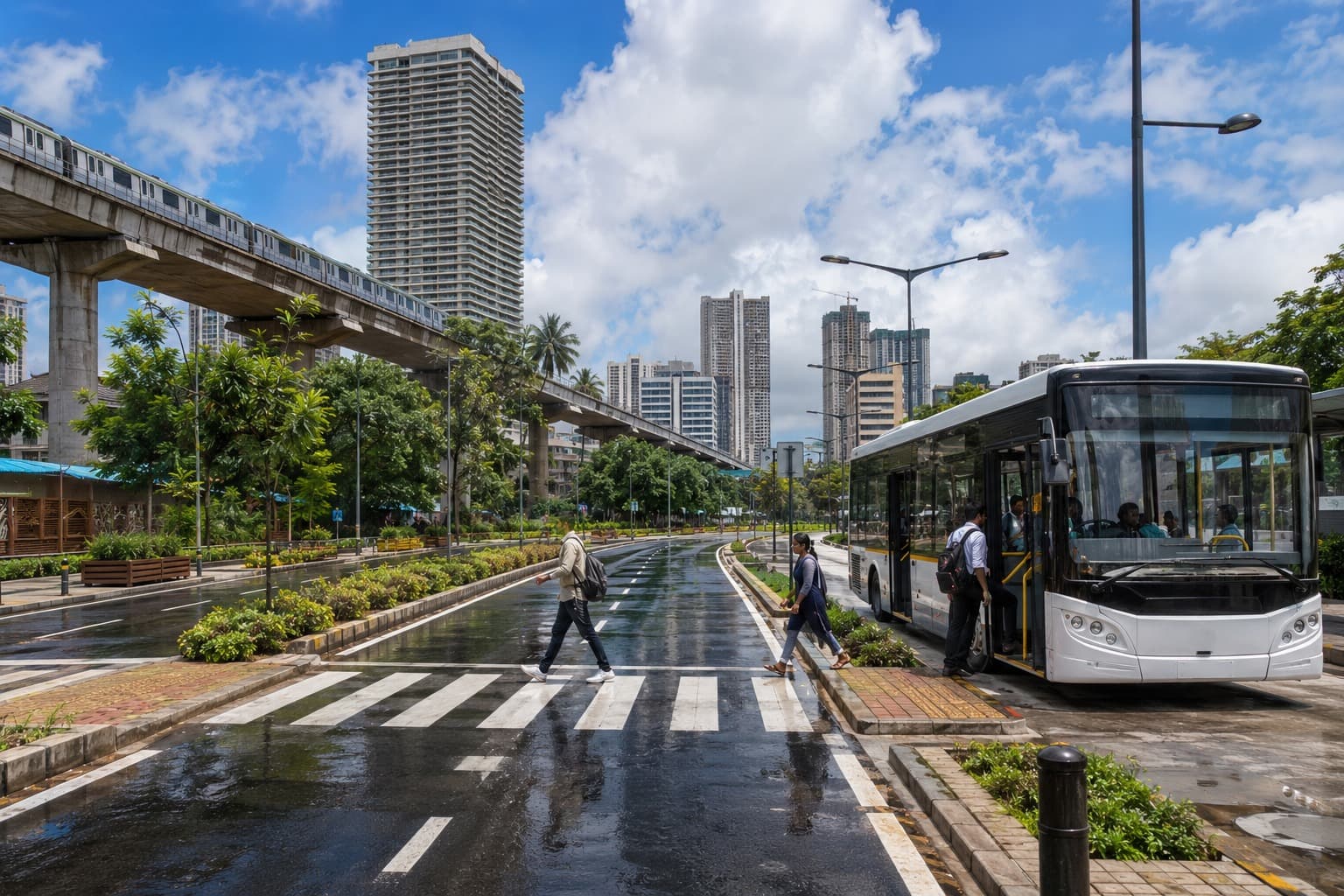
If there is one civic service that genuinely embarrassed the outgoing administration, it is BEST. The undertaking has been sitting on liabilities exceeding twenty thousand crore rupees, and its transport wing alone posted losses running into thousands of crores in the last financial year. A workers strike in June brought the city's bus network to a standstill for nearly three days.
What came out of that crisis is a fresh revival roadmap. BEST has committed to adding five thousand self owned buses over the next three years, moving away from the controversial wet lease model that residents and unions had pushed back against for years. The promise on paper is to eventually reach close to ten thousand buses, with full electrification targeted by the end of the decade. Whether this materialises on schedule is a separate question entirely, but for areas dependent on last mile bus connectivity, like parts of Borivali, Mulund, and Chembur, this matters directly for property accessibility scores.
Dharavi: The Redevelopment That Refuses to Stay Quiet
No conversation about Mumbai's mega development plan is complete without Dharavi. The Adani led project, structured as a joint venture with the state government holding a minority stake, now covers roughly 590 acres and is expected to deliver well over a hundred million square feet of saleable real estate once complete, alongside rehabilitation housing for more than a million existing residents.
The first rehabilitation building on railway land near Mahim is slated for handover by the end of this year, with thousands more units planned through the following financial year. What makes this project genuinely significant for the broader market is location. Dharavi sits barely five kilometres from Bandra Kurla Complex, arguably the most expensive commercial address in the city. If even a fraction of the planned free sale inventory comes online as promised, it could meaningfully expand Mumbai's investable real estate stock in a part of the city that currently has almost none.
Critics continue to raise concerns about rehabilitation sites being pushed to distant salt pan land and the Deonar dumping ground, and those objections are not without merit. Execution risk on a project this size, spread across nearly a decade, remains real.
What This Means for the Property Market
Civic election outcomes rarely move property prices overnight, and this one will not either. What it does shift is sentiment around execution. A government with a working majority and continuity in leadership tends to give infrastructure projects, redevelopment approvals, and budget allocations a smoother runway than a fragmented council stuck in gridlock.
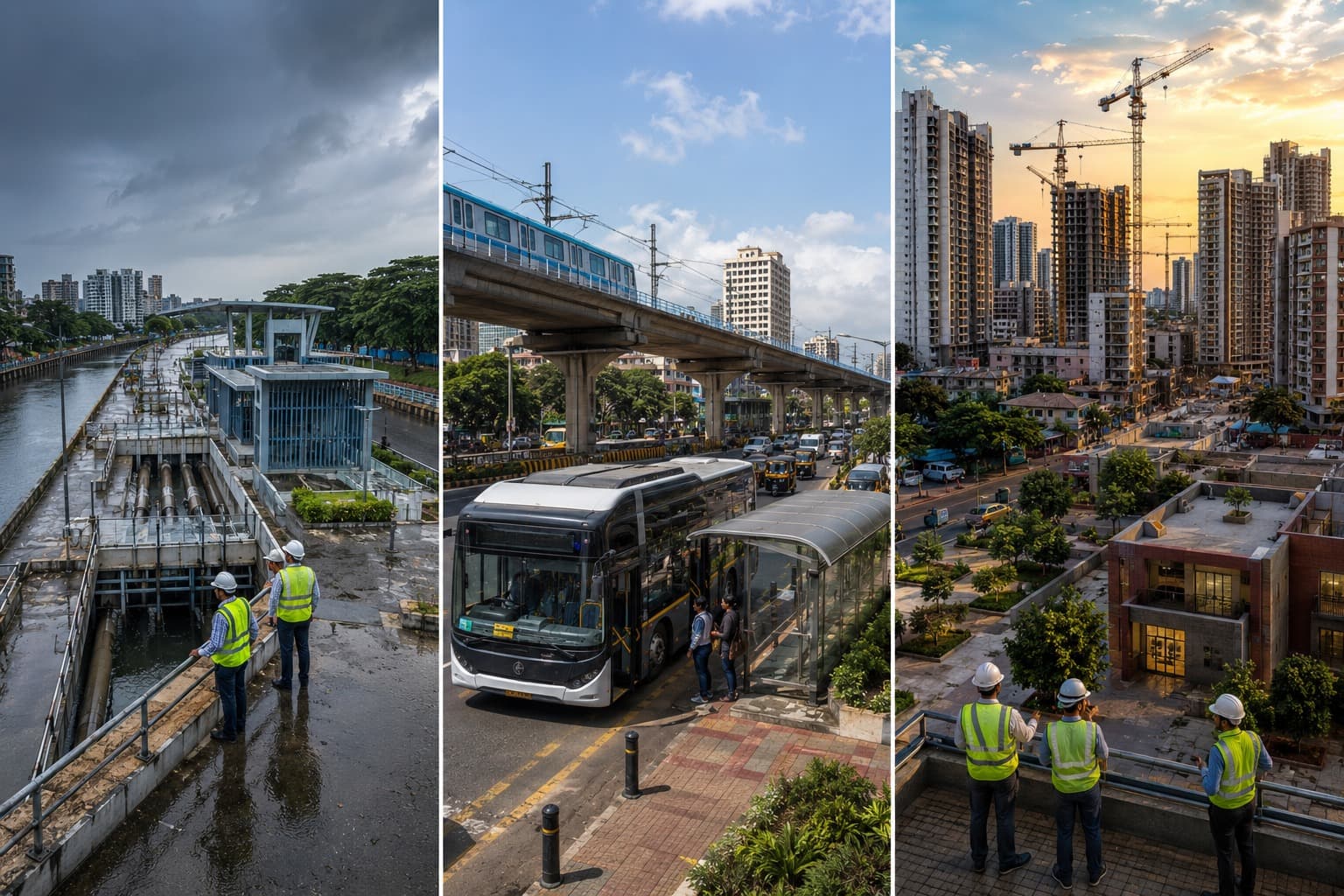
For homebuyers and investors, the practical takeaway is to watch three things closely over the coming year. First, whether flood mitigation works actually reach the worst affected micro markets before the next monsoon. Second, whether BEST's fleet expansion translates into real connectivity gains in the suburbs. Third, how quickly Dharavi's free sale inventory starts hitting the market, since that alone could reshape pricing dynamics around BKC's periphery.
Summary
The 2026 BMC elections have handed Mumbai a government with a clear mandate, but the real test lies in execution across flood control, BEST bus revival, and the sprawling Dharavi redevelopment project. With over a hundred million square feet of future supply tied to Dharavi alone and continued pressure on civic infrastructure in flood prone belts, the next two to three years will quietly decide how several Mumbai micro markets perform. For anyone watching Mumbai real estate, this is not a moment to look away from civic governance news.
Video will be embedded from: https://www.youtube.com/watch?v=2qOW6vRX6X8&t=1s