
Mumbai–Pune–Bengaluru Expressway: The Corridor That Is Rewriting Investment Maps
Summary
The Mumbai-Pune Expressway has revolutionized regional investment. With ongoing upgrades and the ambitious Pune-Bengaluru Expressway set to link three major economic engines, this corridor offers unparalleled real estate opportunities for long-term investors.

A Road That Already Changed Everything Once
When India's first six-lane access-controlled highway opened between Mumbai and Pune in 2002, most people thought of it as a faster way to get from one city to another. What it actually did was something far more consequential. It reshaped where people chose to live, where businesses chose to set up, and where investors chose to park their money.
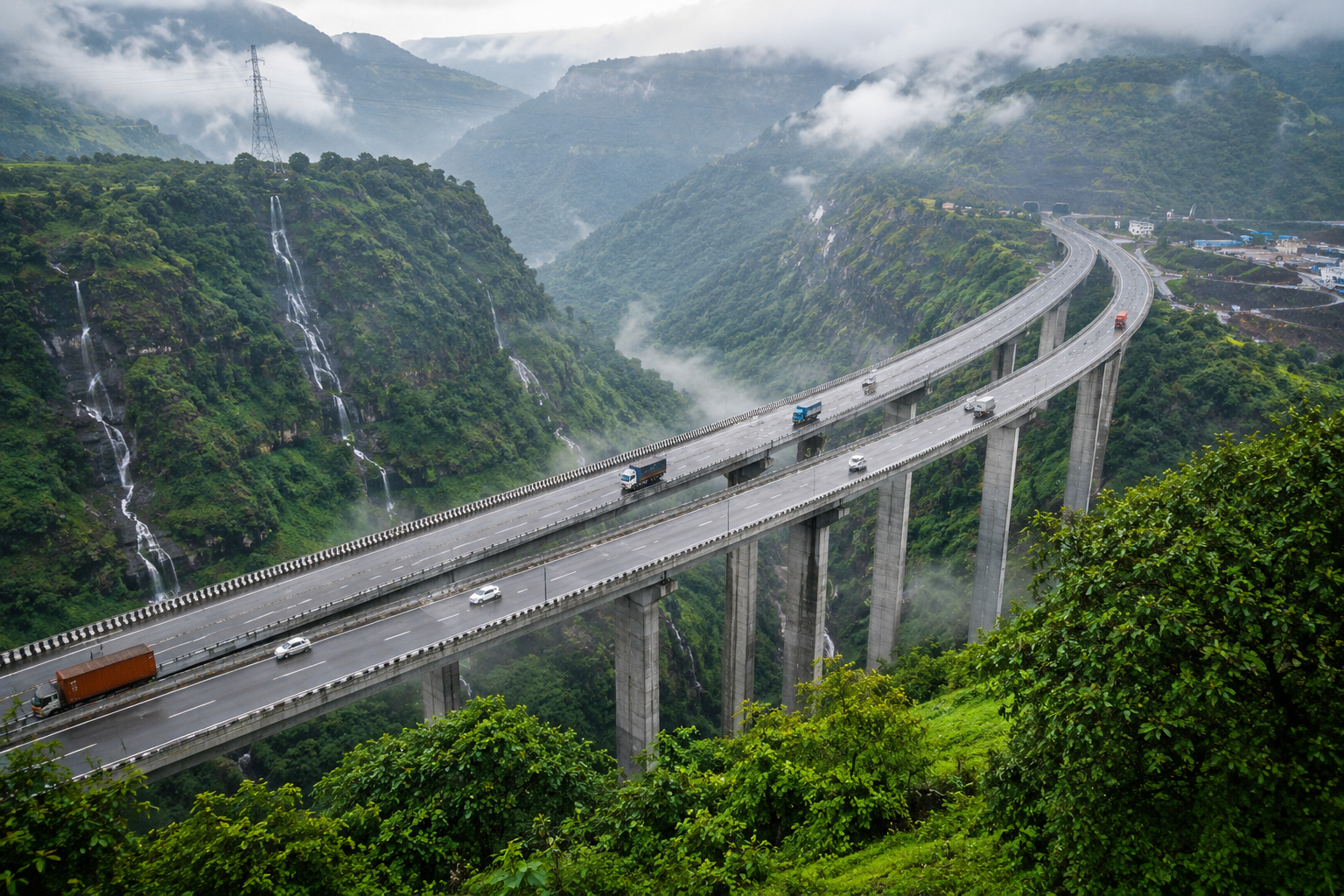
The Yashwantrao Chavan Expressway, as it is officially named, covers 94.5 kilometres from Kalamboli in Navi Mumbai to Kiwale near Pune. It threads through the Sahyadri hills, crossing tunnels that together stretch 5.7 kilometres, cutting a journey that once consumed four to five hours down to roughly two and a half. That time compression is not just a travel statistic. It is the single most important factor behind the property boom that followed along this corridor.
What Is Happening to the Expressway Now
The road that changed Maharashtra's geography once is being upgraded again, and the scale of what is being planned is significant.
The Missing Link project is the most immediate addition. This 13-kilometre bypass between Khopoli and the Sinhagad Institute area near Pune is being built with twin tunnels, one stretching 8.92 kilometres and another at 1.75 kilometres, along with two cable-stayed bridges. The project is estimated to cost around ₹6,695 crore. When complete, it is expected to trim another 25 to 30 minutes off the Mumbai-Pune journey by avoiding the notoriously congested and landslide-prone Khandala Ghat section.
Beyond the Missing Link, the Maharashtra State Road Development Corporation is pursuing a larger ambition. Plans to widen the expressway from six lanes to ten are actively in discussion, at an estimated outlay of ₹14,260 crore. The expansion is being structured under a Hybrid Annuity Model, which blends government funding with private partnership. If approved and executed, it would make the Mumbai-Pune Expressway one of the most capacious urban highway corridors in the country.
How Property Has Moved Along This Route
The numbers along the expressway corridor are not subtle. Localities like Khalapur, Panvel, Talegaon, Lonavala, and Khandala have recorded property price appreciation between 20 and 40 percent over the past decade. Areas that were once considered peripheral, places buyers reluctantly settled for because they could not afford closer-in addresses, are now being actively sought out.
The logic is simple. When a professional can live in Talegaon and reach Hinjewadi or Bandra in under an hour, the trade-off between location and affordability changes completely. Weekend tourism has also driven a parallel market in resort homes, farmhouse plots, and holiday apartments along this stretch, particularly around Lonavala and Khandala where hotel and resort supply continues to expand.
Industrial and logistics real estate has been another major beneficiary. The expressway's position connecting Mumbai's JNPT port complex to Pune's manufacturing and IT clusters makes the land along its interchanges structurally valuable for warehousing and supply chain operations.
The Next Frontier: Pune to Bengaluru
This is where the story gets genuinely exciting for long-horizon investors. While the Mumbai-Pune Expressway has already delivered its first generation of returns, a fresh corridor is being built that will eventually extend that connectivity all the way to Bengaluru.
The Pune-Bengaluru Expressway is being developed under Phase II of the Bharatmala Project, the Central Government's flagship national highway programme. The expressway is planned at approximately 700 kilometres in total length, running parallel to NH 48 but offering a significantly faster, congestion-free alternative to the existing highway.
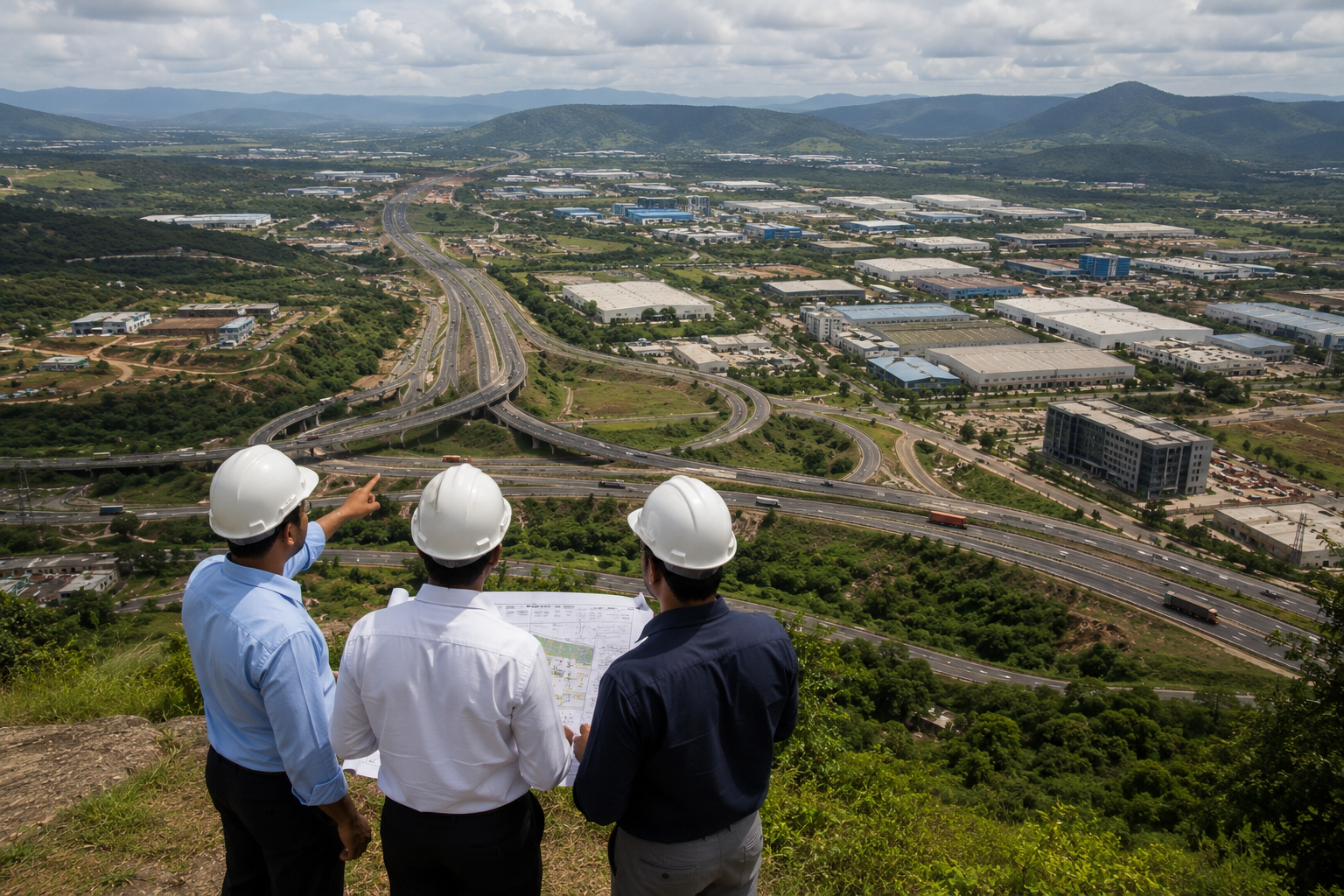
As of mid-2025, land acquisition was around 70 percent complete across Maharashtra and Karnataka. Technical clearance has been received, and construction was expected to begin in early 2026, with project completion targeted by 2028. The projected cost sits at around ₹50,000 crore.
When complete, the travel time between Pune and Bengaluru, currently between 11 and 12 hours on NH 48, is expected to fall to around seven to eight hours. That is a reduction of four to five hours on one of India's most commercially important inter-city routes.
What It Means for Real Estate Investors
Expressway corridors in India have a consistent track record. Land near interchanges appreciates faster than surrounding areas. Industrial clusters form near freight-friendly access points. Residential demand builds in the thirty to fifty kilometre radius around major employment nodes that the highway unlocks.
The Mumbai-Pune-Bengaluru corridor, once the Pune-Bengaluru leg is operational, will connect three of India's five largest economic engines in a single uninterrupted route. Districts in Karnataka like Dharwad, Belagavi, and Haveri, which currently sit outside mainstream property investor conversations, will find themselves on a map that suddenly looks very different.
Summary
The Mumbai-Pune Expressway has already demonstrated what access-controlled highway infrastructure does to property values along its route. With the Missing Link project reducing travel time further, a 10-lane expansion in the pipeline, and the ambitious Pune-Bengaluru Expressway set to begin construction in 2026, the full Mumbai-Pune-Bengaluru corridor is one of the most consequential infrastructure plays available to Indian real estate investors planning for the next decade.
Video will be embedded from: https://www.youtube.com/watch?v=8-xwvplCRo4