
Maharashtra Revives Hyperloop: From Passenger Dreams to Freight Reality
Summary
Maharashtra is reviving its Hyperloop plan, shifting focus to freight transport between JNPT and Vadhavan ports. This strategic move aims to improve logistics, reduce costs, and boost trade, potentially reshaping India's infrastructure.

Introduction
The state of Maharashtra has taken a bold step by reviving the Hyperloop India plan—this time shifting focus from moving people to moving cargo. The earlier vision for the Hyperloop project between major cities gave way to a new idea: a freight-centric high-speed corridor that could reshape logistics in India. This revival speaks to how infrastructure and logistics are changing, especially in port-driven states like Maharashtra. With the new initiative, the state signals that freight transport India is ready to embrace futuristic technology and that the era of “just passenger transit” may be evolving. The story belongs not just to engineers but to all who watch India’s infrastructure ambitions. The term InfraBuzz very aptly captures this moment.
The shift from passenger to cargo
Originally, the plan in Maharashtra aimed at a potential passenger-oriented route—imagine zipping between cities like Mumbai and Pune in minutes. That was the older model of Hyperloop technology in Indian infrastructure. But now, the model has changed. Rather than target individual commuters, the project is being repurposed to serve freight. By doing so, Maharashtra is acknowledging that the business case for Hyperloop in India to shift from passenger transport to cargo movement may be stronger, especially in dense, logistics-heavy corridors. The move aligns with the state’s heavy dependence on port infrastructure and goods movement, rather than just inter-city passenger traffic.
What’s the updated plan?
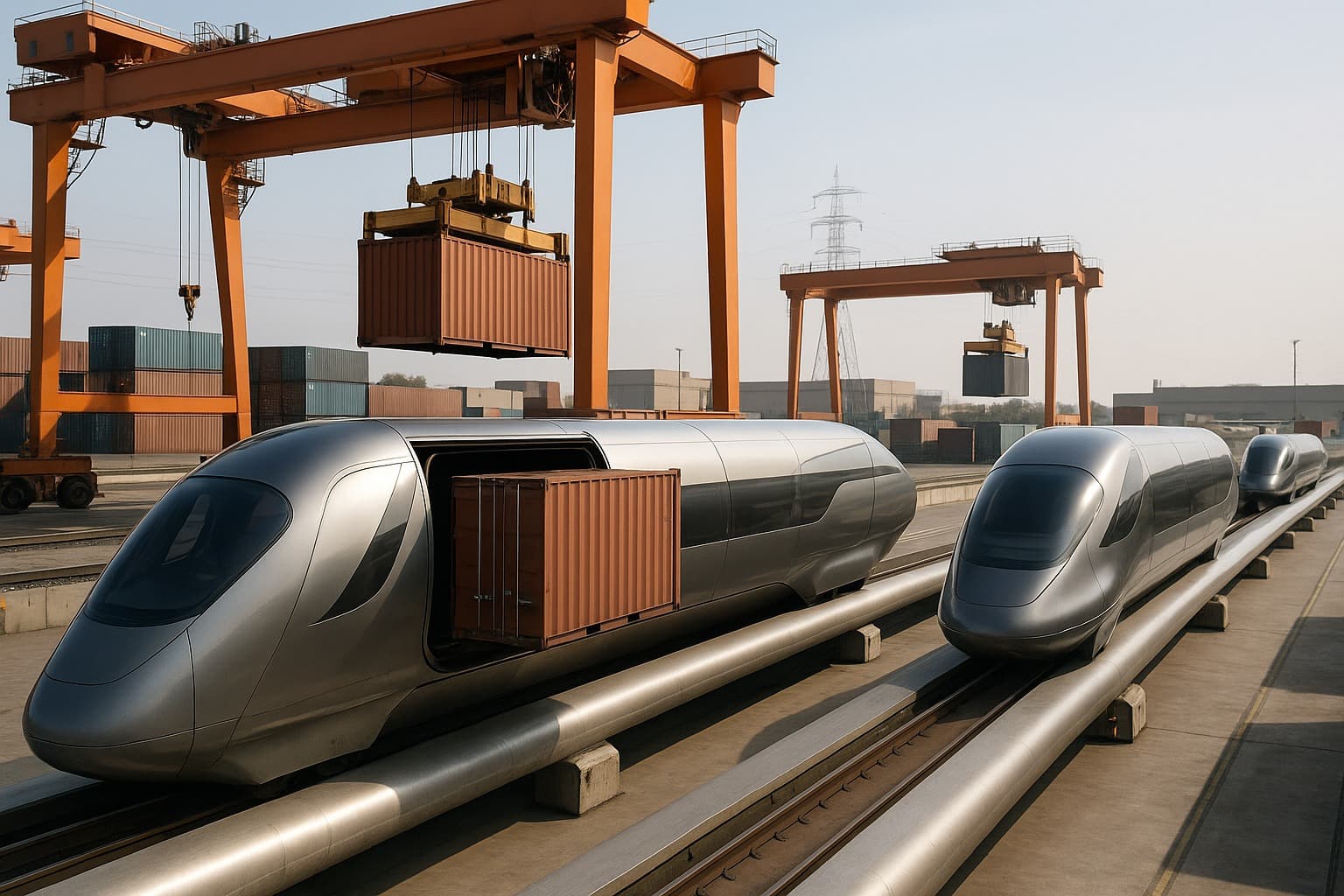
The renewed route is planned between the major export-import facilities: the Jawaharlal Nehru Port Trust (JNPT) near Mumbai and the upcoming Vadhavan Port in Palghar district. The agreement has been signed with a deep-tech startup incubated at Indian Institute of Technology Madras that is developing Linear Induction Motor (LIM)-based Hyperloop systems. The focus is clearly on cargo velocity, throughput and logistics efficiency. This revival of the Maharashtra Hyperloop project revival marks a clear pivot in ambition and strategy from earlier, more passenger-centred versions of the plan.
Why a freight corridor makes sense
There are multiple reasons the state is moving in this direction. First, the existing congestion and delays in ports and connecting road/rail links make cargo flow slower and costlier. By building a dedicated high-speed freight link, these bottlenecks could be eased significantly. Second, freight doesn’t require comfort features like windows or lounges—so the technology fit is simpler and potentially cheaper. Third, when you examine the business case, the return on investment may be clearer when you move thousands of tonnes of goods rather than just thousands of people. In short, the Hyperloop freight corridor India concept may deliver real economic value and support India’s ambitions in global trade.
The broader context of future transport
In recent years, India has been pushing the envelope in transport: high-speed rails, bullet-trains, expressways, logistics hubs and so on. The revival of Hyperloop in Maharashtra adds to this momentum, speaking to how the future of high-speed transport in India may not just be for people but also for goods. While many nations still view Hyperloop only as a passenger transport dream, Maharashtra is testing the idea of making it a reality in logistics. If successful, the region could become a pioneer in this niche—leveraging global best practices, advanced technology and Indian scale.
Key players and what’s happening
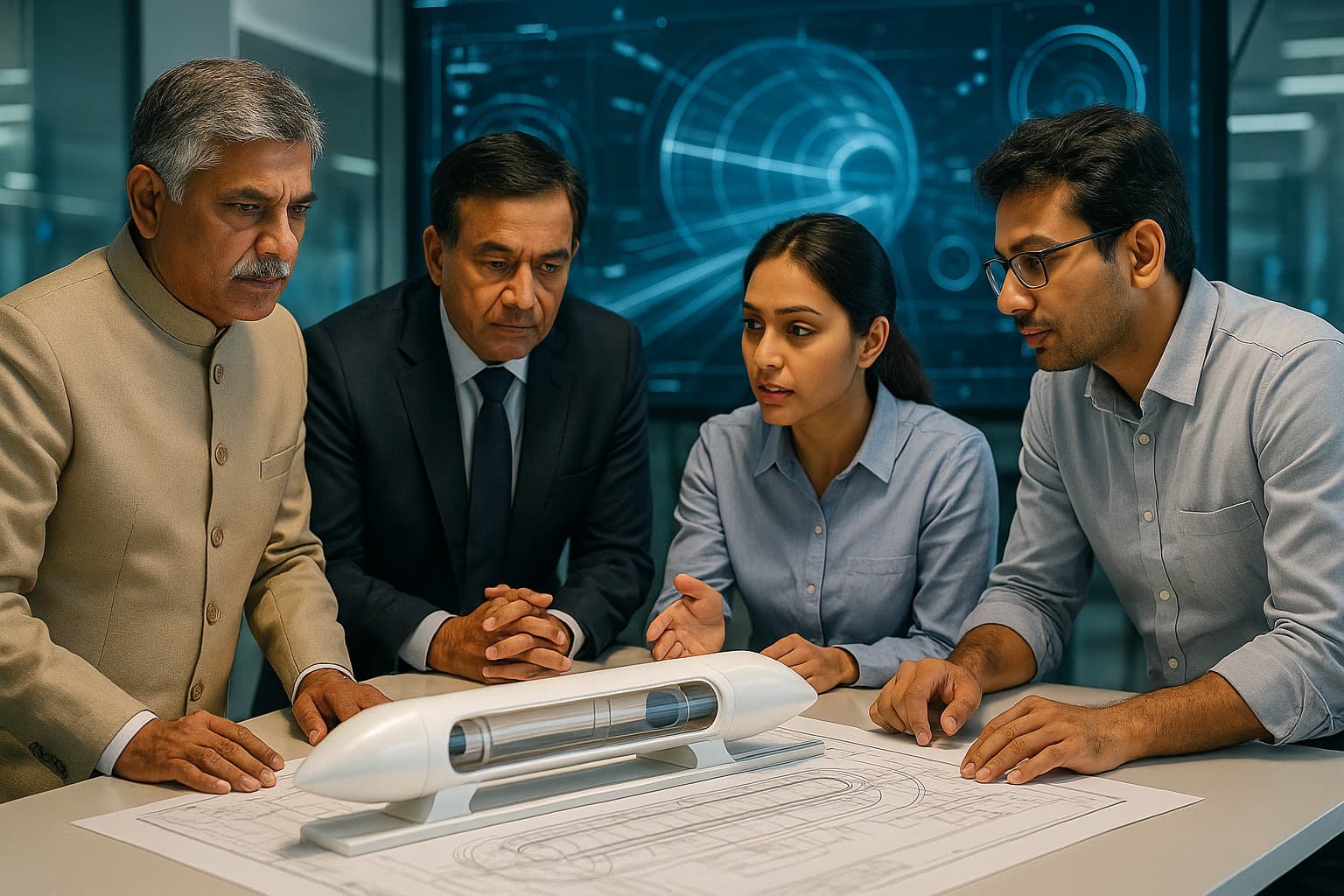
The state government, ports authorities, tech startups and academic institutions are all involved. The startup from IIT Madras is working on the technological platform. The ports—JNPT and Vadhavan—are the physical anchors. The government is providing the enabling ecosystem. Together, they’re moving the needle in what could become a major infrastructure milestone. When we think about Hyperloop project, the important shift is now from “Will it happen?” to “How will it happen and when?” The revived plan signals that timeline matters and purpose matters.
Challenges and considerations
Of course, the path isn’t free of hurdles. Land acquisition along port-to-port corridors, integration with existing logistics networks, securing the right regulatory clearances—all of these loom large. Also, the cost of building new Hyperloop infrastructure remains high and untested at scale. Many had earlier questioned whether the Hyperloop in India was a luxury when basic transport needs were unmet. But by focusing on freight rather than passengers, Maharashtra is addressing a stronger existing need, which may make the case stronger. The success will depend on execution, connectivity, technology maturity and the business model.
What this means for Maharashtra’s economy
By turning its attention to a freight-centric Hyperloop, Maharashtra stands to gain on multiple fronts. Logistics costs could fall, cargo cycle times could reduce, port throughput might increase—and all of this can feed into manufacturing, trade, exports and employment. In effect, the move could reinforce Maharashtra’s status as a trade and economic powerhouse. The message is clear: Maharashtra government reconsiders Hyperloop for logistics and trade, not just glamorous passengers. That shifts the narrative from “futuristic tech showpiece” to “strategic infrastructure tool”.
Looking ahead: the impact and hopes
The revived initiative offers a fresh lens to consider. If successful, it could pave the way for other states to explore similar freight-based Hyperloop corridors. It also signals that infrastructure innovation in India is not always about passenger flair—it’s about solving real productivity and growth challenges. The plan whispers a quiet but powerful theme: advanced technology + logistics + trade = growth. For those watching the Pune-Mumbai Hyperloop latest update (even if that route may now be less immediate), this freight initiative is a reminder that the corridor may still evolve but perhaps with a different purpose. The ripple effects could be large: ports linking faster, industries sitting further out, and regional economies connecting more deeply.
Summary
The revival of the Maharashtra Hyperloop project marks a significant pivot: from passenger ambition to freight pragmatism. With a corridor between JNPT and Vadhavan Port, the state is turning futuristic transport into a logistics powerhouse. By focusing on cargo movement rather than people alone, this move could reshape the region’s trade, ports, and infrastructure ecosystem. Challenges remain, but the strategic shift reflects India’s broader focus on innovation and growth. If executed well, the initiative could become a model for high-speed, high-impact infrastructure in India and beyond.