
Jewar Airport Opens: Impact on Yamuna Expressway Property Owners
Summary
Jewar Airport's opening marks a turning point for Yamuna Expressway property owners, shifting appreciation from speculation to demand-driven growth. Phase 1 includes a 3,900-meter runway and aims for 70 million passenger capacity in the future.

Introduction
Today is the day the Yamuna Expressway corridor has been waiting for since the first boundary wall went up around the project site. Jewar Airport 2026 inaugurates on March 28 with Prime Minister Narendra Modi opening Phase 1 of the Noida International Airport, making it the second commercial aviation gateway for the National Capital Region after Indira Gandhi International Airport in Delhi. For the millions of people who live, work, or own property along the Yamuna Expressway between Greater Noida and Agra, this is not an infrastructure milestone. It is the moment the appreciation thesis they bought into finally converts from forward-looking speculation into present-tense reality.
What Is Actually Opening Today
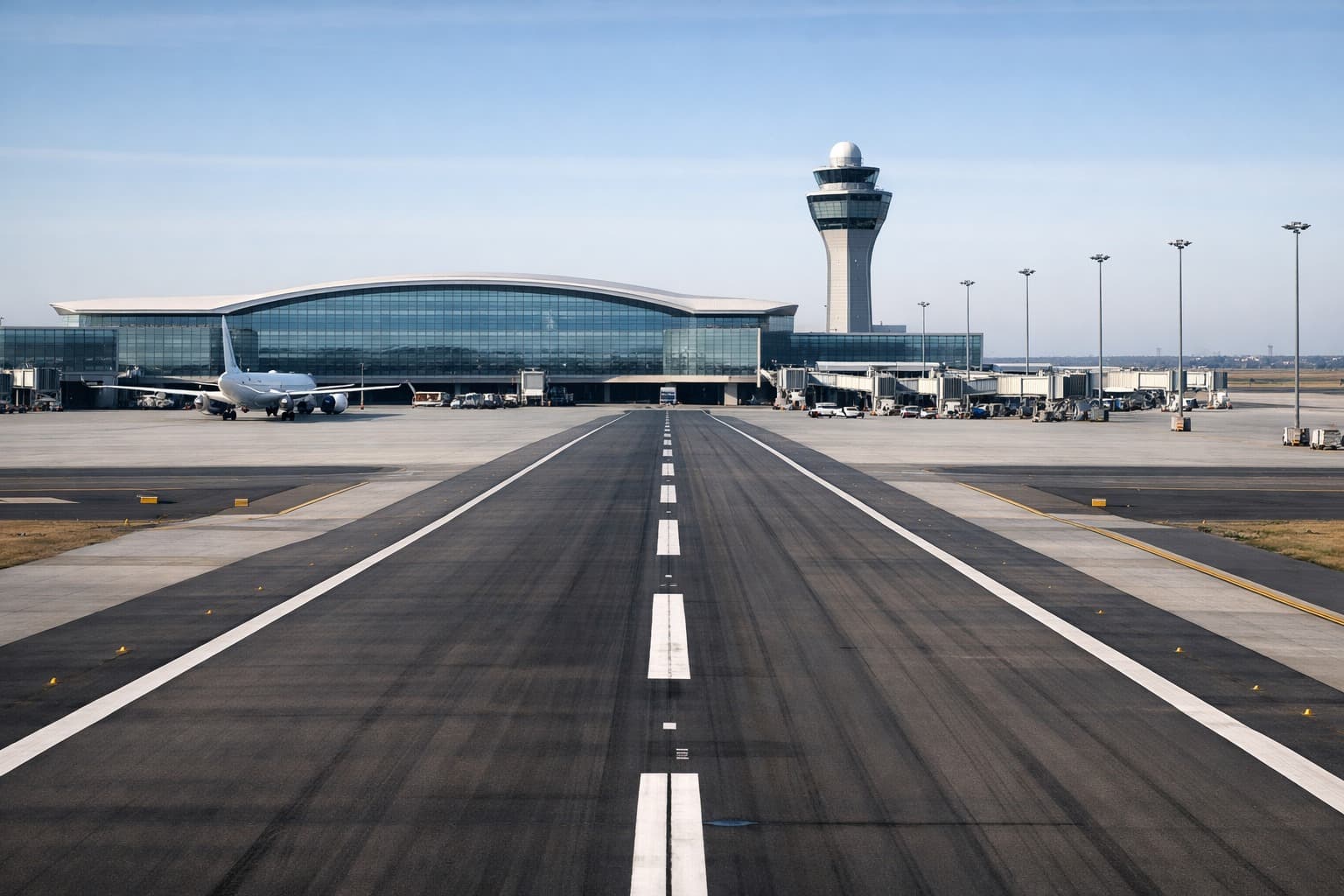
Phase 1 of the airport delivers one runway and one terminal building capable of handling approximately 12 million passengers annually. The runway stretches 3,900 metres, which is long enough to accommodate wide-body aircraft on both domestic and long-haul international routes. Instrument landing systems and advanced airfield lighting allow round-the-clock operations in all weather conditions, which matters enormously for cargo and freight scheduling.
Yamuna International Airport Private Limited, a wholly owned subsidiary of Zurich Airport International AG, is executing the project under a 40-year concession agreement. Tata Projects is the EPC contractor. SBI has provided the primary credit facility. The total Phase 1 investment sits at approximately Rs 11,200 crore. IndiGo has signed as the launch carrier, with Akasa Air and Air India Express confirming services, and multiple additional airline discussions at advanced stages.
The 70 Million Passenger Vision
What opens today is Phase 1 of a four-phase master plan that will eventually make the Noida International Airport one of the largest aviation hubs in Asia. The full build-out targets a capacity of nearly 70 million passengers per year, which would place it alongside airports in the global top tier. Phase 1's 12 million is the first chapter of a development story that will unfold over the next two to three decades.
For Jewar real estate investors, this phased expansion timeline is the key variable. Each capacity expansion phase will be preceded by infrastructure additions: more runways, more terminal wings, expanded cargo facilities, new metro connections, and hotel and hospitality development within and around the airport precinct. Every one of those phases is a fresh appreciation event for surrounding property.
Connectivity: How the Airport Plugs Into the Region
The airport sits directly on the six-lane Yamuna Expressway, one of the best-maintained intercity expressways in India. Noida, Greater Noida, Agra, Mathura, and Vrindavan are all naturally connected through this alignment. Bus services linking the airport to multiple cities across Uttar Pradesh, Haryana, and Uttarakhand are planned for the operational phase. Electric taxi fleets and ride-hailing services will handle last-mile movement.
The metro connection is the infrastructure piece that will complete the picture. Jewar airport's metro link, which will eventually tie into the Noida Metro and Delhi Metro networks, is in advanced planning. When operational, it will give the airport the same kind of mass transit integration that the best airports globally offer and that IGI Airport in Delhi still does not fully provide to its eastern side.
What the Cargo Terminal Adds to the Investment Case
An integrated cargo terminal developed by Air India SATS Airport Services is part of the Phase 1 infrastructure. This is significant for NCR airport property demand in ways that go beyond passenger traffic. Cargo terminals generate warehousing and logistics demand in concentric rings around them. Cold chain facilities, pharmaceutical logistics, e-commerce fulfilment centres, and general freight handling all cluster near cargo-capable airports.
The Yamuna Expressway corridor between Greater Noida and Jewar already has a developing industrial and logistics land use profile. The cargo terminal at the airport will anchor and intensify that industrial demand, which means employment creation running in parallel with passenger growth. Both of these support residential demand in the immediate vicinity.
The Real Estate Arithmetic Along the Yamuna Expressway
Property prices in the sectors closest to the airport, specifically sectors along the Yamuna Expressway between Greater Noida and Jewar, have already appreciated 40% to 60% from their 2021 lows on the strength of the airport announcement alone. The question buyers are now asking is whether today's inauguration is the moment to sell or the moment to hold.

History from comparable airport-adjacent markets, Bengaluru's Devanahalli, Hyderabad's Shamshabad, and Delhi's Dwarka Expressway near IGI, is consistent. The first commercial flight is not the top of the appreciation curve. It is the point where appreciation shifts from speculative to demand-driven. Employment growth, hospitality development, and retail investment follow over the next three to seven years and carry prices further than the pre-operational cycle alone.
Sustainability and Long-Term Credentials
The airport has been designed with net-zero emissions as an operational target, using low-carbon construction materials, renewable energy partnerships, and green building standards throughout the terminal complex. For a project of this scale to carry genuine sustainability credentials matters for the institutional investors and global airlines who will assess Jewar as a long-term operational base.
Summary
Jewar Airport's March 28 inauguration is the inflection point that converts years of Yamuna Expressway property appreciation from anticipated to confirmed. Phase 1's 12 million passenger capacity, a 3,900-metre runway, IndiGo as launch carrier, integrated cargo terminal, and a master plan targeting 70 million passengers make Noida International Airport a generational infrastructure asset. For Greater Noida real estate buyers and investors, today marks not an exit signal but the beginning of the demand-driven appreciation cycle that always follows the first commercial flight at a well-planned greenfield airport.
Video will be embedded from: https://www.youtube.com/watch?v=XMsZEfArxPk&t=3s