
Inside Mumbai's Quiet Construction Revolution
Summary
Mumbai's construction is undergoing a massive revolution in 2026, driven by the SRA's expanded cluster-based redevelopment, promising millions of new homes. While offering investor opportunities in areas like Chembur, buyers must navigate significant risks by vetting developers.

Introduction
Walk through almost any older neighbourhood in Mumbai right now and you will hear it before you see it. Drilling, scaffolding, the constant hum of cranes lifting steel where a four-storey chawl once stood. The city is rebuilding itself from the inside out, and the pace at which this is happening in 2026 has surprised even people who track this sector closely. This is not the slow, occasional redevelopment story Mumbai has told for two decades. This is a city-wide undertaking that touches everything from informal settlements to ageing cooperative societies.
A Scheme That Outgrew Its First Test Case
The most telling sign of momentum came recently when the Slum Rehabilitation Authority decided to widen its cluster-based scheme well beyond its original pilot in Andheri West. After watching developers respond positively to that first attempt, the authority is now moving to bring large informal settlements at Wadala's truck terminal area, Behrampada near Bandra East, and Majaswadi in Andheri East under the same model. Roughly eighteen additional cluster projects are currently sitting with the state's High-Powered Committee waiting for sign-off.
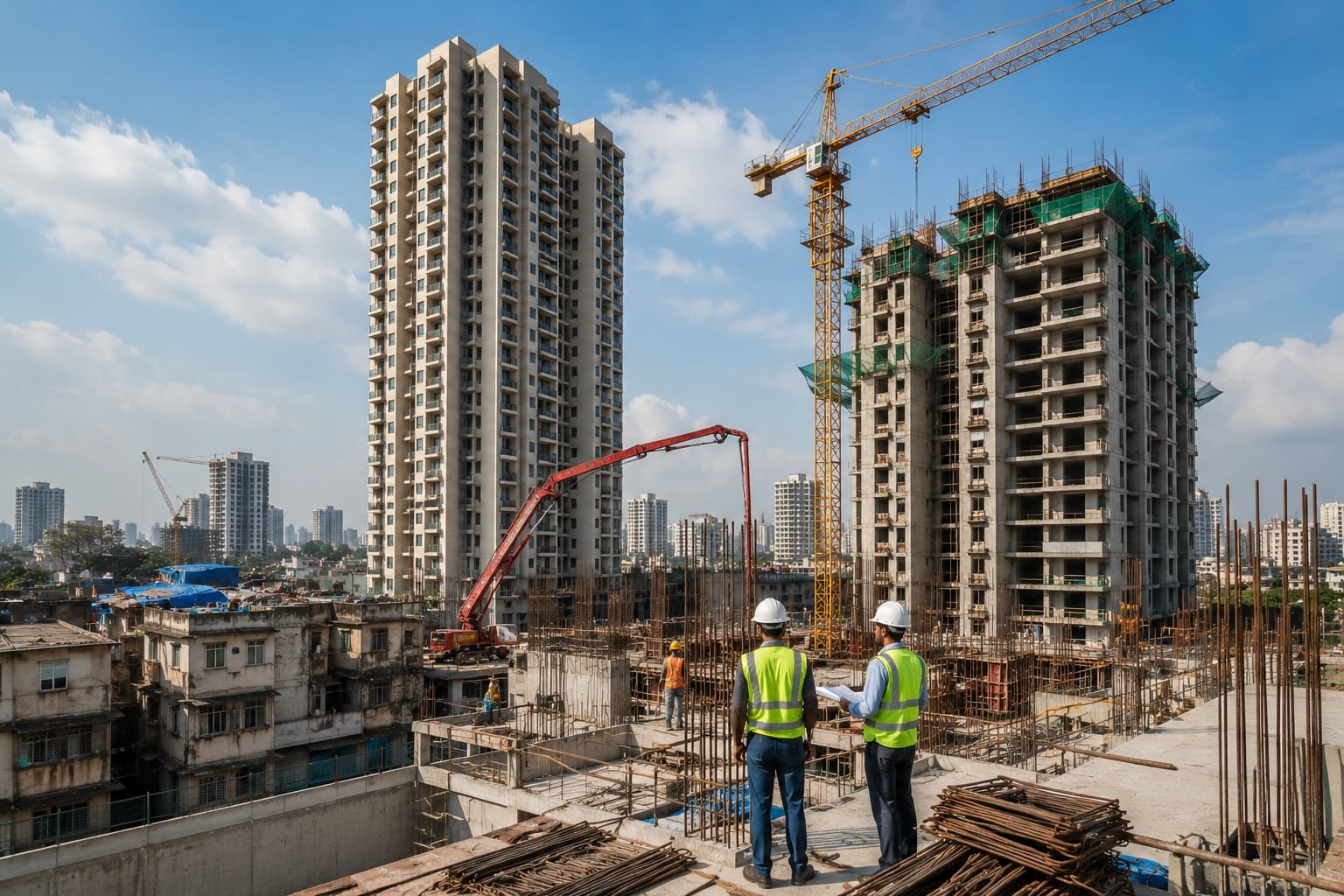
What makes this approach different from the redevelopment Mumbai has known for years is the scale of land being touched at once. Rather than rebuilding one cramped plot at a time, the scheme groups together adjoining settlements so that planners can widen roads, carve out open ground, and lay fresh civic infrastructure across a much larger footprint. The state is hoping this single shift in approach could eventually give somewhere between six and seven lakh residents a permanent, formally built home instead of the informal structures many have lived in for decades.
The Scale Nobody Talks About Enough
Numbers from the authority paint a picture that is easy to underestimate from the outside. Over three lakh rehabilitation units are presently being built across the city, and the long-range target sits above five lakh homes before the decade closes. Layered on top of that is a state-backed push to support construction of roughly thirty lakh homes across the wider Mumbai region through a combination of slum redevelopment and affordable housing expansion.
Dharavi remains the headline act in all of this. Its transformation has grown into one of the largest urban renewal efforts the country has attempted, and its outcome will likely shape how Indian cities approach informal settlement redevelopment for years afterward.
Where the Real Opportunity Sits Right Now
For anyone watching Mumbai's property market with an investor's eye, the interesting corridors are not necessarily the ones already saturated with new towers. Chembur has quietly become one of the city's stronger redevelopment stories, helped along by improving road links toward Bandra-Kurla Complex and Navi Mumbai. The Andheri belt, both east and west, continues to see cooperative housing societies queue up for redevelopment as their buildings age past safe structural limits, and metro connectivity sweetens the deal further. Areas ringing Bandra-Kurla Complex are seeing renewed residential interest simply because office expansion there keeps pulling more working professionals into the surrounding pin codes.
What ties these locations together is the same logic that has always driven Mumbai redevelopment: land is finite, older buildings are ageing out of safety, and demand from professionals working in the city's commercial districts is not slowing down.
The Part Buyers Should Not Skip Past
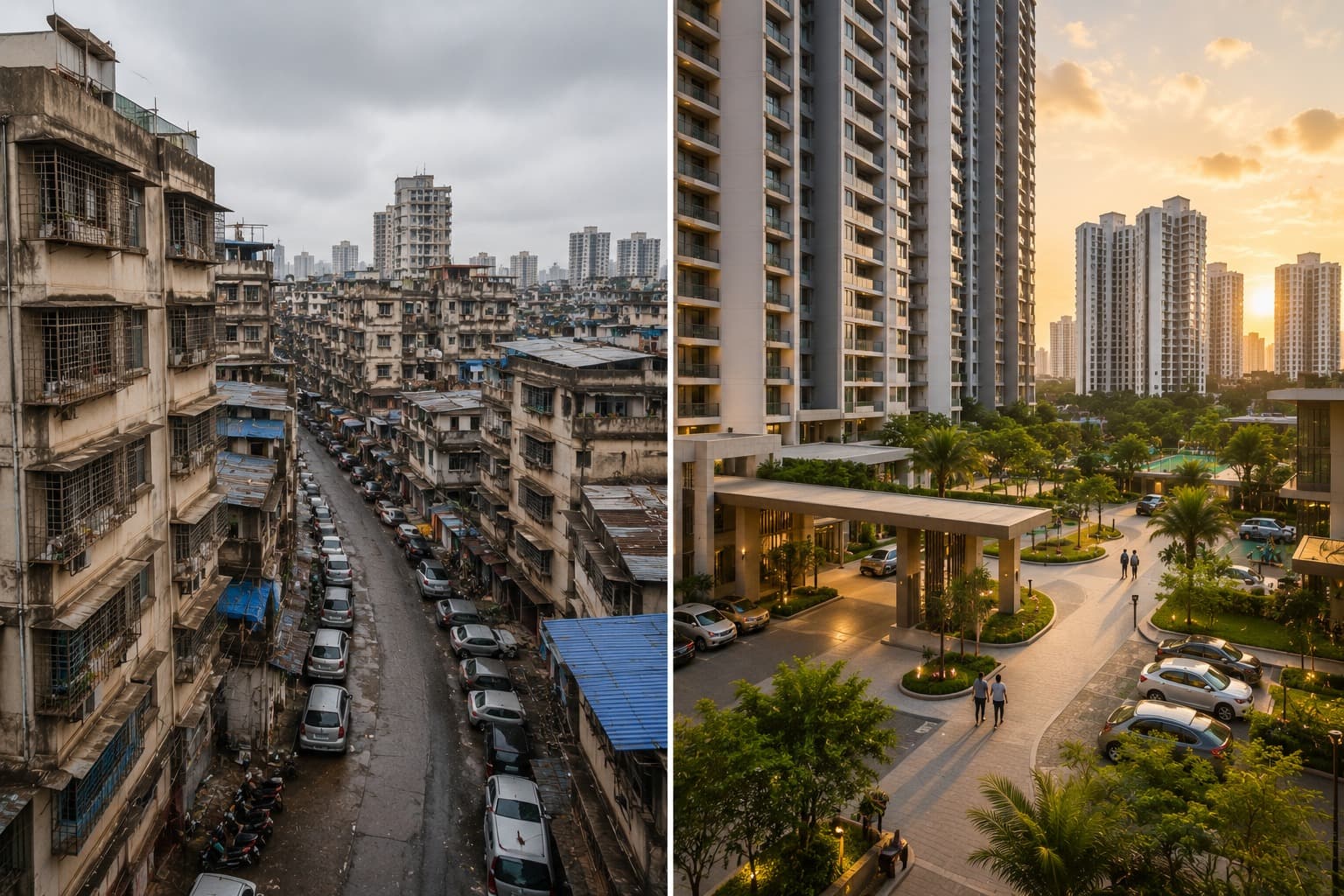
None of this comes without genuine risk, and it would be dishonest to pretend otherwise. Earlier this year, the SRA actually cancelled around 181 joint venture redevelopment projects that had stalled for years without real progress. That single fact should sit at the back of every investor's mind before signing on for a redevelopment-linked property. The developer's track record, financial standing, and history of actually delivering matter more here than in almost any other category of real estate purchase.
Buyers entering at the launch stage of a redevelopment project can sometimes secure meaningfully lower entry pricing than they would in an already-built tower nearby, and that pricing gap is the entire reason this segment attracts so much investor attention. But that advantage only holds if the project actually gets finished on schedule, which is precisely where so many Mumbai redevelopment stories have historically gone wrong.
Summary
Mumbai's redevelopment engine in 2026 is running at a scale that goes well beyond the slow, scattered efforts of previous years. The SRA's decision to extend its cluster model into Wadala, Behrampada, and Majaswadi signals a deliberate shift toward rebuilding entire neighbourhood pockets rather than isolated plots. Chembur, Andheri, and the zones surrounding Bandra-Kurla Complex stand out as the corridors worth watching closely right now. Yet the cancellation of over a hundred and eighty stalled joint ventures is a clear reminder that not every redevelopment promise gets kept, and due diligence on the developer matters just as much as the location itself.
Video will be embedded from: https://www.youtube.com/watch?v=2qOW6vRX6X8