
India's 70,000 Kilometre Electric Railway: The Infrastructure Story Nobody Is Talking About Loudly Enough
Summary
India's rapid electrification of its railway network to become the world's largest is a major infrastructure achievement. While boosting efficiency and connectivity, challenges remain in renewable energy reliance and safety system upgrades.

Introduction
A hundred years ago, a sixteen-kilometre stretch of track between Bombay Victoria Terminus and Kurla became India's first electrified railway line. It ran on a 1,500-volt direct current system and was considered a technological marvel by the standards of 1925. Today, India has electrified 69,744 route kilometres of broad-gauge track, covering 99.4% of its entire network. That makes it the world's largest electrified rail network on the planet. Not one of the largest. The largest. And yet this achievement, which took a century to approach and was essentially completed in the last decade alone, sits largely unnoticed in conversations about India's infrastructure progress. The Indian Railways electrification story deserves better than that.
From 45% to 99% in a Decade: How It Happened
When India reached 2014, roughly 45% of its broad-gauge network was electrified. Progress had been real but slow, averaging about 1.42 route kilometres of new electrification per day. The next ten years saw something fundamentally different. Mission-mode electrification pushed the daily pace to over fifteen kilometres, a tenfold acceleration that required not just political will but actual engineering innovation.
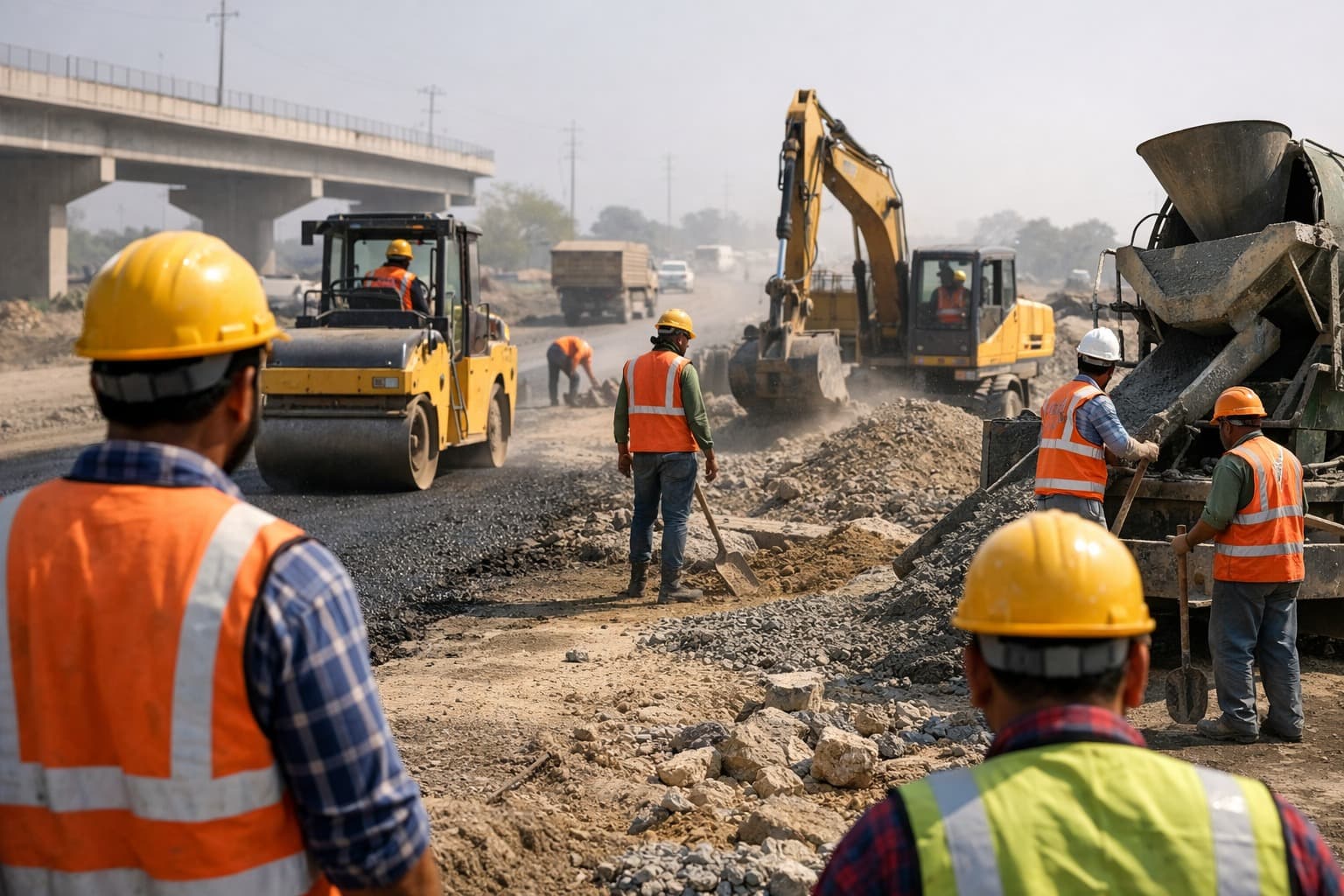
Two specific changes made this speed possible. Mechanised cylindrical foundation drilling replaced the older manual methods of erecting overhead equipment poles, cutting installation time dramatically. Automatic wiring trains were deployed across multiple corridors simultaneously, stringing overhead lines at a pace that manual teams could not approach. About 40,000 route kilometres were electrified between 2014 and 2025, more than in all the years between 1925 and 2014 combined. That context makes the achievement considerably more impressive than the final percentage alone suggests.
The 25 kV AC Standard That Made Scale Possible
One decision taken back in 1961 turned out to be the quiet enabler of everything that followed. Indian Railways adopted the 25 kilovolt alternating current system as the national standard for mainline electrification, replacing the older low-voltage DC systems used in Mumbai's suburban lines. AC at 25 kV transmits power efficiently over long distances without the severe voltage drop that had constrained earlier DC electrification to short urban corridors.
That standardisation meant every electric locomotive built for Indian Railways could operate anywhere on the national network. It also meant the infrastructure investment was permanent and scalable. A traction substation built in Rajasthan in 1975 feeds the same system that a locomotive traversing Tamil Nadu depends on today. Standardisation at that scale is easy to undervalue until you realise what its absence would have meant for a network this size.
The Environmental Arithmetic
Indian Railways now runs almost entirely on electricity, and the environmental logic behind that shift requires honest examination. Electric traction is approximately 70% cheaper to operate than diesel per unit of work done. That cost efficiency compounds across 23 million passengers and millions of tonnes of freight moving daily. The carbon calculation is more complicated.
About 70% of India's electricity grid still draws from coal-fired generation. So the transition from diesel to electric traction has reduced direct emissions from locomotives but shifted the carbon load upstream to the power sector. The net emission reduction is real but smaller than the headline electrification figure implies. Indian Railways' target of net-zero carbon emissions by 2030 will only be achieved if the renewable energy share in the grid grows substantially between now and then. That remains an open question.
Kavach and the Safety Infrastructure Gap
Electrification tells only part of the modernisation story. The Kavach automatic train protection system, designed to prevent collisions by automatically applying brakes when two trains are on a collision course, was supposed to accompany the electrification push across the network. But as of early 2026, Kavach coverage extends to only a fraction of the electrified network. The system's rollout has moved significantly slower than the electrification pace, leaving the safety infrastructure meaningfully behind the traction infrastructure it was designed to accompany.
Train operators running at higher speeds on electrified tracks without Kavach protection carry a residual safety risk that the electrification achievement alone does not resolve. The next phase of Indian Railways modernisation needs to close this gap urgently.
What the 70,000 Kilometre Network Means for Real Estate
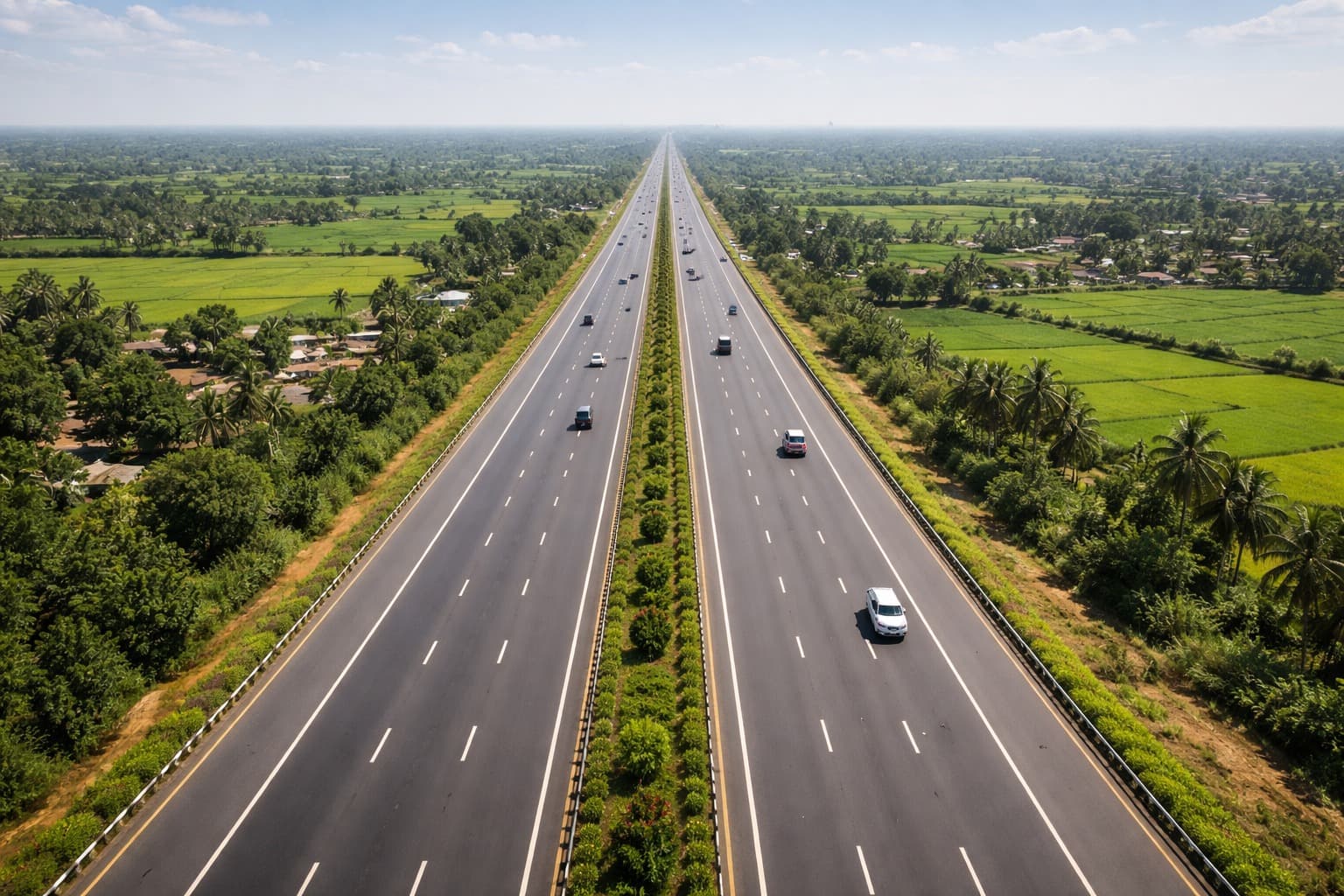
Every railway corridor upgrade, whether it is electrification, doubling, or dedicated freight, changes the real estate calculus for towns and cities along the route. Electric trains run faster and more reliably than diesel counterparts on the same infrastructure. Reduced travel times compress effective distances between cities, which historically pulls residential and commercial demand toward previously peripheral stations.
Towns along Central Railway, Eastern Railway, and the Southern zones that had been growing slowly due to irregular or slow services are now on fully electrified mainlines capable of running premium express trains. That connectivity improvement feeds directly into property demand among buyers who commute by rail or who value the connectivity options a faster, more reliable mainline provides.
Summary
India's 70,000 kilometre electric railway network is the world's largest and its achievement in the past decade, accelerating from 1.42 km per day to over 15 km per day of new electrification, represents one of the most consequential infrastructure execution stories in Indian history. The environmental case is real but nuanced given grid coal dependence. The Kavach safety rollout needs to catch up. And for real estate buyers and investors along India's rail corridors, an electrified, faster, more reliable mainline network is a connectivity upgrade that quietly but consistently supports property demand in every town it serves.
Video will be embedded from: https://www.youtube.com/watch?v=9CxnGw9gjx8