
Impact of Iran Conflict on Indian Real Estate: A Full Market Breakdown
Summary
The Iran conflict caused a Q1 2026 dip in Indian housing sales, but prices continue to rise. Developers are still launching projects, though unsold inventory is growing, and NRI demand softened due to geopolitical tensions.

Introduction
The first quarter of 2026 was not supposed to look like this. India's real estate market had been on a strong run for nearly three years, and most industry watchers expected that momentum to hold. But the US-Iran conflict changed the mood, and the numbers tell a clear story.
ANAROCK Research's latest data shows that housing sales Q1 2026 across India's top seven cities dropped 7 percent quarter on quarter. That is not catastrophic, but it is a meaningful pause in a market that had grown used to green numbers.
The Sales Numbers in Plain Terms
Across Mumbai, Bengaluru, Pune, NCR, Hyderabad, Chennai and Kolkata, a combined 1,01,675 units were sold in Q1 2026. The previous quarter saw 1,08,970 units change hands. In value terms, the market moved from Rs 1.60 lakh crore to Rs 1.51 lakh crore.
That is nearly seven thousand fewer homes sold in three months. Behind each of those units is a family that either postponed a decision or could not close because of rising uncertainty.
City by City: Who Took the Biggest Hit
Mumbai Bengaluru housing sales together accounted for nearly 48 percent of total volumes, which shows just how dominant these two markets remain even in a down quarter.
Mumbai Metropolitan Region recorded 32,800 units, down 6 percent from the previous quarter. Bengaluru sold 16,440 units, a 5 percent decline. Both cities felt the pressure but held their ground relative to others.
Pune dropped 10 percent. NCR was down 8 percent. Kolkata also fell 8 percent. But Chennai took the hardest blow with a steep 18 percent decline quarter on quarter.

Hyderabad was the lone exception, holding roughly flat despite the broader turbulence. Every other major city felt the drag from global uncertainty in some measurable way.
Developers Did Not Slow Down
Here is the part of this story that most people miss. While buyers were pulling back, builders were not.
New launches in Q1 2026 reached 1,26,265 units. That is 2 percent higher than the previous quarter and a striking 26 percent jump over Q1 2025. Developers read the long-term picture differently from buyers spooked by short-term news.
Hyderabad led the charge with new launches jumping 46 percent quarter on quarter. Bengaluru and MMR saw new supply rise 7 and 6 percent respectively. Pune, NCR, Chennai and Kolkata pulled back on launches, but the overall national picture remained strongly supply-positive.
This marks a notable reversal. For most of the post-pandemic period, sales consistently outpaced new supply. That pattern has now flipped, at least temporarily.
Prices Kept Climbing
If you were waiting for the Iran conflict Indian real estate tension to push prices down, Q1 2026 offered no such relief. Average residential prices across the top cities rose 2 percent quarter on quarter and 7 percent year on year.
NCR led annual appreciation at over 15 percent, driven heavily by luxury and ultra-luxury launches. Bengaluru followed at 8 percent annually.
In terms of what was being launched, the Rs 1.5 crore to Rs 2.5 crore segment dominated at 32 percent of new supply. Properties above Rs 2.5 crore made up 20 percent. The mid-range bracket of Rs 80 lakh to Rs 1.5 crore held 25 percent. Affordable housing below Rs 40 lakh shrank to just 10 percent of new launches, a continuing and significant structural shift in India's residential market.
Unsold Stock Is Rising
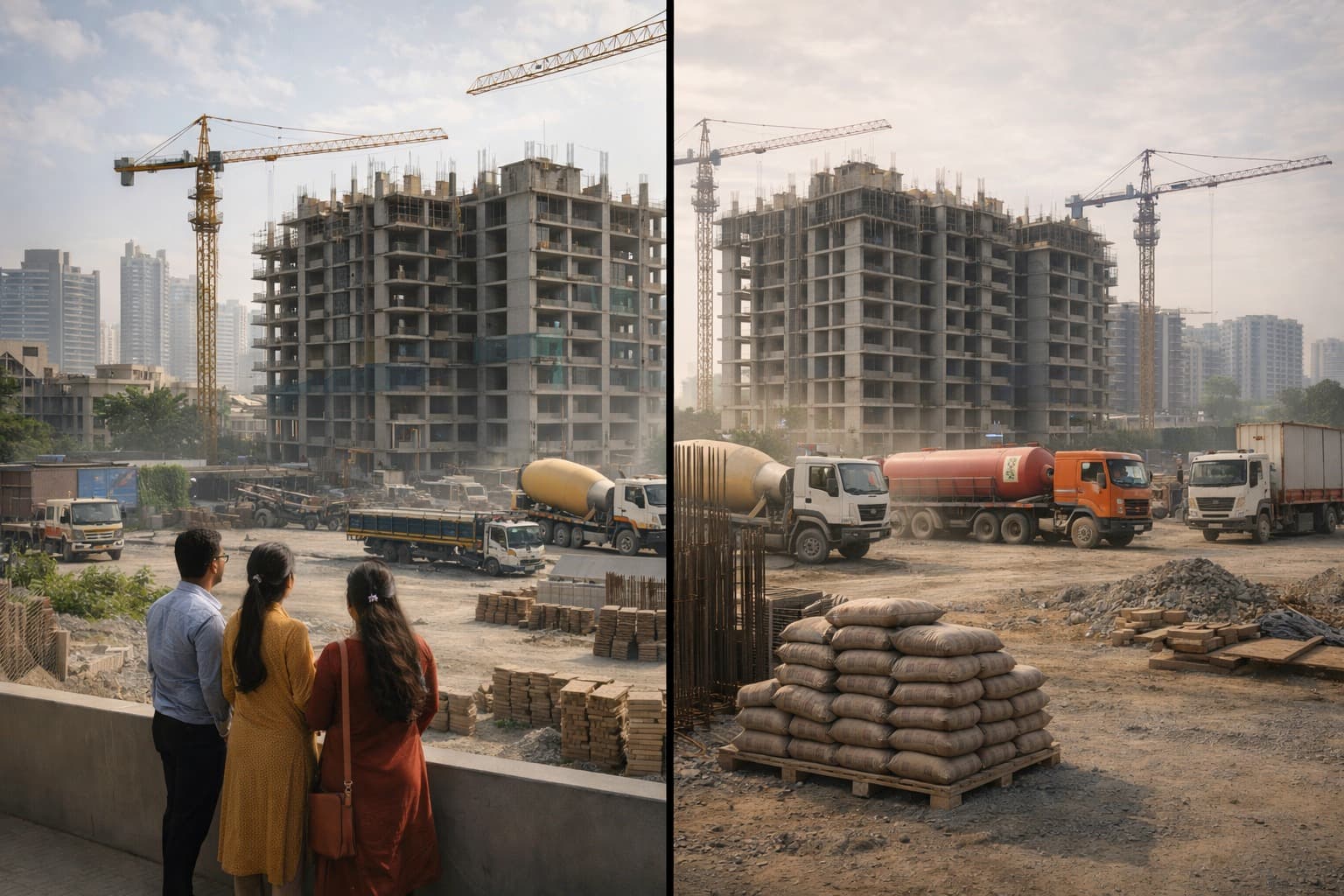
When launches outpace sales, unsold inventory builds. By the end of Q1 2026, total unsold units in the top seven cities crossed 6.01 lakh.
That is a 4 percent rise quarter on quarter and 7 percent higher than a year ago. Bengaluru saw the sharpest increase, with unsold inventory jumping 12 percent in the quarter and 24 percent year on year. A city that has been absorbing supply aggressively is now building a visible backlog.
What Anuj Puri Said
ANAROCK Chairman Anuj Puri connected the dots directly. He pointed to oil price surges and rising construction material costs hitting hardest in March as the Iran war construction cost India pressure became real. He also noted that Middle Eastern NRI investors, who are a significant buyer segment for Indian real estate, paused their decisions under the shadow of the conflict.
Puri also flagged the supply-demand reversal as a trend to watch. For the first time since the pandemic recovery, new launches are running ahead of sales.
Summary
The Q1 2026 housing sales India dip of 7 percent reflects short-term sentiment pressure from Iran conflict real estate uncertainty rather than a structural breakdown. Prices are still rising. Developers are still launching. But unsold inventory is building, Middle Eastern NRI demand has softened, and buyers across most cities are exercising caution. How quickly this corrects depends almost entirely on how geopolitical tensions resolve, and whether construction costs stabilise in the quarters ahead.