
Ganga Expressway: The Road That Could Reshape Uttar Pradesh's Economic Future
Summary
The Ganga Expressway, a 594km corridor linking Meerut to Prayagraj, is set to transform Uttar Pradesh by drastically cutting travel times, boosting real estate value, and fostering industrial growth. This monumental project is key to unlocking the state's economic potential and addressing its long-standing infrastructure deficits.

A Project That Has Been a Long Time Coming
Uttar Pradesh has always been a state of enormous potential held back by equally enormous infrastructure deficits. Getting from one end of the state to the other has historically meant lost hours, lost productivity, and lost opportunity.
The Ganga Expressway is being built to change that reality. At 594 kilometres connecting Meerut in the west to Prayagraj in the east, this greenfield corridor is among the longest expressways being developed within a single Indian state. It is not just a road. It is a statement about where Uttar Pradesh wants to be in the next decade.
The Numbers That Define the Project
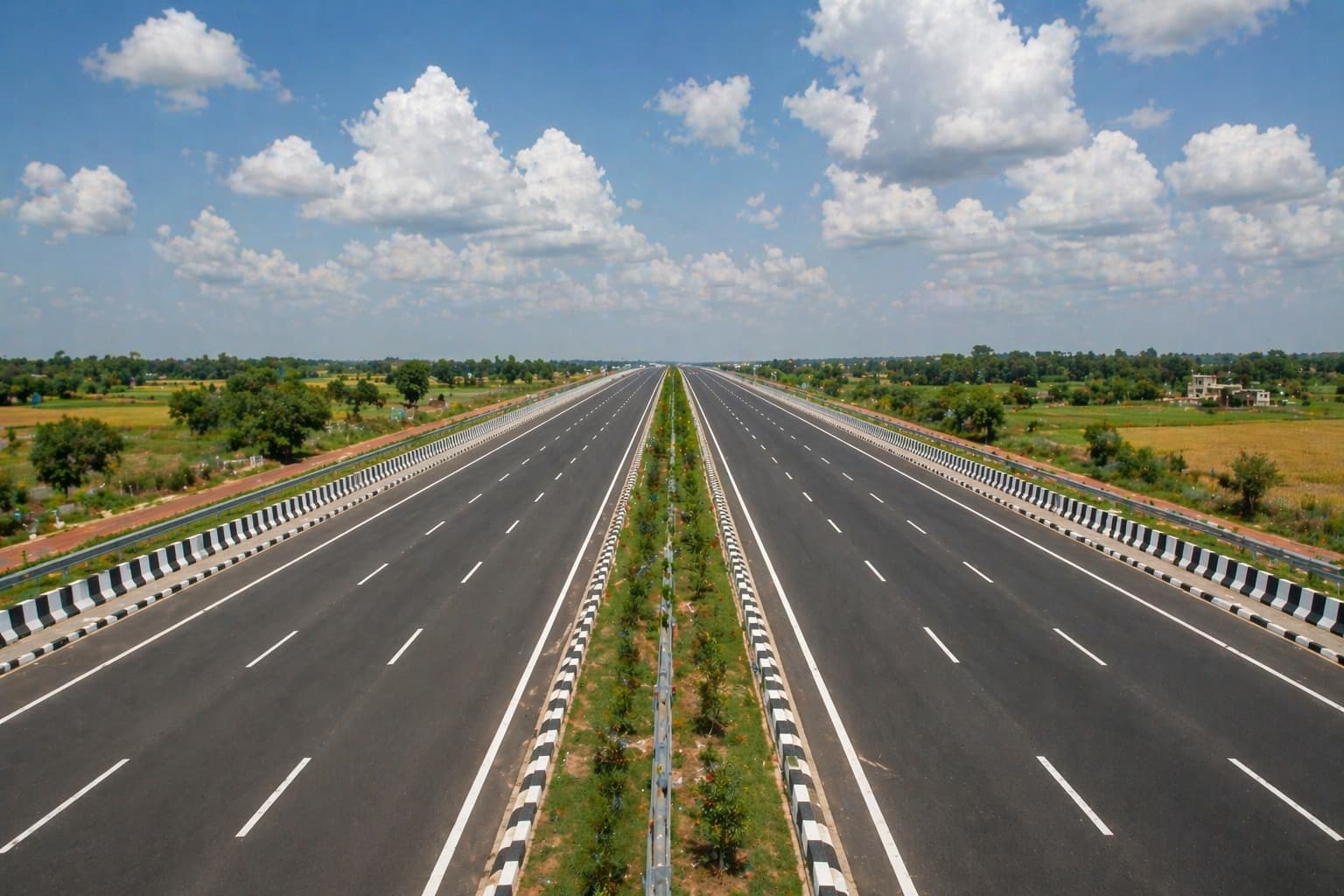
The scale of this undertaking is worth pausing on. The expressway passes through 12 districts, cuts across roughly 518 villages, and has been built at an estimated cost of around ₹36,230 crore. It is a six-lane access-controlled highway with the structural capacity to expand to eight lanes as traffic demand grows over time.
The districts it threads through read like a map of central and eastern UP's underdeveloped interior. Meerut, Hapur, Bulandshahr, Badaun, Shahjahanpur, Hardoi, Unnao, Rae Bareli, Pratapgarh, and Prayagraj all sit along the route. These are not just geographic waypoints. Each is a region with agricultural strength, a local economy, and a population that has historically lacked direct, fast highway connectivity.
What Changes for the Ordinary Traveller
The most immediate impact is time. The journey between Meerut and Prayagraj, which currently takes somewhere between 12 and 13 exhausting hours on existing roads, is expected to come down to around six hours once the expressway is fully operational. That is not a marginal improvement. It is a transformation.
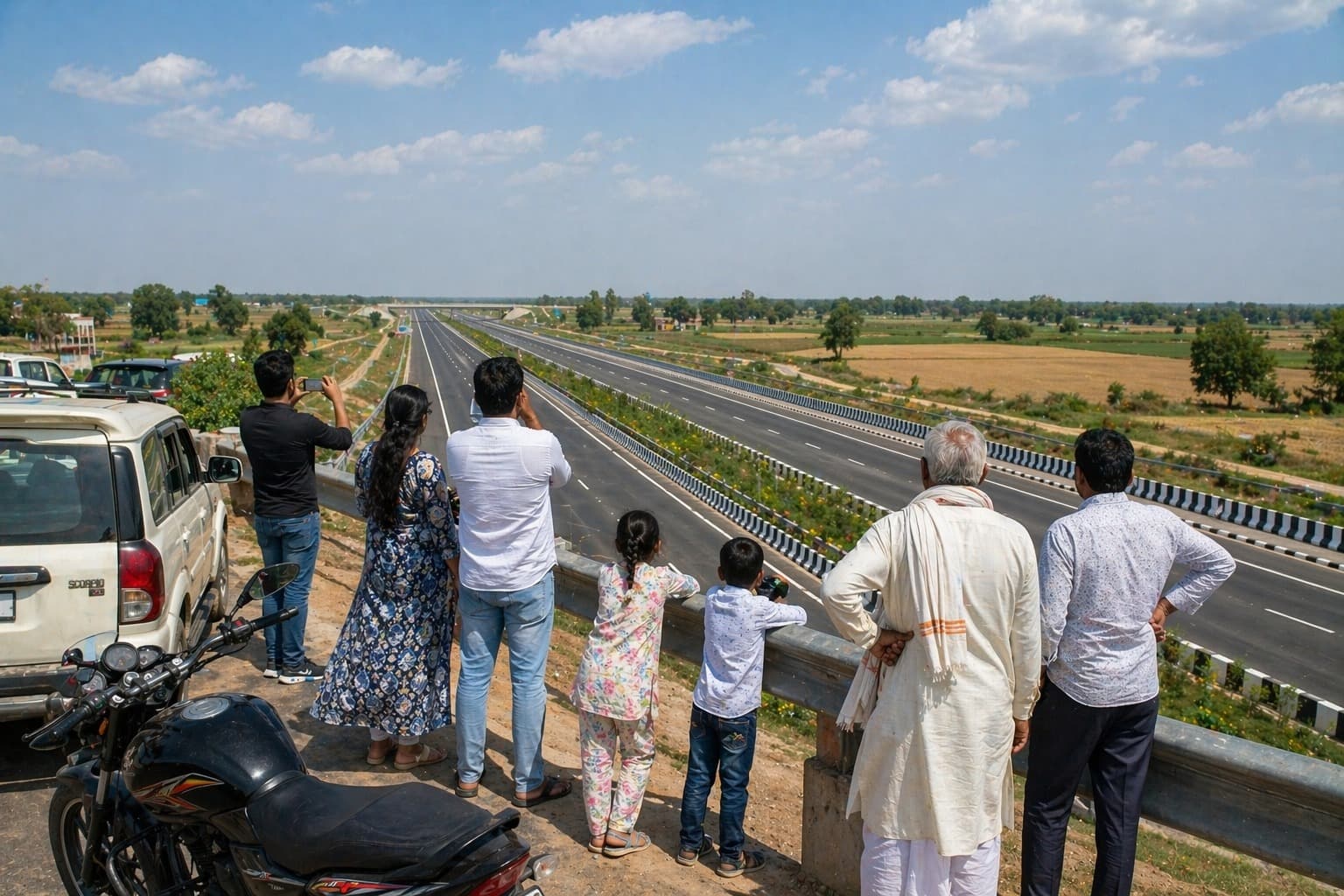
For daily commuters, farmers transporting produce, truckers moving freight, and pilgrims heading to Prayagraj's ghats during Kumbh and other gatherings, this matters enormously. Fast roads unlock access. And access, over time, unlocks economic activity in ways that are hard to predict but consistently positive.
The Emergency Airstrip No One Expected
One of the more dramatic features of the Ganga Expressway is a 3.5-kilometre emergency landing strip built near Shahjahanpur. In May 2025, the Indian Air Force conducted live drills on this stretch, successfully landing and taking off with aircraft that included Su-30MKI jets, Mirage 2000 fighters, C-130J transporters, and Mi-17 helicopters.
It is a reminder that modern expressways in India are being built with dual-use thinking embedded from the outset. The airstrip adds strategic depth to the project beyond its commercial purpose and places it in a category of infrastructure that serves both civilian and national security interests.
The Real Estate Story Along the Corridor
Infrastructure creates property value. That is a principle Indian investors have seen play out consistently across every major expressway project in the country, from the Yamuna Expressway to the Delhi-Mumbai corridor. The Ganga Expressway is already showing early signs of the same pattern.
In Modipuram, Meerut, property prices have already recorded a 72 percent rise over the past five years, partly driven by anticipation of the expressway's completion. Land parcels near interchange points along the route are attracting investor interest in districts that were previously considered too remote for meaningful real estate activity.
Hardoi, Shahjahanpur, and Rae Bareli are not names that traditionally appear in any property investor's vocabulary. That may be about to change.
Industrial Clusters Are Being Planned
The UP government has been proactive about treating the expressway as an industrial spine, not just a transport link. In Meerut, land adjacent to the expressway entry and exit points has already been acquired for an industrial city. Kanpur is expected to become a significant commercial and logistics node given its position near the route's midpoint.
The Adani Group is handling a substantial portion of the construction work between Badaun and Prayagraj under a public-private partnership model, which signals the kind of institutional confidence that tends to accelerate downstream investment.
Summary
The Ganga Expressway is the single most transformative piece of infrastructure Uttar Pradesh has commissioned in recent years. Connecting Meerut to Prayagraj across 594 kilometres, passing through 12 districts and 518 villages, it carries the weight of a state's economic ambitions. For real estate investors, logistics companies, and businesses targeting UP's growing consumer base, the corridor that runs alongside the Ganga Expressway route deserves serious attention well before the rest of the market catches up.
Video will be embedded from: https://www.youtube.com/watch?v=oHEDRF01Ass